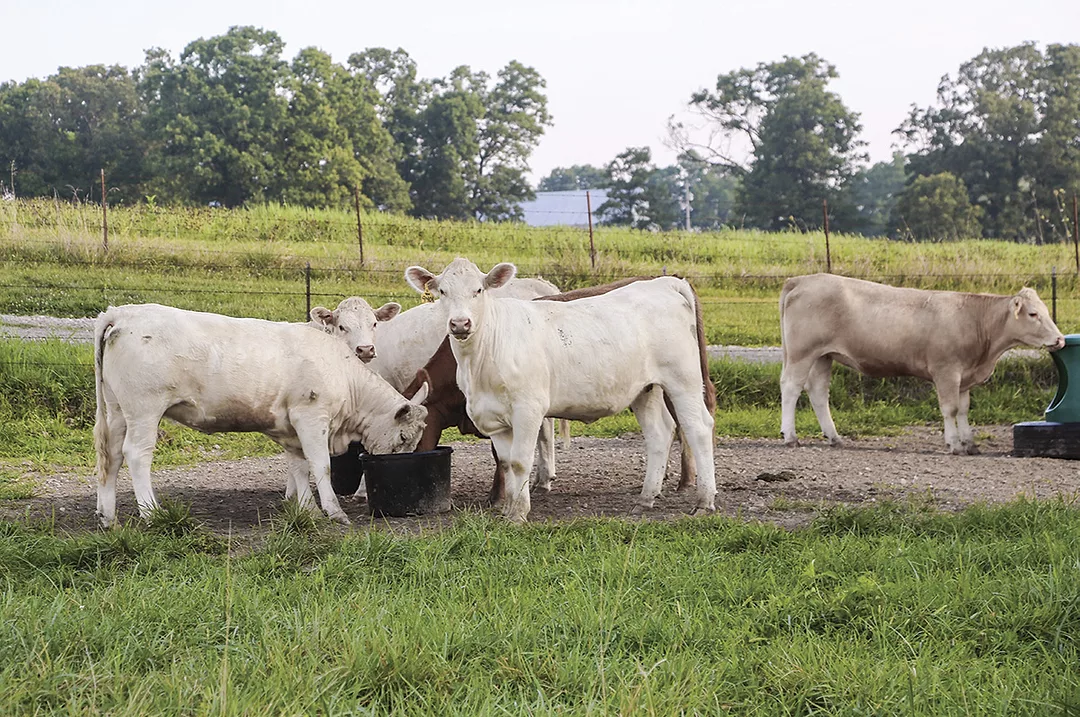
Early indicators and predictions show that the beef industry is slowly considering rebuilding the herd. Fewer heifers are being placed on feed, and many producers’ current stocking rates are so low that they have nowhere to go but up in numbers. This is a unique opportunity to build the herd with purpose and longevity in mind. Before any decisions are made to retain or purchase heifers, take a minute to think about how best to proceed. Here are four areas to evaluate when considering your operation’s rebuilding process.

1. What are your ranch’s long-term goals?
This may seem, to some, a complex question. However, don’t overcomplicate it. If there is no structured and written plan for your whole operation, I recommend generating one, but for now, let’s keep the discussion about livestock. Remember, not every female is worth keeping for breeding purposes. Your goals should guide your selection. Have you considered direct-to-consumer marketing? If so, you may want to ensure that your herd genetics will support that business model through carcass traits such as quality and frame size. Has your operation considered seedstock production or genetic improvements? This may be a great opportunity to implement some of those changes as you rebuild your numbers. Do you hope to expand? If so, make sound financial evaluations of the cost of rebuilding and how to do so in a way that does not limit your ability to acquire more land by lease or purchase in the future.
2. What is the calculated long-term carrying capacity of your rangeland?
Keep in mind that many of our calculations are based on a traditional animal unit (a 1,000-pound cow consuming 2.6% of bodyweight). While some arid areas still manage to run 1,000-pound cows, most of our current herd is 1,200-1,500 pounds. Due to the increased frame size of our brood cows, many of our rangelands have been slowly and unknowingly overgrazed. There are many applications out there that can help establish average annual forage production. Those numbers can be used to look at forage volatility from year to year and calculate a sustainable carrying capacity. Doing so helps avoid destocking every time precipitation is lower than average, keeps your rangelands healthy and productive, and opens the opportunity to introduce other classes of livestock in years when forage production is above average.
3. What is the current cost of developing a heifer on-site?
There are many articles out there about buying versus raising replacements, so we won’t revisit that here. Knowing your cost of production is still a valuable decision-making tool. Those who can develop heifers on pasture can do so more affordably than those who develop them in a drylot. When calculating what a replacement heifer costs you, be sure to use your cow cost as a starting point. Many producers use market value. This is not a true representation of what that heifer costs your operation and discounts any advantages you may have over others. For example, your cow cost may be $850 per weaned heifer. Assuming another $700 is required to produce a bred heifer, that heifer costs $1,550. Compared to an average bred heifer price of $1,993 over the last three years, that is a savings of $443 per heifer. Considering 100 replacements, that adds up quickly. With an average weaned heifer price of $1,340, using market value as your starting point adds almost $500 to each heifer and does not truly represent your cost of production. There are other considerations as well. Is heifer development feasible in your system? Are your genetics favorable for heifer retention? Do you have access to quality replacements? Would purchasing running-aged cows be a better option? Answers to these questions will influence how you approach annual replacement needs.
4. Will replacements be financed or purchased with cash?
In our current economy, interest rates make financing difficult. Spending significant amounts of cash on replacements takes away capital best used for other things. Each of you will have a different situation. Some may not have sufficient capital to pay cash. If you don’t, would it be best to wait until interest rates come down? Is building your herd necessary for your operation’s financial viability?
It may help to make a return on investment or net present value calculations where you can consider cash in versus overall investment return. For example, you may purchase 100 bred heifers for $2,200 each. That is a total input of $220,000. At a 5.5% interest rate over a five-year period, that’s an annual payment of around $50,400. Those heifers need to produce at least that much revenue each year just to pay the loan. At current prices, that should be easy. However, what if prices drop to $145 per hundredweight (cwt) in the next three to five years? Based on an 85% weaned calf rate and 550-pound calves, gross revenue from those heifers is around $67,700. While that covers the note, does that cover your cost of production? At an annual return of 7%, that initial $220,000 would generate $15,400 a year, and your capital is still in place if an opportunity comes. The point is, make sure you have adequately looked at the finances of your decision-making.
We have a great opportunity in the beef industry to move forward with purpose. By being thoughtful in our rebuilding process, we can do so in a sustainable way. Let’s avoid overexpansion and the inevitable future fluctuations that follow. Our resources should be optimized, not maximized. Each operation has variables that will shape its decision-making, but we can keep the overall health of the industry at the front of our minds as we move forward.