Cow comfort and herd health are essential factors to achieve higher milk quality and production. Bedding plays a critical role in both, which is why many dairy farms have long relied on sand as their go-to bedding. However, questions sometimes arise as to which bedding is better – fresh sand or recycled sand?

You must have confidence in your bedding, whether it is new sand or recycled sand. It needs to work for your manure-handling system, your cows, their health and, ultimately, milk quality. It all goes hand in hand.
When it comes to newly purchased sand versus recycled sand, research shows that properly processed recycled sand provides the same comfort and milk quality benefits as newly purchased sand, with significant cost savings and a reduced environmental footprint.
Myth-busting recycled sand
Despite years of success with recycled sand, several myths persist. For instance, some producers assume recycled sand bedding is less clean, of inconsistent quality or less comfortable for cows. Others are concerned it may harbor bacteria and increase mastitis risk. These concerns are largely based on appearance.
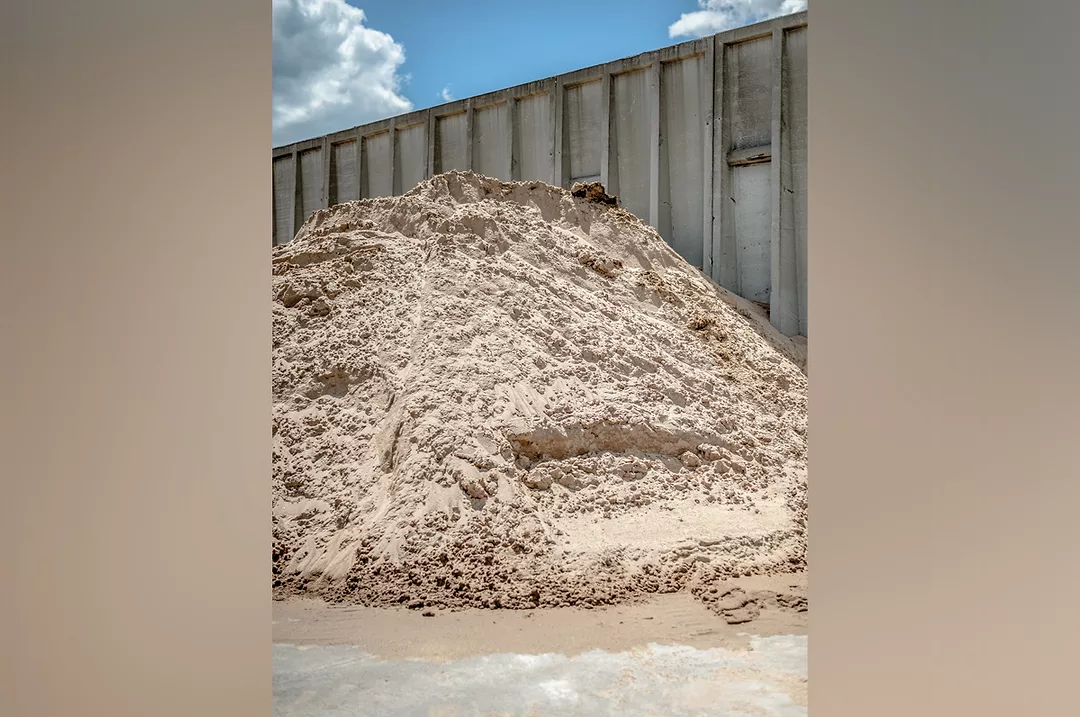
Certainly, recycled sand does not look like the pristine, white beaches of the Caribbean. But do not judge a book by its cover.
Properly recycled sand matches – or even exceeds – the performance of newly purchased sand in delivering the well-known benefits of sand bedding. Here are four points to consider:
- Cow comfort: Properly processed recycled sand retains the same makeup and form as new sand. The key to comfort lies in the particle size and cleanliness of the sand, rather than whether it is new or reused. During processing, rough debris and excessive fines are removed, providing the same comfort benefits as fresh sand.
- Bacteria growth: Studies show that when properly processed, recycled sand has no significant difference in bacterial counts when compared to new sand over the week after bedding the stalls.
- Moisture and organic matter: The optimal moisture range for bedding is 4% to 5%. New or recycled sand, when properly processed, typically falls within that range. Additionally, during processing, organic matter is removed from recycled sand. Depending on the quality of newly sourced sand, recycled bedding may contain fewer organic materials.
- Economic impact: Continuously purchasing large volumes of new sand is costly, both in the material itself and its transportation. Typical sand recycling systems can recover 90% or more of the sand from manure. Often, only 5% to 10% is lost to unrecoverable fine particles. Engineers are working diligently to decrease that percentage even more. This efficiency means the same sand is used again and again in stalls, with only a small fraction needing to be replaced on an annual basis. In fact, studies found that when switching to recycled sand bedding, the bedding cost per unit of milk drops up to 30 cents per hundredweight of milk produced.
For many dairy farms, recycled sand bedding offers a sustainable way to enjoy sand’s benefits while significantly cutting costs, mitigating manure challenges and supporting optimal cow health.
Know what you have
Newly purchased sand is often assumed to be the gold standard, but it may present its own challenges.
Farmers assume new equals perfect condition because, well, it’s new. But that isn’t always the case. Keep in mind that quality, from organic matter levels to particle size, varies by source.
Because new sand quality may fluctuate, routine testing for organic content, moisture levels and particle composition is essential. Dairies may incorrectly assume new sand is cleaner than recycled, but it can contain undesirable silts, clays and plant debris.
High-quality sand, whether new or recycled, should include a mix of fine and coarse particle sizes with minimal gravel, clay or silt to ensure it remains loose and dry and provides proper traction, drainage and cushion.
Sand benefits depend on how you manage it
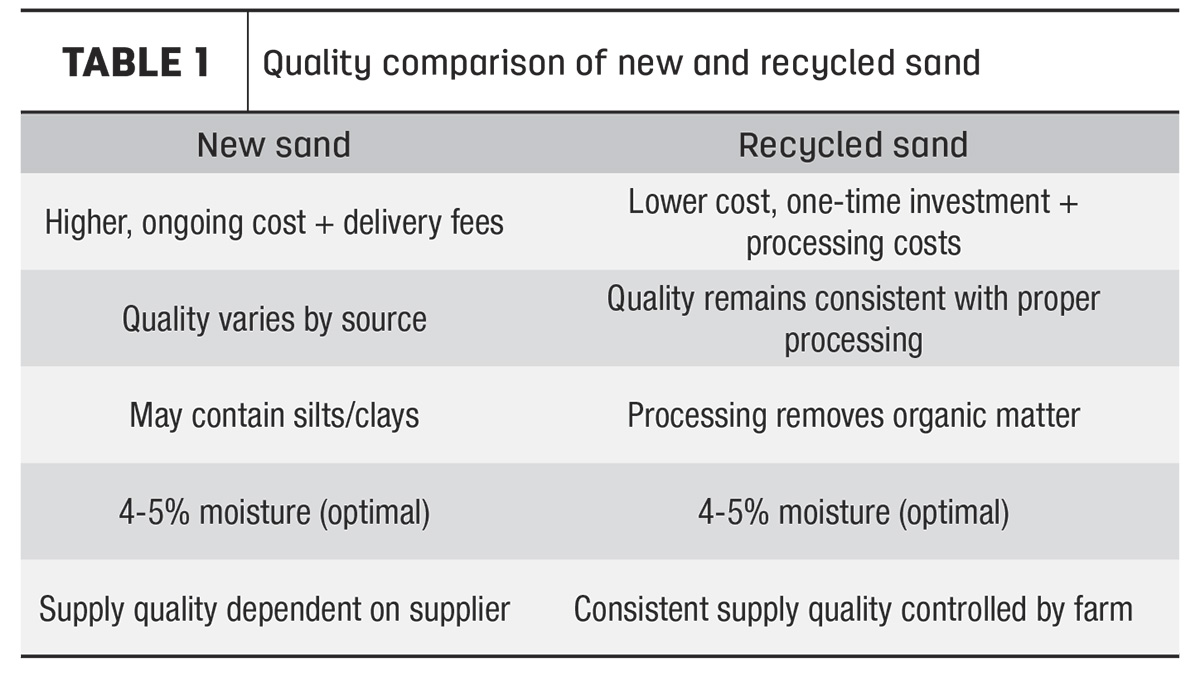
Sand quality is what matters most. Research continues to show that recycled sand provides the same quality as new (Table 1). Whether you are bedding with new or recycled sand comes down to the economics and logistics of your farm.
Regardless of origin, the key to effective bedding is keeping stalls dry, removing organic matter and ensuring clean, deep bedding for cow comfort.
With advanced sand recycling systems, dairy farms can lower sand bedding costs, improve bedding consistency and reduce environmental impact while maintaining high herd health standards. Now is the time for dairy farmers to rethink their bedding strategy and consider how recycled sand can support a more efficient, profitable operation.
References are omitted but available upon request by sending an email to an editor.