If you’re looking for an alternative crop to wheat, teff might be an option.

Teff is not new but has a rich history of being cultivated in Ethiopia (hot and dry climate) over 3,000 years ago. It’s a tiny grain with a rich nutritional profile of 10% protein, low glycemic index (helping to regulate blood sugar) and is naturally gluten-free, which accounts for its growing popularity in today’s market.
But production-wise, Idaho growers want to know how it fits into a rotation, what the water and nutrient requirements are, what it looks like at harvest and what the market potential is.
Berny Marquez has been growing teff for the past few years near Richfield, Idaho. “We started with 120 acres because that’s what fit our rotation at the time,” Marquez says. “It displaced some of our wheat because we were looking for something less volatile in the markets.”
Marquez says teff is a water-efficient crop and takes roughly the same nutrient and soil amendments comparable to wheat. What makes it more attractive than wheat is the market stability. “It’s nice to grow it under a marketing contract and not be dependent on the Chicago Board of Trade pricing, like wheat is,” he says. His contract is through The Teff Company in Boise.
Even though it is comparable to wheat in many ways, there are differing factors for its production and harvest. “It’s new enough that there aren’t a lot of chemicals labeled for it yet, which limits what you can use for weeds,” Marquez says. “And because of the chemicals that are labeled for it, you can’t plant teff behind another small grain. We use it to follow alfalfa or corn in our rotation, but we’re still figuring it out.”
“Another challenge to think about,” Marquez says, “is that this crop doesn’t like frost, so you have to plant it later than other grains, which pushes harvest back to September or even October sometimes when we’re battling rain.”
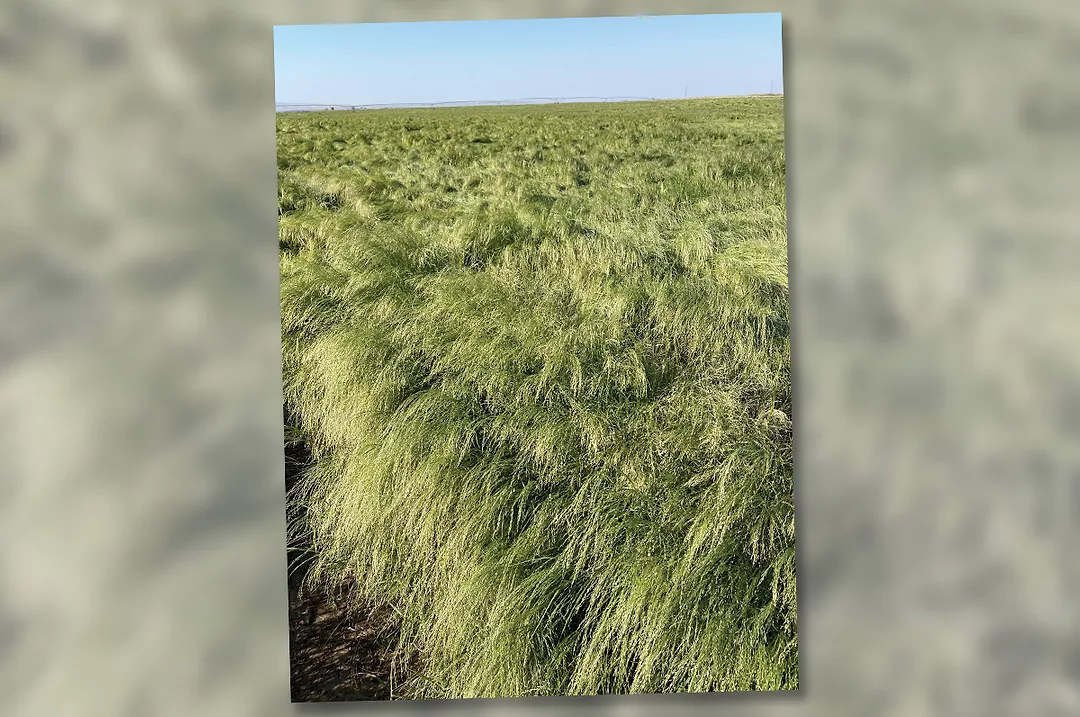
For harvest, a combine must have a bean pickup header and concaves installed, which is an additional $6,000 to $8,000 investment to a regular grain combine. Marquez’s teff yields around 1,600 to 1,800 pounds per acre.
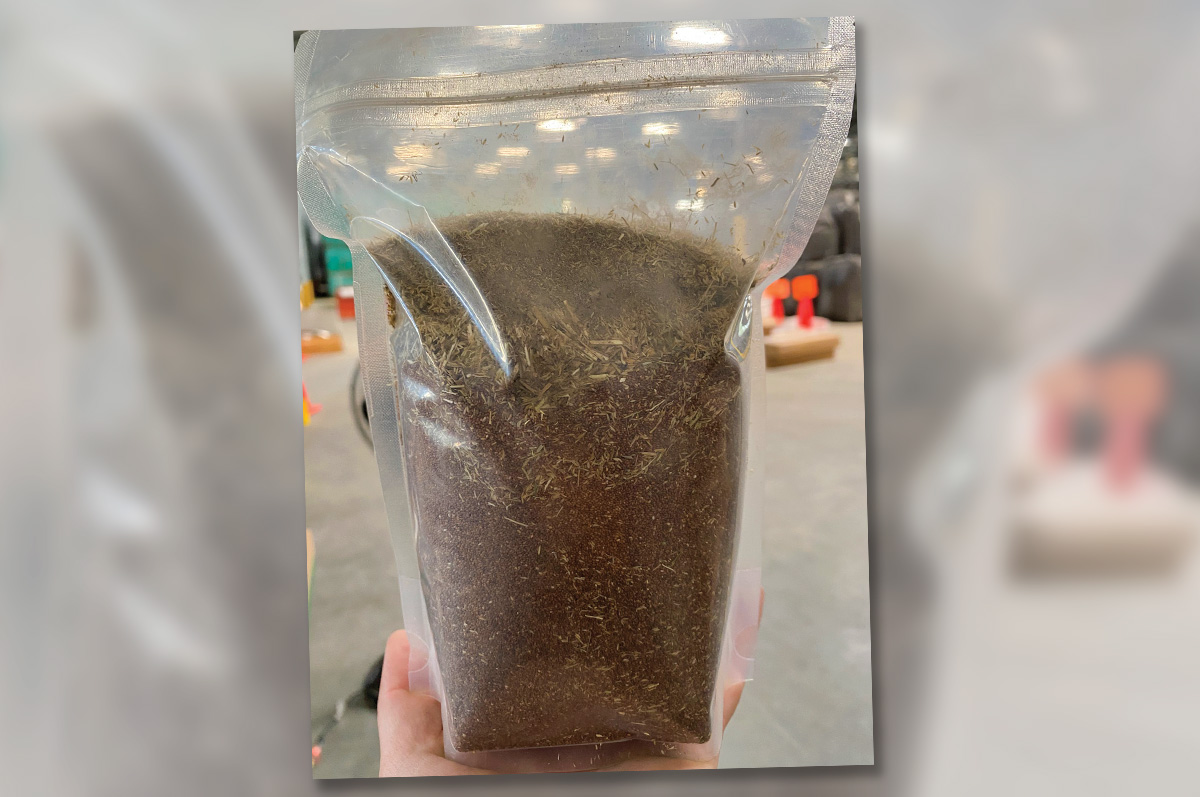
Teff is made into flour and traditionally used to make injera, a fermented Ethiopian flatbread – now gaining popularity in the U.S. as a gluten-free option for those with celiac disease or sensitivities. Image by Berny Marquez.
After the grain is harvested, the grassy straw can be harvested and is popular for horse bedding or dry-cow feed. Marquez says the straw is not popular for dairy bedding because the cows browse the grassy straw, which disrupts the nutritional balance of the ration. It can also be used for beef cow feed or bedding.
Joey Wallace, who farms with Driscoll Brothers in the Magic Valley, has grown teff for the past seven years. They started with a pivot-sized field to try it out. “We were looking for alternatives rather than grain,” he says. “It doesn’t replace all grains for us; it’s just in addition to other grains that we use.” His experience has been similar to Marquez’s. “Teff doesn’t use as much nitrogen as wheat,” he says, “but we’re still trying to figure out where those levels need to be to maximize yields. Right now, it’s using a little less nitrogen and a little less water [than wheat].” His yield range has been 1,800 to 2,000 pounds per acre.
“We don’t know what the high yield potential could be,” Wallace says. “If we give it more water, will it yield more? I believe there’s more to learn with it.”
“Wind has been our biggest challenge,” Wallace says. “When the crop comes up, the wind can blow it off like it does with sugarbeets, and we might have to replant. That’s not every year, but it happens. This is a crop grown in warm climates, so it definitely doesn’t like the cold.”
Wallace explains more about the harvesting process. “We swath it and lay it in a windrow and let it dry for a bit, then come in with a combine,” he says.
Teff is made into a flour and is used throughout the world in an Ethiopian bread called injera, a fermented flatbread similar to sourdough. There are many Ethiopians living in the eastern U.S., but more and more consumers throughout the U.S. are using it as a gluten-free health food to manage celiac disease or gluten sensitivities. The market continues to grow.
“I enjoy growing it,” Wallace says. “It’s something different and gives us an opportunity to learn. It has challenges, but it makes me want to develop into a better farmer.”
Marquez says, “I would recommend it to growers, for sure. It’s been a good crop for us.”
Teff in the Snake River region
Wayne Carlson, founder of The Teff Company, became involved with Ethiopia during the early '70s, living as a guest in a farming community. Later, back in Idaho, Carlson was fascinated by the similarities of the Snake River region and the East African Rift’s climates and geology. An idea formed that the Snake River region may be perfect for growing teff. Once he started growing it, word spread to Ethiopians living in American metropolitan areas as they reconnected with their favorite grain. The Teff Company has been supplying the Ethiopian and Eritrean communities for nearly 40 years with American-grown maskal teff. Some of the best-quality teff in the world is produced in Idaho.
For farmers considering growing teff, more information can be found on the Boise-based Teff Company website.
Teff
- Seed size 0.7 to 1 millimeter
- Creates fine, smooth flour
- No grittiness in final products
- Superior moisture retention
Teff nutritional profile (per 100 grams):
- Protein: 13.3 grams
- Iron: 6.6 milligrams
- Calcium: 180 milligrams
- Fiber: 8 grams
- Complete amino acid profile, high in lysine




.webp?height=auto&t=1783636475&width=285 "63802-Thomas-GPS-equipment--Automated-Magnum-Tractor--Matt-Skinner-photo(1).jpg")