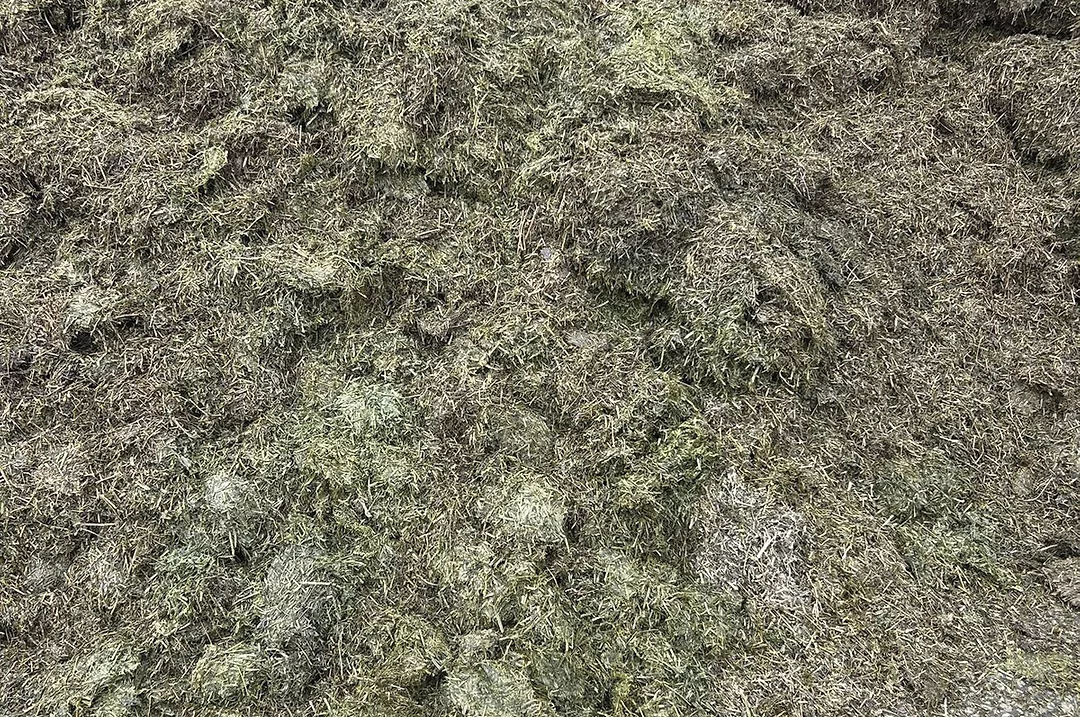
You open a bag, bunker or pile of alfalfa haylage and exclaim, “Something’s not right here!”

What you find is a foul-smelling, slimy, wet haylage that doesn’t mix well in the total mixed ration (TMR) and significantly decreases the TMR’s palatability. Intakes and milk production start to decrease. “What happened to my haylage?” is the big question.
Silage fermentation 101
To understand what happened, we must first return to the basics of silage fermentation.
The goal is to efficiently create a stable silage. To accomplish this goal, we want to quickly eliminate oxygen and drive a strong lactic acid fermentation to rapidly decrease the silage pH. A homolactic fermentation is the ideal fermentation type for forage because the only end product is lactic acid. As such, if it were possible to achieve a purely homolactic fermentation, the dry matter (DM) recovery would be 100%. Homolactic fermentation creates an ideal environment for beneficial fermentation microbes while making an inhospitable environment for harmful spoilage microbes. It’s important to note that, due to their higher protein and natural mineral content, alfalfa silages have a higher buffering capacity than corn silage, making a robust lactic acid fermentation even more critical for these silages.
It has been reported that up to 1 billion cells of bacteria, yeasts and molds can naturally exist per gram of freshly harvested forage. If you don’t use a research-proven silage inoculant, you hope enough naturally occurring lactic acid-producing microbes come from the field to drive this rapid upfront fermentation.
Unfortunately, even if these beneficial microbes are naturally present, fermentation and the subsequent pH drop are often delayed and slow, which allows time for other microbes to conduct alternative types of fermentation that waste valuable nutrients. These alternative fermentations, including clostridial fermentation, can produce butyric acid, ammonia, biogenic amines or carbon dioxide. With all these end products, DM recovery can be as low as 49%. This is why silage inoculants are so widely used. With ever-tightening margins on dairy and beef operations, we want to preserve as much of the valuable harvested forage as possible.
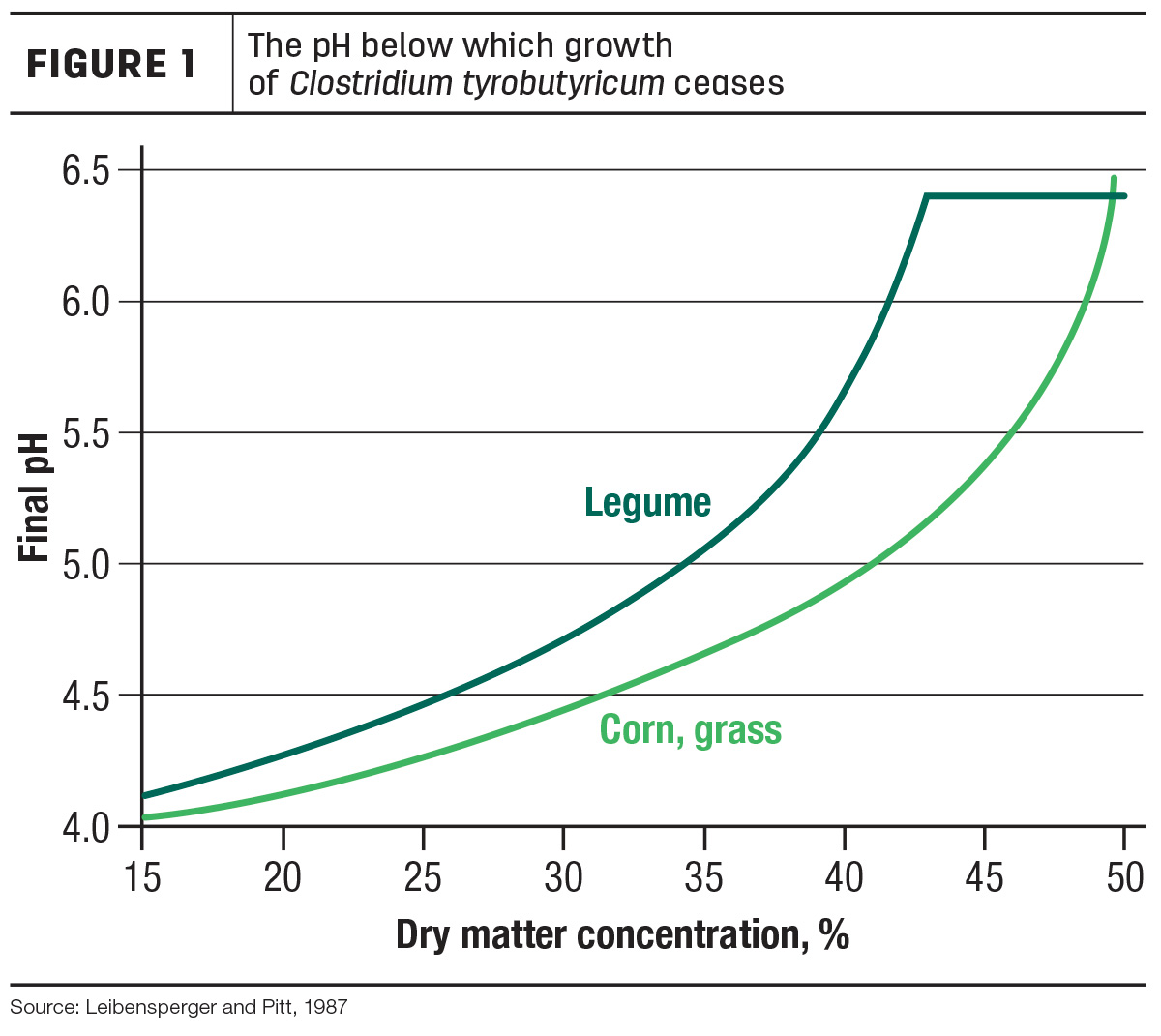
One of the most critical factors that drives a robust silage fermentation is the moisture content of the forage. Very dry forage packs poorly, leaving room for more oxygen pockets throughout the silage mass. On the other hand, very wet forages (less than 30% DM) are an ideal environment for some spoilage microbes such as clostridia. Because of this, the wetter the forage, the lower the pH must be to limit clostridia.
Bad outcomes with bad haylage
Remember that slimy, wet, stinky haylage I first mentioned? It’s probably the result of a clostridial fermentation.
Cattle will likely refuse to eat this foul-smelling, unpalatable silage. The forage will likely test high for butyric acid and contain high levels of biogenic amines, which are degraded proteins. Both compounds contribute to unpalatability and decreased intakes; in addition, biogenic amines can lead to decreased rumen and gut motility and inhibit protein digestion.
Potential challenges extend beyond depressed intakes. If this silage is consumed, the extra butyric acid can be converted to beta-hydroxybutyric acid (BHBA) in the blood, which can then lead to ketosis (both clinical and subclinical), especially in fresh cows. Furthermore, research suggests an association between high clostridia levels in feed and hemorrhagic bowel syndrome.
What can I do with this?
Nobody likes to waste silage; careful planning is crucial to ensure it is fed safely. Avoid feeding greater than 50 grams of butyric acid per head per day to lactating cows. To calculate this, simply multiply the percentage of butyric acid reported in the forage laboratory analysis by the pounds of DM of that silage you are feeding per head per day. For example, if the laboratory reports 4% butyric acid, and you were feeding 12 pounds of DM of that silage per day, multiply 0.04 by 12 and you get 0.48 pound. Then multiply by 454 to convert to grams; in this example, it equates to 217.92 grams of butyric acid per head per day. In this case, you could reduce the feed rate to under about 2.75 pounds of DM to stay under 50 grams of butyric acid. However, feeding such a small amount of haylage is not often practical.
If you must feed the butyric haylage, another strategy is to spread out the haylage to let it air out for at least 12 hours prior to feeding. Butyric acid is a volatile fatty acid, so some of it will volatize off the forage. Doing this may allow you to feed a slightly higher amount of the haylage.
If possible, feed the butyric haylage to far-off dry cows, late-lactation cows or heifers. Avoid feeding it to fresh or early-lactation cows.
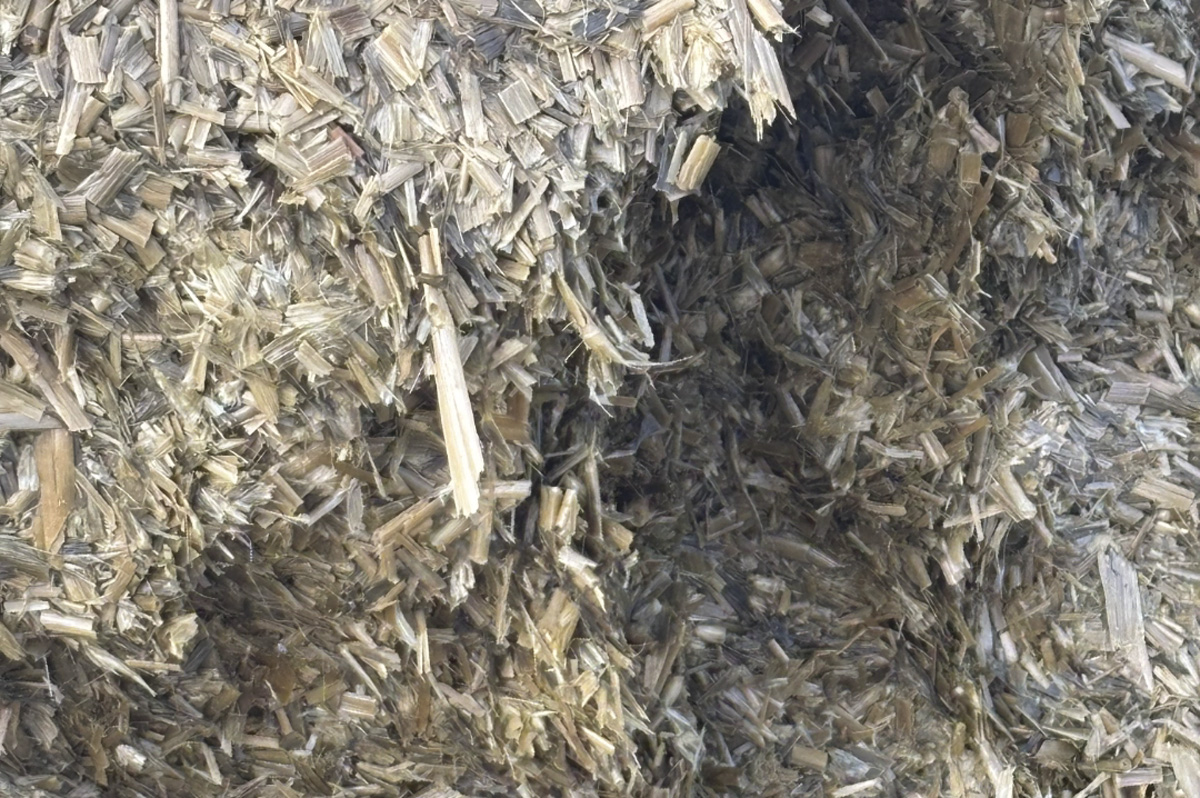
This photo shows how unexpected changes in rye silage can affect feed quality. Image by Steve Murty.
Reduce your risk
In the Midwest, early summer of 2024 was unseasonably wet, so getting alfalfa to dry before chopping or baling was a challenge with very limited harvest windows. When rain is on the way, the producer must decide to go ahead and chop the forage or wait for it to get rained on and dry again. This is a frustrating but understandable situation.
When cut alfalfa gets rained on, it washes some of the sugars out of the crop. Alfalfa that has been rained on likely won’t ferment very well for a couple of reasons, even when using a good homolactic forage inoculant. First, the lactic acid-producing microbes need to consume sugar to produce lactic acid. Low sugar levels make it more difficult for those microbes to accomplish that. Furthermore, cut forage that gets rained on will likely pick up more ash contamination from the field, which will make it more difficult to reach the desired pH.
Low-lignin alfalfa varieties can be a great tool to help decrease your risk of making butyric haylage, as they can provide a longer harvest window before fiber digestibility starts to decline. Farmers will always be at the mercy of the weather, and this is one strategy to gain flexibility in harvesting and chopping.
If you must ensile wet alfalfa, work with your nutritionist to determine the best strategy to utilize that forage. Clostridia produce butyric acid slowly, with levels increasing over a period of about two months. The sooner you feed it, the better. The longer the wet forage sits, the more time clostridia have to produce butyric acid and spoil your forage. Be sure to keep accurate, ongoing notes throughout the growing season about the weather conditions when you harvest each crop to help you gauge whether you have a high-risk forage.