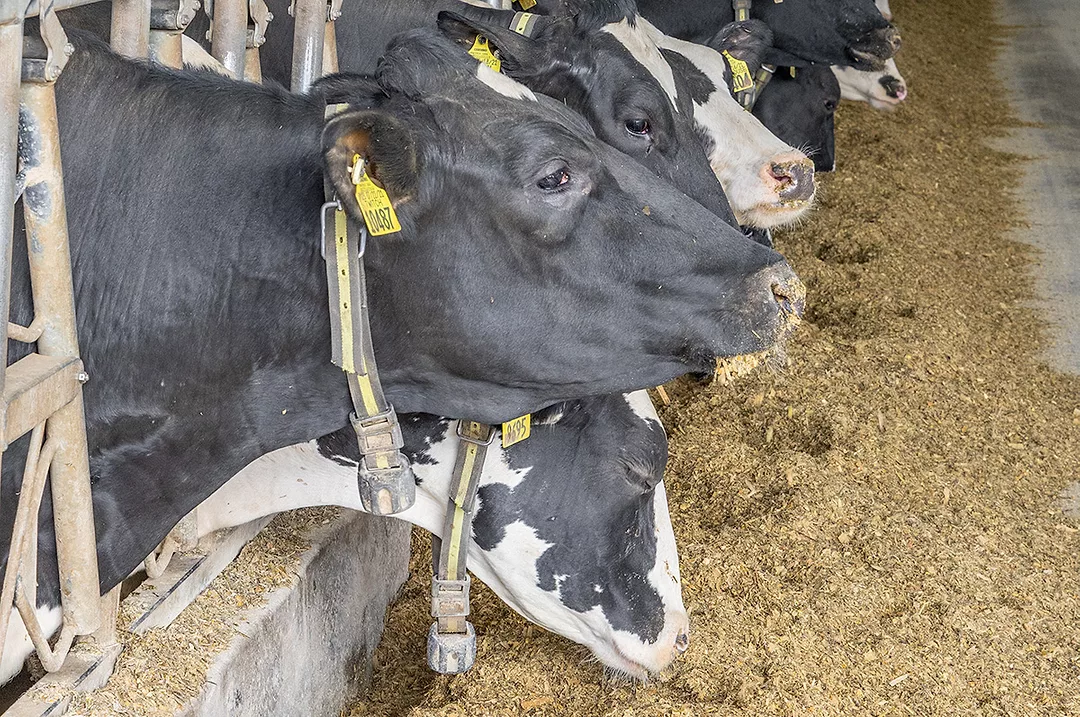
Your cows may not have a crystal ball, but monitoring technology used during the dry period may provide valuable information that can be used to predict the risk of potential health disorders that could affect lactation performance post-calving. Considering dry cows often are “out of sight and out of mind,” monitoring technology can fill the gap by keeping tabs on them 24/7.

Research studies show monitoring technology can help producers identify and intervene in potential fresh cow issues, such as lameness, ketosis and more.
Identify cows at risk in early lactation
Monitoring technology measures and tracks cow behaviors that are indicators of potential health issues. One of these behaviors is rumination time. If a cow is not feeling well, she will reduce her feed intake or stop eating entirely, resulting in decreased rumination.
The first few days after dry-off can be a stressful time for cows and it is common to see an abrupt decrease in rumination time, which may remain lower for over a week. This decline can be caused by factors such as increased udder pressure from milk accumulation, dietary changes, hierarchy restructuring and other stressors. Rumination time should bounce back following the involution phase of the mammary gland and the cow’s acclimation to her new environment.
Persistent changes in rumination time can help identify cows at risk of developing infectious and metabolic diseases in early lactation. While monitoring rumination time around calving is an effective way to identify cows with potential metabolic and infectious diseases, it doesn’t allow enough time for preventive measures to be taken.
Research indicates dry cow behavior monitoring can predict higher disease risk in early lactation, while giving you time to intervene.
Early detection of lameness
A study from Michigan State University (MSU) was the first to explore the use of rumination time to detect periparturient disease as early as dry-off. The study compared rumination time in the weeks surrounding dry-off between cows with and without health disorders in early lactation.
Over the course of the study, cows affected by lameness ruminated 15 plus or minus 6.08 minutes per day less than unaffected cows.
Reduced rumination time in cows that developed lameness in the first 60 days in milk was most noticeable during the first three days after dry-off. Lame cows ruminated an average of 24.57 minutes less in the first three days post-dry-off than those unaffected with lameness post-calving.
Even though lameness does not typically present clinical signs until early lactation – or at least is not identified until cows return to the parlor – reduced rumination time can be caused by subclinical or mild lesions that don’t result in abnormal gait until after calving. This suggests monitoring rumination time during the early dry period could help identify and examine cows at risk for lameness before the onset of clinical signs.
Monitoring for signs of ketosis
Hyperketonemia (HYK), also known as subclinical or clinical ketosis, occurs when a cow has elevated ketone bodies in the blood due to excessive and fast fat mobilization in the early postpartum period, when cows experience negative energy balance. In cases of subclinical ketosis, clinical signs are not visibly apparent. Subclinical ketosis is associated with an increased risk of many other transition cow diseases, such as clinical ketosis, metritis, retained placenta and left displaced abomasum.
In the MSU study, rumination levels in cows that developed HYK post-calving were consistently reduced throughout the assessment period, but were most noticeable five to six days prior to dry-off. Throughout the study, HYK cows ruminated 9.83 plus or minus 6.4 minutes per day less than unaffected cows. At days -6 and -5, HYK cows ruminated 24 and 26.3 minutes less than unaffected cows, respectively.
Another study at University of Guelph linked decreased rumination time during transition period to higher likelihood of HYK in multiparous cows. Rumination time was recorded daily via automated monitoring from 14 days prior to calving to 24 days after calving. There was no difference in rumination time among first-lactation cows, although the sample size for this group was smaller.
Multiparous cows considered healthy spent an average of 459 (plus or minus 11.3) minutes per day ruminating during this period. However, multiparous cows with HYK ruminated 25 (plus or minus 12.8) fewer minutes per day. A higher impact on rumination time was observed in cows that developed HYK and one or more additional health problems which ruminated 44 (plus or minus 15.6) minutes per day less than healthy cows.
The largest differences in rumination time between healthy multiparous cows and HYK cows were seen one week prior to calving and one to two weeks post-calving. This indicates the importance of paying close attention to rumination time across the entire transition period to identify HYK and other potential health disorders.
Additional research suggests rumination time in the week before calving can be a reasonable predictor of postpartum health in second-lactation-or- greater cows. In another University of Guelph study, reduced rumination time during this period was negatively associated with the overall metabolism of transition cows, incidence of clinical disease in early lactation and the subsequent milk production, reproduction and culling in cows experiencing one or more lactations.
Detecting signs of heat stress
Managing heat stress during the dry period is also critical in maintaining cow health and overall productivity. Hot weather can be very damaging to both the cow and the unborn calf. It can decrease milk production and, specifically during the transition period, reduce colostrum production.
Cows that experience heat stress during the dry period are also at a higher risk of developing metabolic diseases. Reduced feed intake and therefore lower nutrient absorption can affect the cow’s body condition and hinder late-gestation calf development.
Monitoring technology can identify cows’ behaviors associated with heat stress, such as panting or breathing heavily. Some systems can help you detect heat stress at the individual, pen and farm levels, allowing for targeted interventions in housing facilities and holding areas, such as installation of sprinklers, misters, fans and shade structures to improve heat abatement.
Implementing monitoring technology
Research consistently shows that a smooth and healthy dry period results in healthier, more productive cows and calves. By utilizing monitoring technology during the dry period, producers can intervene early to address health issues, setting the stage for improved lactation performance and long-term well-being for both the cow and calf.
Valuable information can be gained through systems capable of monitoring cow behaviors around dry-off and throughout the dry and transition periods. As research in this area continues to evolve, we will gain deeper understanding of how to use this data to make more assertive and effective management decisions at the cow and farm level.
It is important to remember monitoring technology is not a diagnostic tool but rather a data-gathering tool to help make better management decisions. Train your managers and caretakers on how to use rumination reports and other information to identify cows that need attention. Make sure they understand how to make in-depth assessments at the cow level and work with your veterinarian to develop intervention protocols.
Finally, consult with your nutritionist if you have questions or concerns about nutrient requirements and feed intake during the dry and transition periods.
References omitted but are available upon request by sending an email to the editor.