Manure is a valuable fertilizer for corn silage fields, supplying nitrogen (N), phosphorus (P) and potassium (K) crucial for plant growth while improving soil structure and water retention. But livestock producers who regularly apply manure to their fields may inadvertently create an imbalance between P and zinc (Zn).

Manure naturally increases soil P levels, so most corn plants don’t require much additional P. But when P levels get too high, it can actually tie up Zn in the soil, making it less available to crops, even if a soil test says the soil has adequate amounts.
Zinc is essential for various biological processes in corn, including growth, metabolism and photosynthesis. It also aids plants in utilizing other nutrients such as N, P and K more efficiently. Zinc deficiency can often happen when soil pH is higher than 7. When P levels exceed 40 to 50 parts per million, there is a good probability that Zn availability will be limited.
When nutrients are out of balance, yield drops. Silage from Zn-deficient fields will also have lower energy density, decreased protein content and lower fiber digestibility – all of which make it lower feed quality.
Damaging deficiencies
Zinc isn’t the only deficiency growers should be aware of. High manganese (Mn) relative to iron (Fe) in the soil can also cause problems. Even if a soil test shows plenty of Fe, too much Mn can block its uptake.
High calcium (Ca) can also throw several nutrients out of balance, including P and K. No matter how much N-P-K a grower applies, yield and forage quality can be limited when micronutrients are deficient. But growers can prevent these deficiencies and increase yield and quality by managing high-P soils through a complete crop nutrition plan.
Testing the benefits of crop nutrition for corn silage
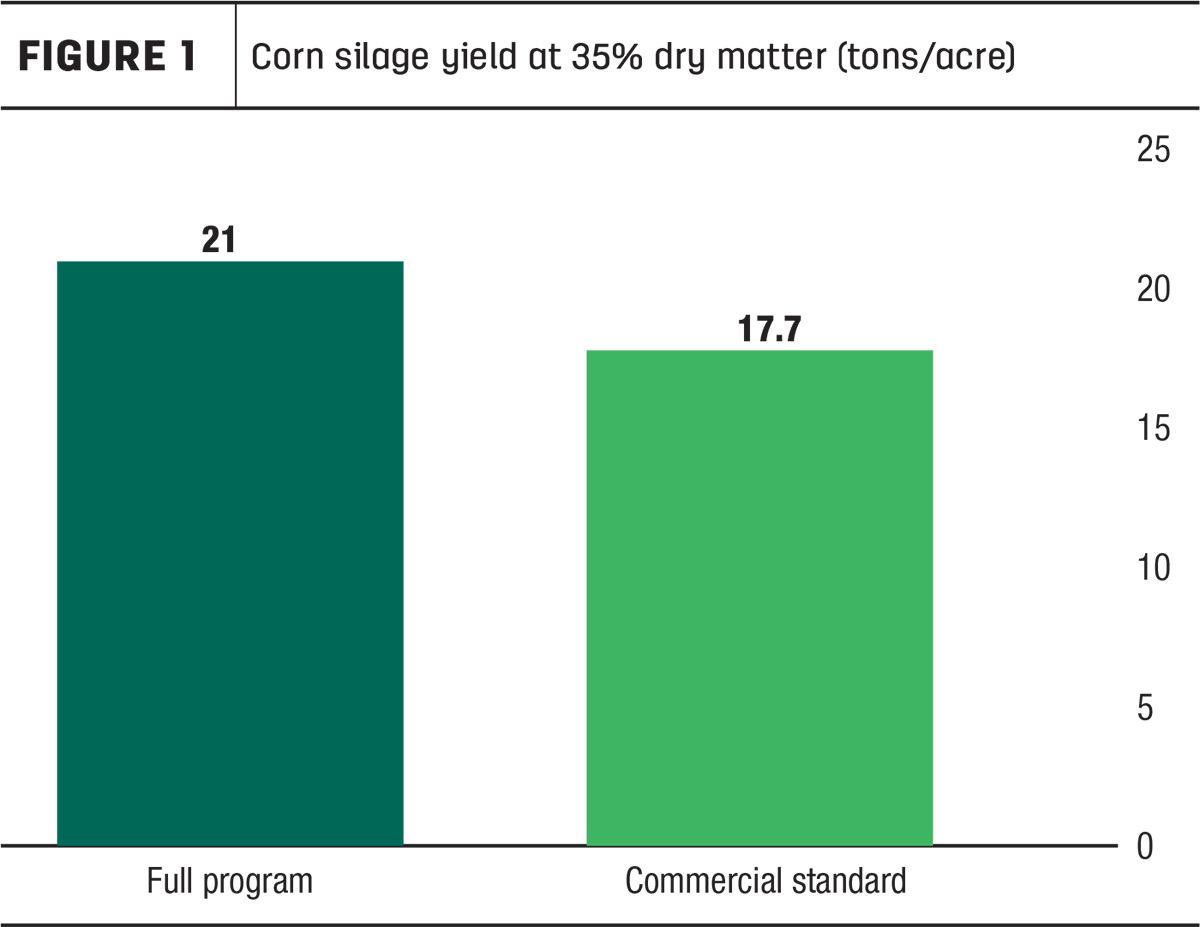
AgroLiquid conducted a three-year field trial in collaboration with DairyOne, a dairy consulting group associated with Dairy Farmers of America. The study compared the grower standard fertility program for corn silage fields in central New York with balanced nutrition strategies that addressed the crop’s primary, secondary and micronutrient needs.
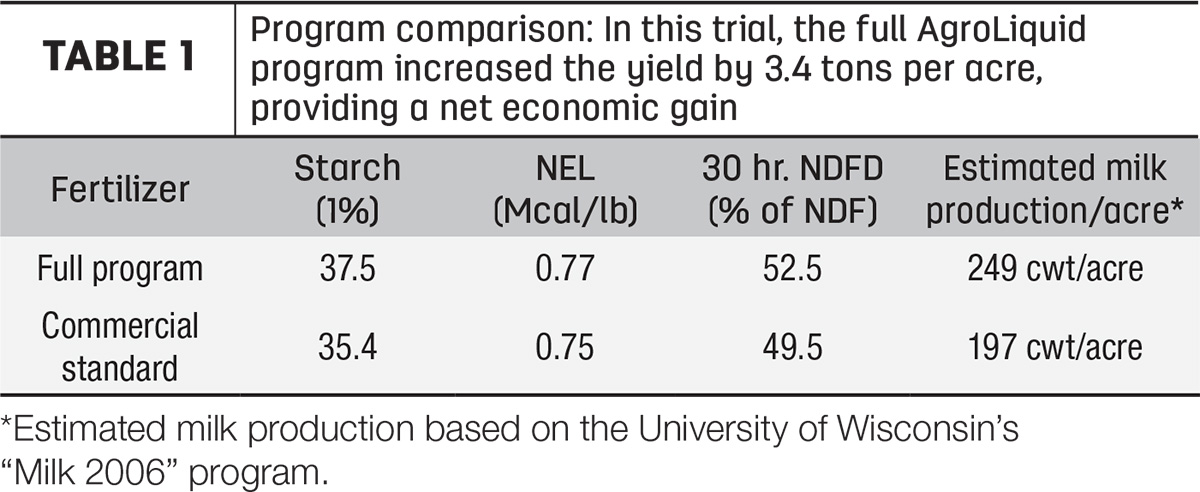
Beginning soil tests for each treatment showed adequate levels of P, modest levels of K and low sulfur (S) and micronutrient levels. Nutrition programs were developed to address the crop’s nutrient needs while using the crop nutrition already present in the soil, then compared with the grower standard: 5 gallons per acre of 6-24-6 plus 15 gallons per acre 32-0-0 at planting and 40 gallons per acre of N and S at sidedress. At the end of the trial, a full crop nutrition program (full AgroLiquid program) that addressed primary, secondary and micronutrient needs provided the best overall corn silage yield, quality and estimated milk production, demonstrating the value of proper crop nutrition in corn silage.
Samples from each plot were vacuum sealed and analyzed for feed value after a month of fermentation.
Three key benefits for producers
Analysis of forage yield and quality showed three key benefits of providing a balanced program of primary, secondary and micronutrients to corn silage crops:
- More feed from less land: The full crop nutrition program produced more corn silage than the standard program, meaning farmers needed 54 fewer acres to fill a standard storage bunker. This creates real value for farmers, who can feed their herd with less land while using those extra acres to grow crops they can sell or plant different feeds for their animals.
- Better-quality feed equals more milk: The silage from the full crop nutrition program helped cows produce an extra 8,400 pounds of milk per acre (as estimated by the Wisconsin Milk 2006 modeling tool). While the full program cost is about $80 more per acre than the standard approach, the extra milk was worth nearly $1,600 more. That’s more than $20 back for every $1 spent compared to the standard method.
- Lower daily feeding costs: The full crop nutrition program created more nutritious silage with extra energy that helped produce those additional 8,400 pounds of milk per acre. This better feed meant farmers could cut back on corn supplements by about 8 pounds per cow each day. This represents significant feed cost savings while maintaining milk production.
Finding the right balance
Regular soil testing helps identify nutrient deficiencies and imbalances before they begin to impact crop health. I often hear from growers who say, “I’ve got something going on here and I’m not able to get my yield where I want to.” When we look at their soil test report, there’s oftentimes a pretty obvious starting point for rebalancing their soil.
Regardless of what crop nutrition program a grower uses, when soil nutrient levels such as K, magnesium (Mg), Ca, sodium (Na) and hydrogen (H) are out of balance, their program will be less effective than if nutrients are in balance. Soil pH may be out of the desired range of 6.5 to 6.8. Soil structure may also be compromised, resulting in poor drainage and plant root development.
Corn silage requires more N, K and micronutrients than corn grown for grain. Removal of the entire corn plant from the field at harvest also removes more nutrients from the soil than would be removed with grain corn harvest. Monitoring soil test nutrient levels becomes even more important when growing corn for silage over several years in the same field.
Creating a balanced soil will require the appropriate use of dry soil amendments such as lime and potash and may take several years to complete. Properly balanced soil will allow for better plant growth, nutrient utilization and soil resiliency.
For more information, visit the AgroLiquid website.