For optimum health and production, forages need adequate soil fertility. Some soils are deficient in certain important minerals and may need those added for better forage production. Fertility requirements also differ for alfalfa, grass mixes and annual forages.

Gordon Jones, Oregon State University Extension agronomist, works with growers on many agronomic topics – from irrigation to variety selection, soil management, harvest and production systems.
“When we think about forage crop systems, or any crop for that matter, we rely on soil testing to understand the pH, phosphorus and potassium, and what will be supplied by the soil in that field," says Jones. "We find situations where soil fertility is adequate, with enough phosphorus and potassium to grow a good crop that season."
From there, he notes that grass hay often has a different need. It may only require nitrogen (N), and soil tests help determine whether phosphorus (P) or potassium (K) will be needed, or whether adjusting soil pH through liming could improve yield.
Lime, typically calcium (Ca) or magnesium (Mg) carbonate, can be helpful in acidic soils – neutralizing acids and improving nutrient absorption, especially for grass.
“With grass crops, it’s a bit complex; soil testing is somewhat less reliable for nitrogen as a predictor for expected yield response," explains Jones. "We can apply nitrogen with split applications through the season, according to the capacity for production."
Alfalfa, however, follows a different pattern. Because legumes fix their own nitrogen, producers don’t worry about N.
Jones says, "It’s rare that we’d recommend nitrogen fertilizer, but the producer might need to think about phosphorus, potassium, sulfur (S) and micronutrients like boron, and evaluate these in the soil or the crop when determining fertilization needs.”
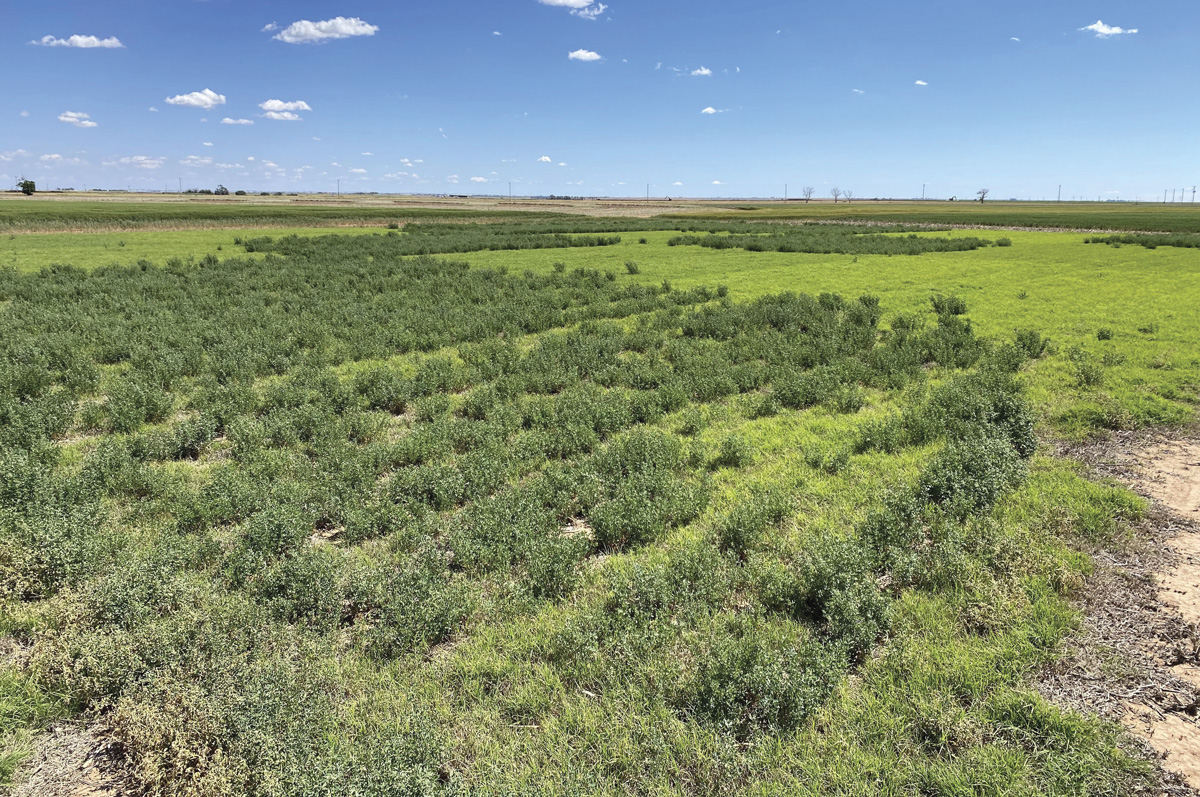
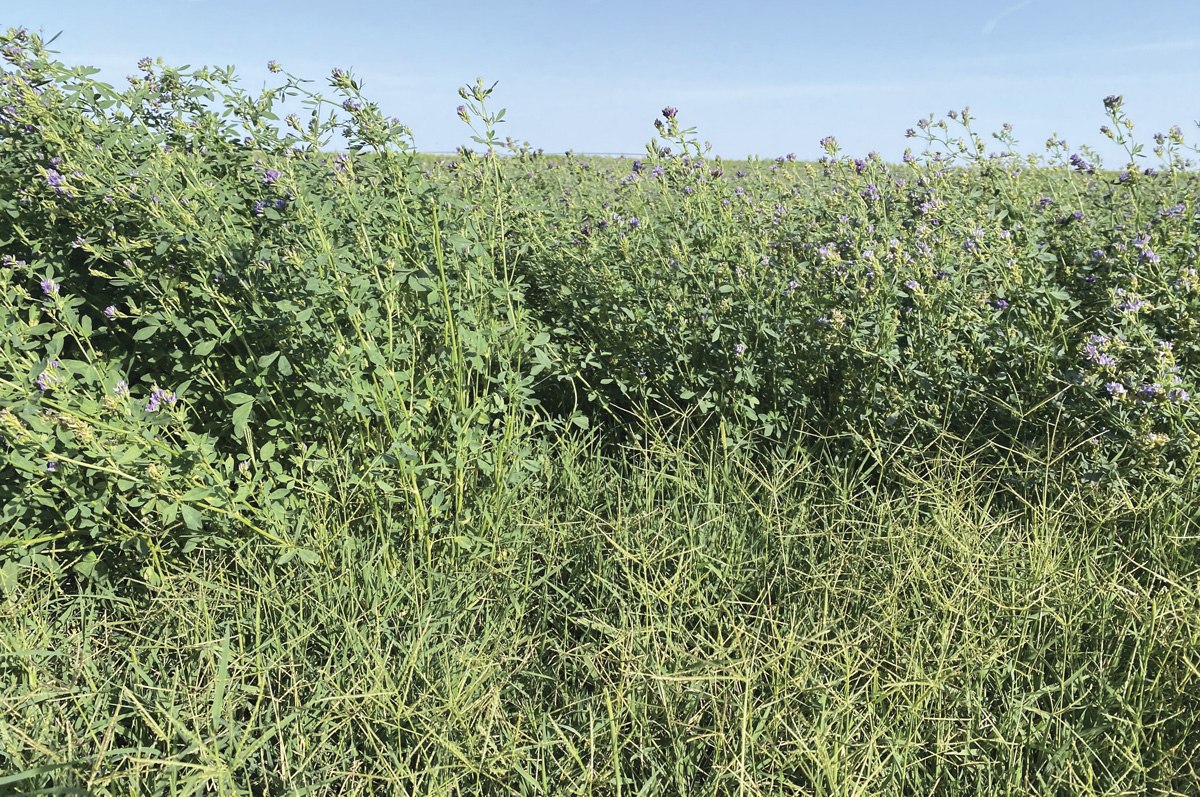
Grass-legume research plots illustrate how species combinations influence forage quality, stand persistence and seasonal productivity. Image by Pramod Acharya.
If it’s a monoculture like orchardgrass, timothy or alfalfa, fertilization is relatively easy to figure out and determine how much to apply.
“Many producers are growing mixed grass and legumes together, however, and those species respond somewhat differently and have different root structures and different demands for nutrients,” he says.
Grass and alfalfa are often planted together, and that’s where fertility decisions become more nuanced. Alfalfa doesn’t benefit from added N, but the grass component can. In a desired 50-50 grass-alfalfa stand, the N fixed by the alfalfa is typically enough to meet the crop’s overall N needs. Adding N in that situation shifts the balance toward grass, which can outcompete and eventually crowd out the legume. Some growers intentionally use this strategy when the legume percentage is too high. If the goal is to encourage more legume instead, increasing P, K and S – without applying N – helps favor alfalfa in the mix.
Potassium becomes especially important in these mixed stands.
Jones notes that in mixed stands, “Potassium is of particular interest.” He explains that grasses are more competitive for potassium because of their dense fibrous root systems, while alfalfa’s deep taproot is less effective in the upper soil profile where most K uptake occurs. As a result, a standard K rate often favors the grass and can disadvantage the alfalfa. To maintain a stable grass-legume balance, he says producers need to ensure adequate K; otherwise, the stand can shift toward one species or the other. Adjusting K levels is one practical way to influence that proportion.
Building on that broader theme of managing stand balance and nutrient dynamics, Daniel Putnam, emeritus professor and extension forage agronomist at the University of California – Davis, emphasizes the role of rotation in long‑term forage system health.
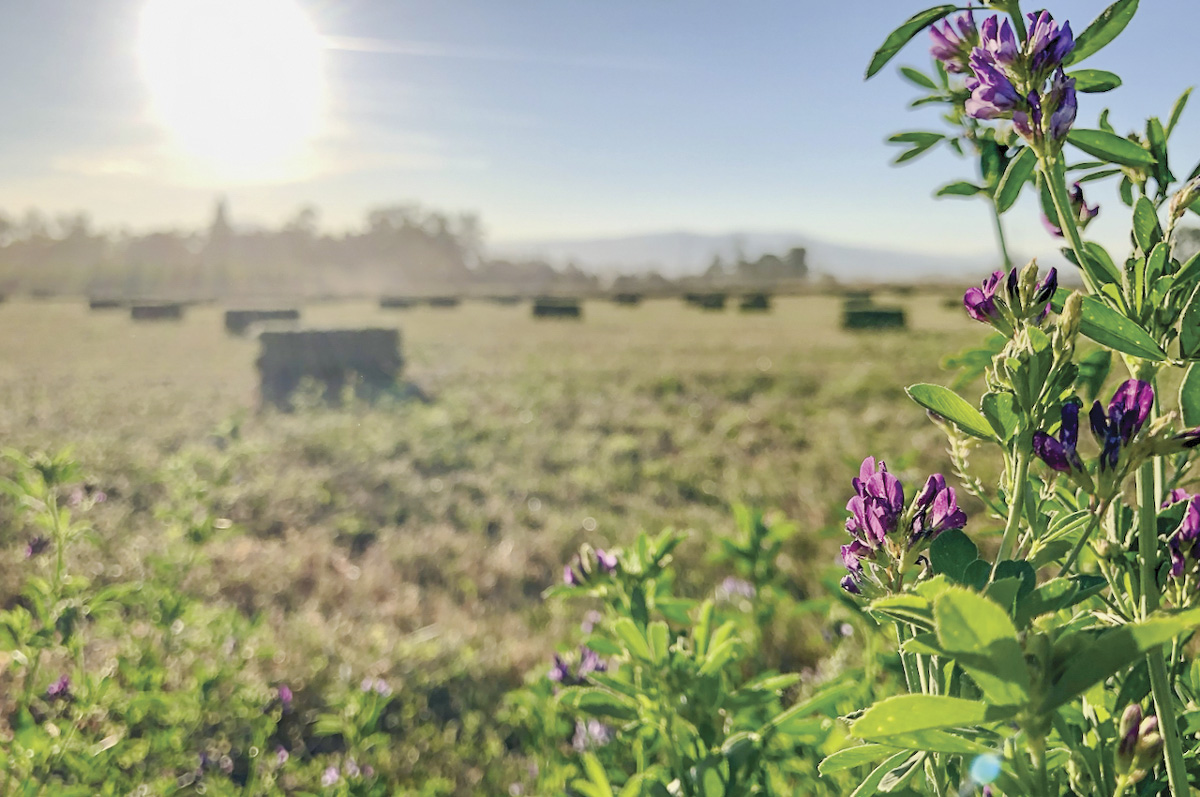
Recently baled alfalfa hay is spread throughout a field in the Rogue Valley of southern Oregon. Image by Gordon Jones.
“I'm a fan of crop rotations, particularly if you are growing multiple forages, like corn silage and alfalfa hay or grassy forages or have some clovers in the mix," says Putnam. "We grow a lot of small-grain forage in the Central Valley of California, and some farms are close enough to dairies to apply plenty of manure from those dairies. For alfalfa growers who don’t have access to manures, they could consider the amount of residual nitrogen in crop rotation with alfalfa.”
He notes that growers should design their forage rotations to take advantage of the free N fixation from the legume.
“We’ve done a lot of work rotating wheat following alfalfa. There is typically a lot of residual nitrogen in the soil from that alfalfa," he says. "A grass crop or any nitrogen‑demanding crop that follows alfalfa will have much of its needs met, and they can save on their initial application of nitrogen fertilizer.”
He adds that for both corn and small grains, it’s important to monitor the crop and soil rather than applying all the fertilizer upfront. Producers can evaluate whether additional N is actually needed once the crop begins growing, and in many cases it’s more effective to apply a greater share of the fertilizer later – especially when the crop follows alfalfa.
“There are some quick soil tests that can tell you whether there is residual nitrogen before you apply more, since nitrogen is our most expensive fertilizer for grass‑type crops," says Putnam, and adds that they've seen tremendous differences between small grains that follow alfalfa and small grains that follow other grain crops or other non‑N‑fixing crops.
"This is a year to take advantage of nitrogen‑fixing with alfalfa because the price of fertilizer is so high.”
He points to a multistate study showing that in more than 90% of trials, corn following alfalfa required little or no N fertilizer to maximize yield – reinforcing the value of crop rotation when planning fertilization.
Some growers, however, respond to high fertilizer prices by applying no N at all to grass crops, which Putnam cautions against.
“They’ll still see a solid yield boost when soil nitrogen is depleted. Even if prices are high, using zero is a mistake,” he says. “Nitrogen‑starved grasses produce very little, and if the crop is water‑starved, nitrogen won’t help because moisture – not fertility – is the limiting factor.”
A replicated research plot allows agronomists to evaluate establishment, growth patterns and yield potential under controlled conditions. Image by Pramod Acharya.
Research trials
Pramod Acharya, an assistant professor and extension forage specialist with the University of Idaho, and colleagues conducted research in New Mexico comparing productivity and feed value of bermudagrass and bermudagrass-alfalfa mixtures. Nitrogen fertilizer was applied at 15 pounds per acre to the grass‑only plots after each cutting.
“In that study, we found that overall production was more or less similar between the grass‑only and the mixtures. In some cuts, the alfalfa-bermudagrass mixtures produced better-quality forage – higher crude protein and lower fiber fractions – than the grasses alone,” says Acharya.
Legume species have the potential to add N through biological fixation, and interseeding legumes into grass pastures often supports increased yield and, in some cases, improved forage quality. Acharya notes that when legumes make up more than 40% of the stand, N fertilizer is generally unnecessary. However, legumes require more P and K, and grasses – with their fibrous root systems – are typically more efficient at extracting soil P. As a result, higher proportions of legumes may require additional P and K inputs.
“When establishing legume‑containing mixtures, maintaining approximately 10 to 20 pounds of available soil nitrogen per acre is appropriate. High rates of nitrogen may harm nodulation and suppress nitrogen fixation. Another consideration in nitrogen nutrition for grass-legume mixtures is organic matter content. Soils with greater than 2 percent organic matter may supplement much of the nitrogen requirement through mineralization.”
This can provide significant value in cropping systems.
The proportion of legumes in a mixed stand usually declines over time, most often due to nutrient deficiencies – typically inadequate K and P.
If N is applied to these mixes, the grass becomes dominant.
“In cases where more phosphorus and potassium fertilizers are applied, legumes will become dominant," adds Acharya. "Maintaining a proportionate stand density [50-50 grass and legume] is challenging unless you have a specific nutrient management plan for phosphorus and potassium to help maintain the stand."