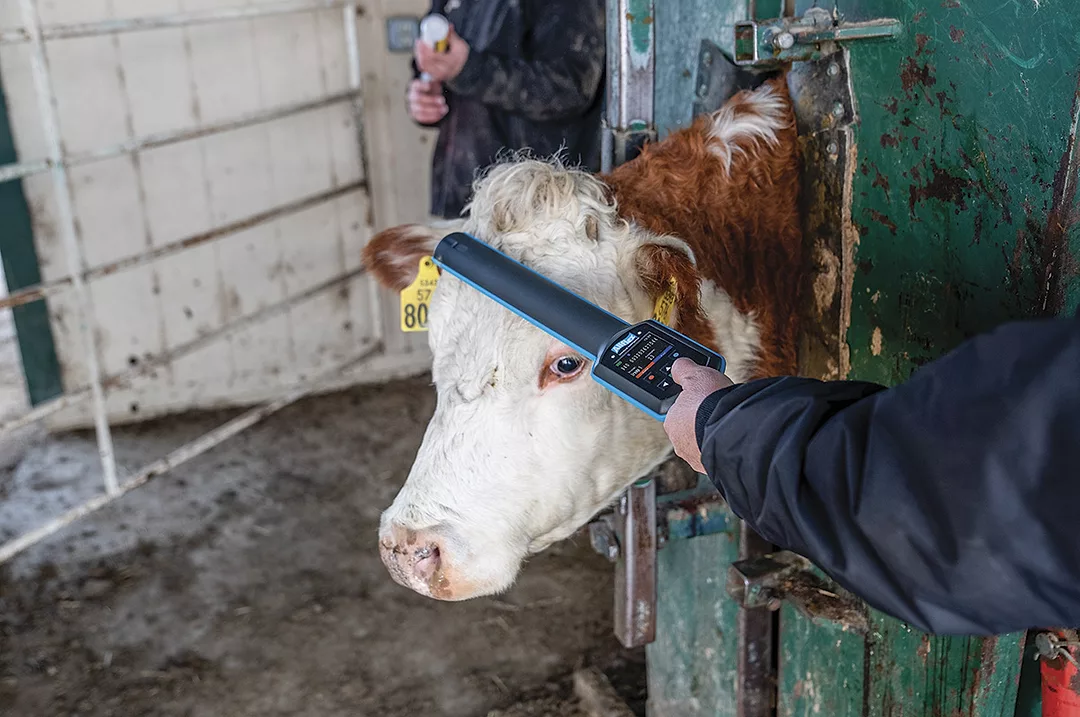
If you have ever tried to recall where you wrote down a cow’s tag number or decipher pen marks on the back of your hand after a long day of processing cattle, you know the frustrations of recordkeeping. Recordkeeping isn’t always the easiest task, but it plays an important role in informing management decisions. Whether tracking vaccinations, monitoring weight gain or managing breeding programs, the precision and efficiency of your recordkeeping system can make a significant difference in your herd’s productivity and profitability.

Electronic identification (e-ID) tags and readers offer a straightforward method for streamlined recordkeeping and improved herd management. They improve the speed and accuracy of record collection, capturing information in real time and removing errors that can come from manual recordkeeping.
What is an e-ID?
Each e-ID eartag features a unique 15-digit number and is designed to last the lifetime of the animal, similar to a Social Security number. This unique identifier can be entered into management software and linked to records such as vaccinations, deworming and performance records, such as weight gain and breeding dates.
You may want to consider using an official e-ID tag depending on your marketing goals and the animal's age, sex and classification. These tags indicate an animal’s country of origin in the first three digits of the number. The U.S. country code is 840, which is why you may commonly see them referred to as 840 tags.
The USDA 840 e-ID tags replaced the orange metal clip tags used to indicate brucellosis vaccination (“bangs”) and silver "brite" metal clips used to identify breeding animals moving between states. A premises identification number (PIN) is required to order these tags. This can be obtained by contacting your state identification coordinators.
Alternatively, manufacturer-coded tags do not require a PIN and are widely used to aid producers in making informed herd management decisions.
Most e-ID tags use passive RFID technology and do not require a battery. When a tag reader comes within close proximity of the tag, an internal microchip transmits the 15-digit number to the reader via the antenna found inside the tag.
Five ways to improve herd management with e-IDs
E-IDs work with scale systems and other software programs to help you manage cattle more efficiently and eliminate the risk of misreading tags or recording errors. You can then use your preferred management software to link an animal’s unique e-ID to records. Here are five key ways leveraging e-ID eartags can improve herd management and profitability:
1. Unlock market channel access
Many value-added programs can be validated through the records linked to the animal’s unique identifier. Cow-calf producers can associate their calves’ identification with proper vaccination, deworming and other management practices, which represent a low risk to buyers and make calves more appealing at auction.
2. Track individual animal and herd performance
E-IDs allow you to track key metrics such as weight gain, feeding efficiency and growth rates with ease. This information can help you identify underperforming animals, allowing for early detection of issues or illnesses. Likewise, it makes it easy to spot high-performing animals and track health and performance trends among your herd.
3. Keep or cull with confidence
Combining pedigrees and genomic testing with performance records in one place helps you select better replacements for the future of your herd. You can also determine with certainty which animals to keep or cull based on their history and performance.
4. Advance breeding strategies
Breeding success relies on accurate timing and recordkeeping. E-IDs allow you to track breeding dates and calving intervals, ensuring optimal breeding strategies that maximize herd productivity.
5. Coordinate for better herd health
The use of e-IDs also allows you to easily see what treatment protocols have been used in the past, so you can work with your veterinarian to make more informed decisions about treatment options. State and federal veterinarians can utilize e-IDs for disease surveillance because of the unique identifier and better protect cattle in their state.
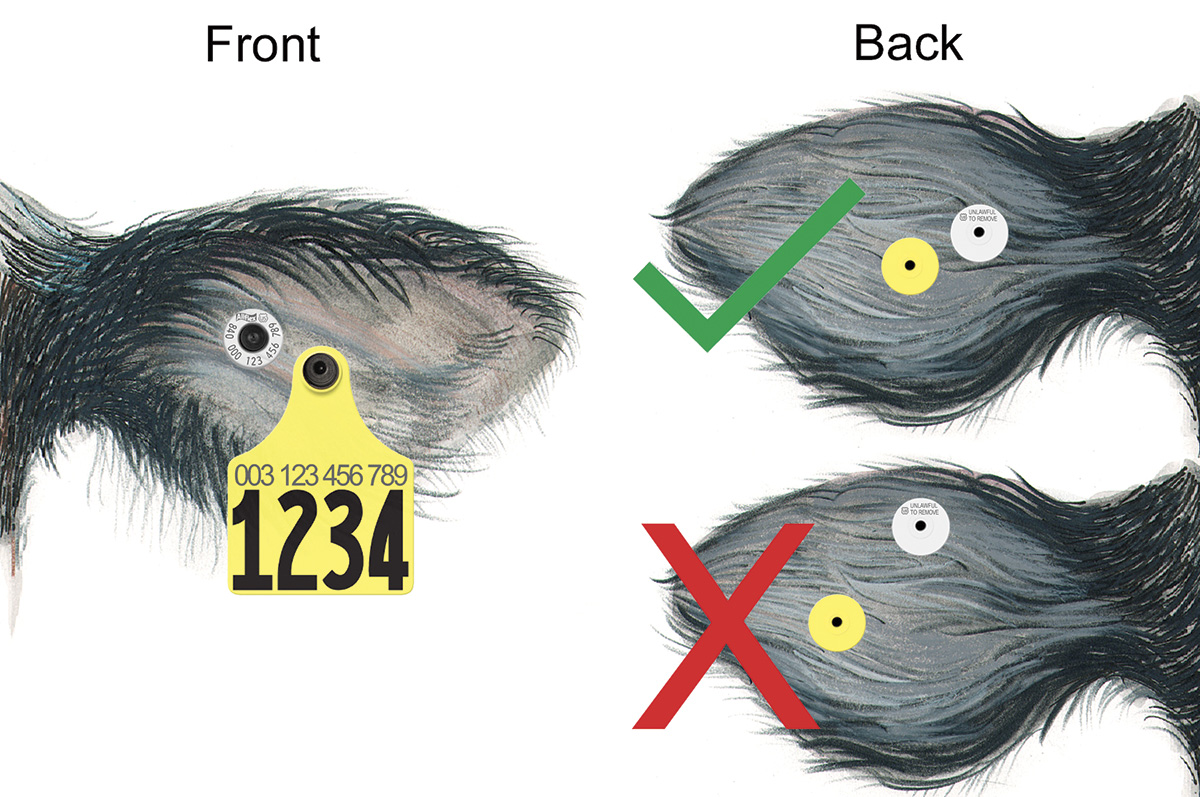
Proper tag application is crucial for tag retention and performance. Image courtesy of Merck Animal Health.
How to get started with e-IDs
There are several options to choose from when it comes to e-ID eartags. You can evaluate e-ID tags on quality, durability and convenience. Choose an e-ID eartag that features a top-of-the-line antenna made from a material such as copper wire to enhance transmission performance.
Reliable tags are built to withstand harsh environments and last for the lifetime of the animal, ensuring trouble-free operation. Pick a tag that features a single-piece over-mold construction to prevent moisture from seeping in and causing the tag to lose function.
You can also purchase e-ID tags as part of a set that includes a visual tag, an electronic ID tag and/or a tissue sampling unit (TSU). In these matched sets, the visual tag and electronic tag share a unique ID that can also appear on the TSU.
Proper tag application is crucial for tag retention and performance. Use the right applicator from the same company as the tags. If the packaging on the applicator is labeled “universal,” it indicates the applicator is compatible with all species tags within the same brand.
Place e-ID tags vertically in the middle of the ear, between the second and third rib, approximately two-thirds of the distance from the outside edge of the ear and one-third of the distance from the head of the animal. If also using a visual tag, place it in the middle third of the ear, with the e-ID tag about an inch away from the panel tag in the inner third of the ear.
Selecting a reader
RFID tag readers allow you to manage record collection with speed, convenience and accuracy, but are not required to use RFID tags. Some companies offer a tag lookup tool that allows you to enter your tag order information and obtain a list of your tags in sequential order.
When evaluating RFID tag readers, consider the type of records you want to collect, how you plan to use that information in your management decisions and the accessibility of your facilities. A variety of readers are available on the market, ranging from entry-level models that read the tag and securely transmit the information to the office, to advanced options that can scan barcodes and automatically link records to the 15-digit unique identifier.
Easy, accurate and efficient recordkeeping is critical to managing and advancing your herd. E-ID eartags and readers, along with your preferred management software, can help – allowing for informed, real-time decision-making and increased efficiency. When choosing e-ID tags and readers, consider discussing your options with your veterinarian or a sales representative familiar with your operation and who can provide personalized recommendations based on your needs and goals.