Housing and management of dry cows can impact their future health and milk production. Sometimes this aspect of the dairy herd can get overlooked, as dry cows don’t directly produce revenue and there are always competing priorities to manage on the farm.

The Ontario Ministry of Agriculture, Food and Agribusiness (OMAFRA) ran a project during the summer of 2024 that evaluated dry cow housing and management at 10 well-managed dairy farms in Ontario. Our goal was to measure aspects of dry cow housing and share that information with other producers who might be considering changes to their own facilities. We compared what we found with recommended practices, including the Code of Practice. Environmental measurements such as windspeed, temperature and humidity readings, and carbon dioxide (CO2) concentrations were taken to determine a baseline from these facilities in Ontario. Another objective of this study was to develop methods that would be practical for producers to use on-farm to assess their dry cow housing system.
Ten farms were recruited for this project, each having different ways to manage and house dry cows. Each farm was visited weekly from May 2024 to August 2024, and the number of visits at each farm ranged from eight to 11, based on the farm’s start date.
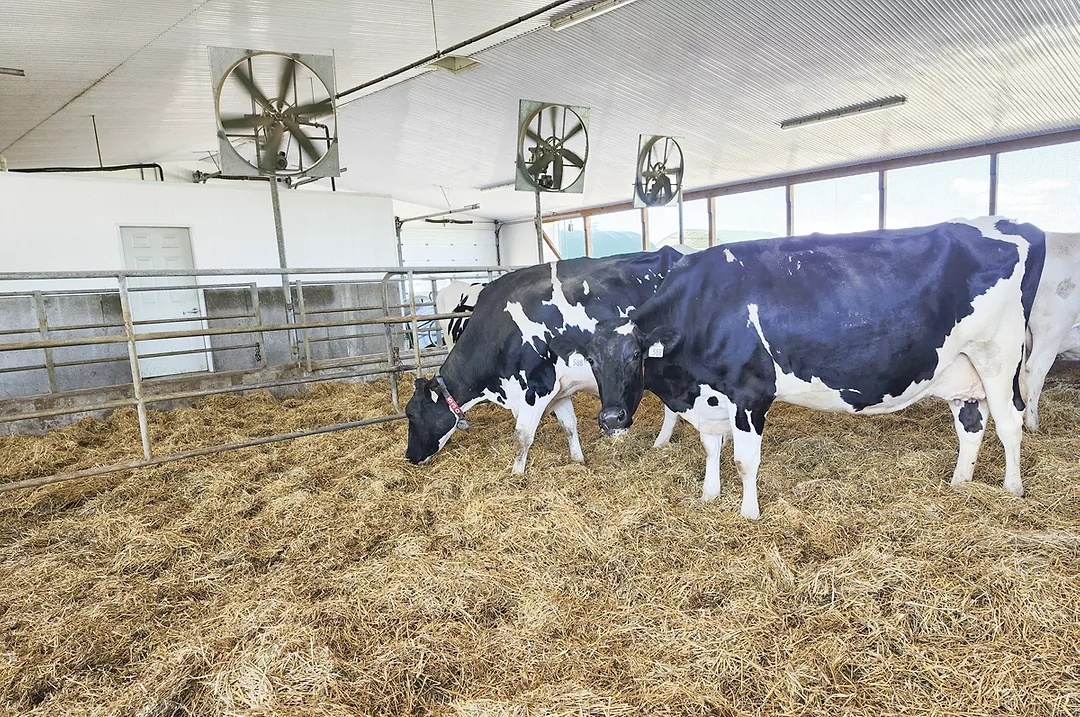
Nine out of the 10 herds separated their dry cows into far-off and close-up pens, with the 10th managing all dry cows together on a single dedicated dry cow compost-bedded pack. For far-off, eight out of nine groups were housed in freestalls, with the other one on a bedded pack. Close-up groups were all housed on some type of bedded pack.
Space allowance
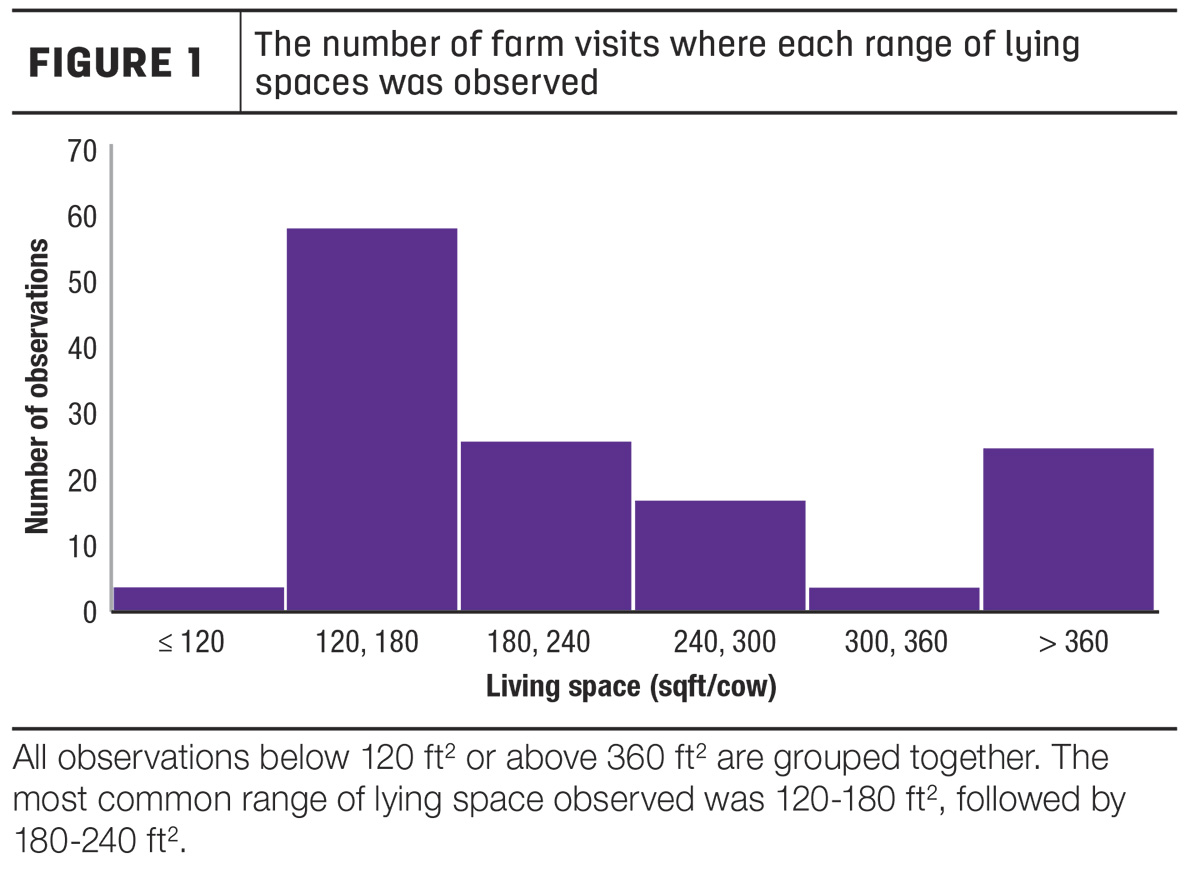
Providing ample space for dry cows is a key to good management, as it can promote lying time and potentially reduce somatic cell count in the next lactation. For bedded packs, average lying space was 244 plus or minus 135 square feet per cow (mean plus or minus standard deviation). The Code of Practice recommends a lying space of 120 to 160 square feet per cow. Our conversations with producers during this project focused on their priorities for dry cow management, and many believed that more than 120 square feet per cow was optimal, especially in the close-up period. In fact, there were only four visits (3% of all visits) during the project when lying space was less than 120 square feet per cow on these farms (see Figure 1).
The average stall stocking density on the project was 0.56 plus or minus 0.23 cows per stall. These producers intentionally provided more space than the recommendations, and they would avoid compromising on this due to the benefits they were experiencing.
If you are thinking about building a new facility for your dry cows, build larger than you think you will need. For example, for a redesigned facility, determine the pen space using your data from the busiest calving month rather than the average number of calvings per month to ensure you have ample space throughout the year. Then, remember to include a further allowance for future herd growth.
Heat stress
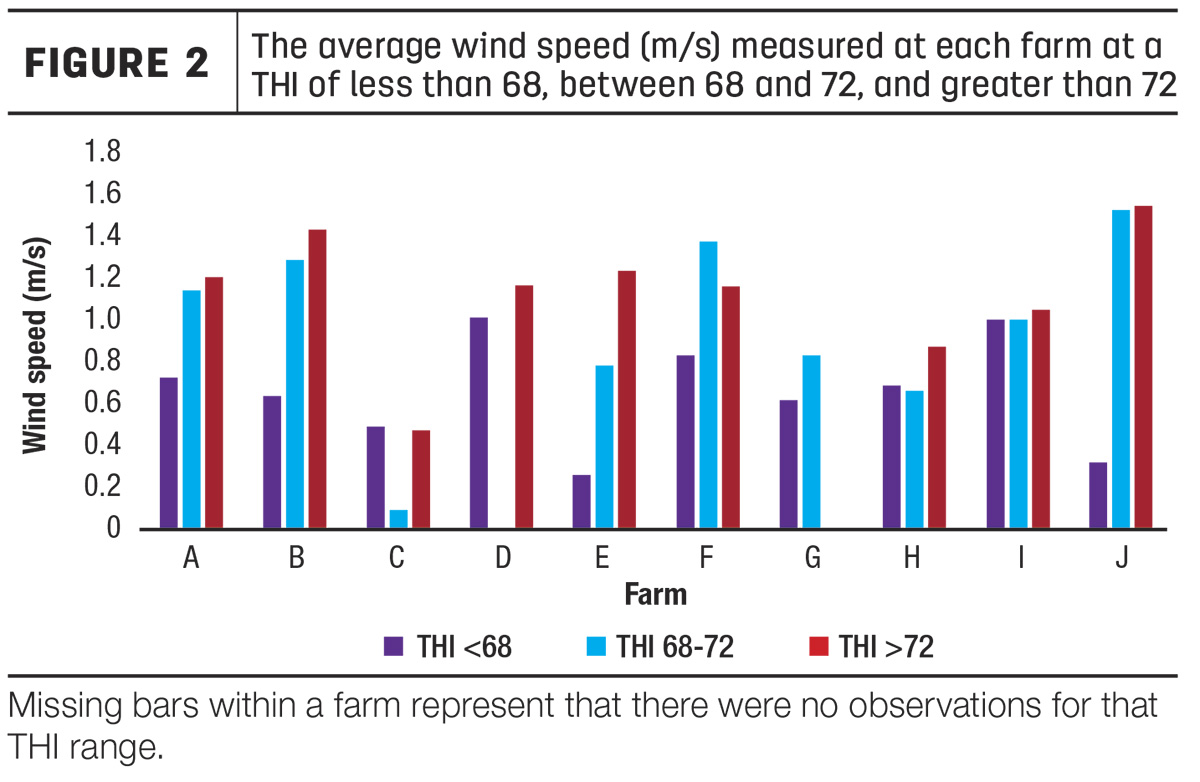
We installed sensors at each barn that took temperature and humidity readings at regular intervals, which were used to calculate the temperature-humidity index (THI). Temperature-humidity index is a standardized way to determine heat stress conditions at various temperature and humidity levels. A THI of less than 68 has been associated with little to no heat stress, a THI between 68 and 72 represents mild heat stress, and a THI greater than 72 represents conditions of heat stress. The THI for each hour was recorded from temperature and humidity data collected throughout the project at each farm and was compared to the THI calculated from data recorded at the nearest weather station. Within-barn THI was significantly related to and greater than the THI calculated from the nearby weather stations (see Figure 2).
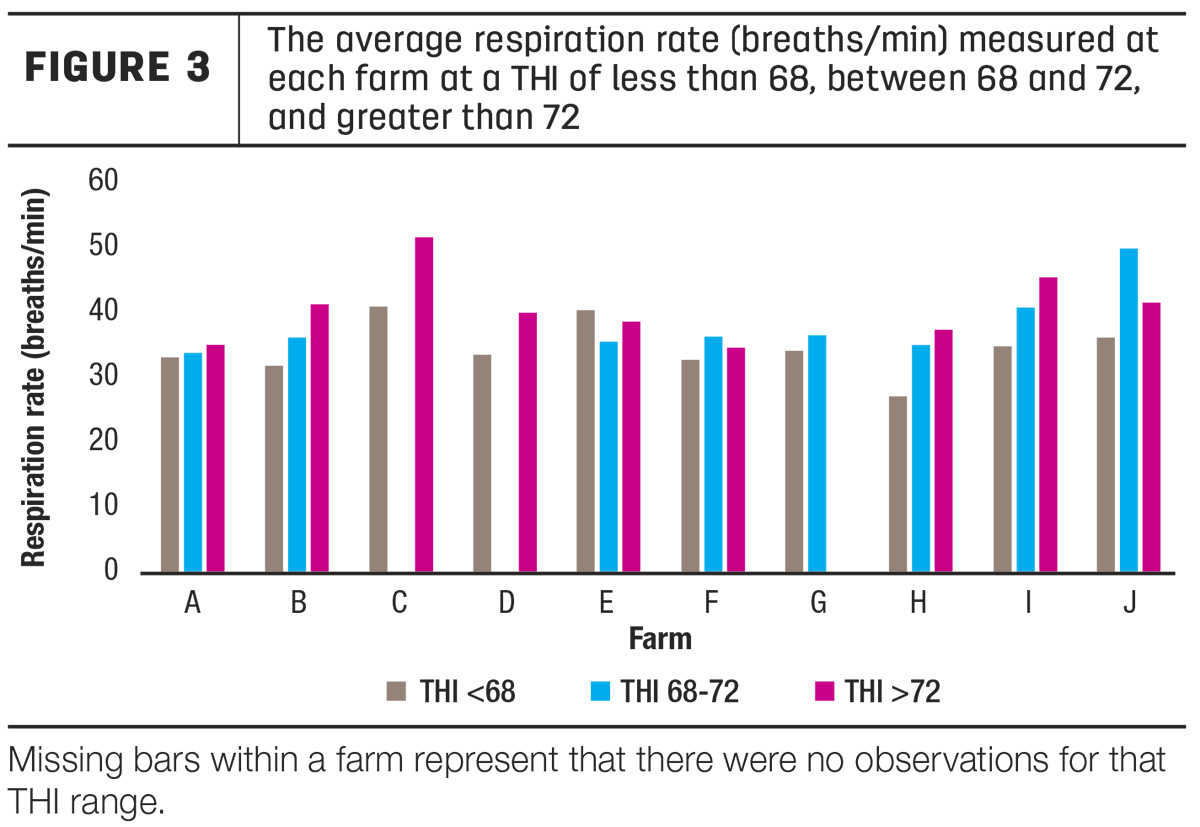
It is important to minimize heat stress as much as possible in the dry period. Heat stress in the dry period can lead to a reduction in gestation length, calf birthweight and milk production in the next lactation. With changes in feed intake and milk production being common signals for heat stress in the lactating herd, heat stress can be less obvious to detect in dry cows. Heat stress can be assessed by measuring respiration rate (how fast the cows are breathing). Each week, we recorded respiration rate for a sample of close-up and far-off cows at each farm. Close-up cows tended to have a faster respiration rate than far-off cows, and some randomly chosen cows may have been in the early phases of calving. Respiration rate was significantly faster when the THI was greater than 72 or was between 68 and 72, compared to when the THI less than 68 (see Figure 3). However, there was no significant difference in respiration rate between the two higher THI categories. Measuring respiration rate is a simple and effective way to assess if heat stress is occurring in the herd. Observing panting (more than 60 breaths per minute) cows during a routine walk-through of the barn is an indicator that additional fans and soakers would benefit the dry cows.
Body condition score
Body condition score (BCS) is a measure of the fat stores carried by an animal. BCS scoring systems typically use a range of scores from 1 to 5 in 0.25 steps, with a score of 1 representing a very skinny cow and a score of 5 representing an obese cow. The Code of Practice recommends BCS in the range of 2.75 to 3.25 for dry cows. Proper management of BCS throughout the dry period, both in maintaining an appropriate BCS and avoiding changes in BCS, is important to minimize disease and optimize future success.
Body condition score was assessed for a random sample of 10 cows at each farm weekly by two trained technicians, and their scores were averaged. There was a small but statistically significant difference in the BCS of close-up compared to far-off cows, with close-up cows having a greater BCS on average (3.15 versus 3.05). At each farm, the average BCS of the close-up group was greater than the average BCS of the far-off group. This likely points toward some cows gaining some BCS throughout the dry period. Average BCS for each farm was within the 2.75 to 3.25 recommended range presented in the Code of Practice. The average BCS recorded and the relatively small changes in BCS for most cows reflect that these farms were doing an excellent job at managing BCS throughout the dry period, and their cows were at a smaller risk for disease related to issues with BCS. proAction requires intervention if cows have a BCS less than or equal to 2.0. Only 0.68% of BCS observations were recorded as 2 or less than 2. The highest BCS recorded (averaged between both observers) was 4.
Windspeed
Measuring how quickly air is moving in a barn helps assess the effectiveness of the cooling system. Faster windspeed can increase the ambient temperature point at which respiratory heat loss is needed by the cow to manage her heat stress, and it can also help to control the warming effect that humidity has. Windspeed was measured in a set number of locations in each dry cow facility using a handheld anemometer. Like respiration rate, the windspeed measured was influenced by the THI at the time of measurement (more fans were usually on at higher THI) (see Figure 2). Windspeed measured in the pens was greater when THI was between 68 and 72 and greater than 72, compared to when it was less than 68. The difference in windspeed when THI was greater than 72 compared to when it was between 68 and 72 was not significant. The two farms with the lowest average windspeeds also had the highest average THI in their barns. This demonstrates that providing an environment with sufficient windspeed can help reduce the risk of heat stress. When THI was in the heat stress zone (THI greater than 72), the average windspeed recorded on the project was 1.08 metres per second, but these values did vary between farms.
CO2
CO2 levels are sometimes measured in calf barns when troubleshooting ventilation problems. There are currently no recommendations for CO2 concentrations in dairy barns in the Code of Practice. Typical outside concentrations of CO2 in “clean air” are approximately 400 parts per million (ppm). For this project, CO2 measurements were recorded using a handheld device at a set number of locations at each farm each week. The maximum value recorded on-farm at any one point was 824 ppm. The CO2 concentrations inside the barns were significantly greater than those outside (485 versus 410 ppm). None of the values we measured were concerning in this project, but it is simple to monitor with inexpensive equipment and might provide some insights in situations of poor ventilation when troubleshooting the dry cow housing environments. We wouldn’t recommend measuring it routinely.
Take-home messages
- Dry cow management is key to optimizing success of your dairy herd.
- Monitor respiration rate regularly.
- Watch a cow and count her breaths for 15 seconds, then multiply the number you counted by four.
- If this number exceeds 60 breaths per minute, you may need to consider adding heat stress mitigation (fans, soakers).
- Anemometers are great for checking for dead space and airflow.
- Your feed representative or herd veterinarian may have one you can borrow. If not, they are relatively cheap and a worthwhile investment.
- Suggested lying space available per cow in a bedded-pack system should be 180 to 200 square feet.
References omitted but are available upon request by sending an email to the editor.
Jayden Thomas and Katherine Perry are past dairy cattle research assistants.