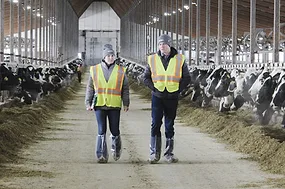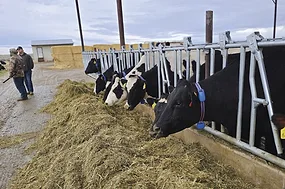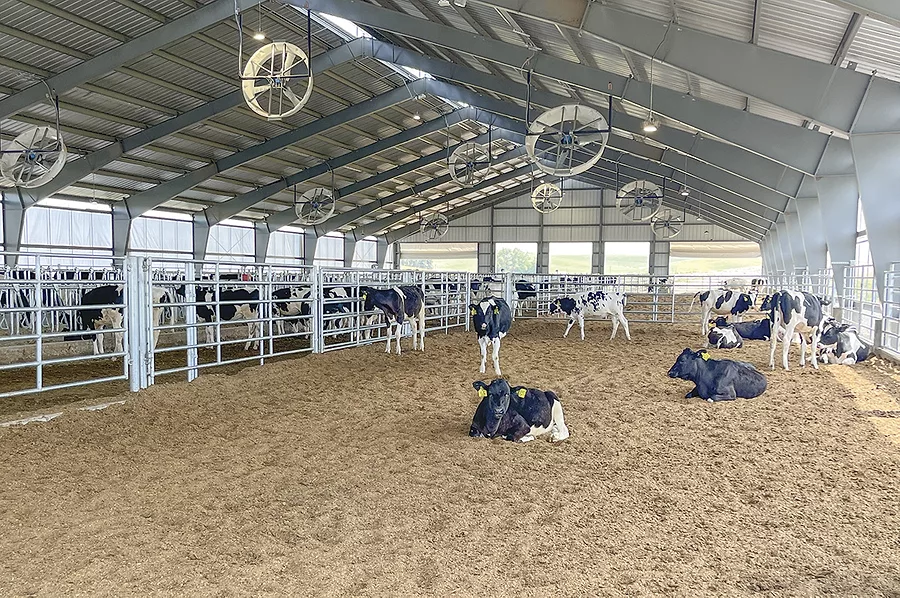
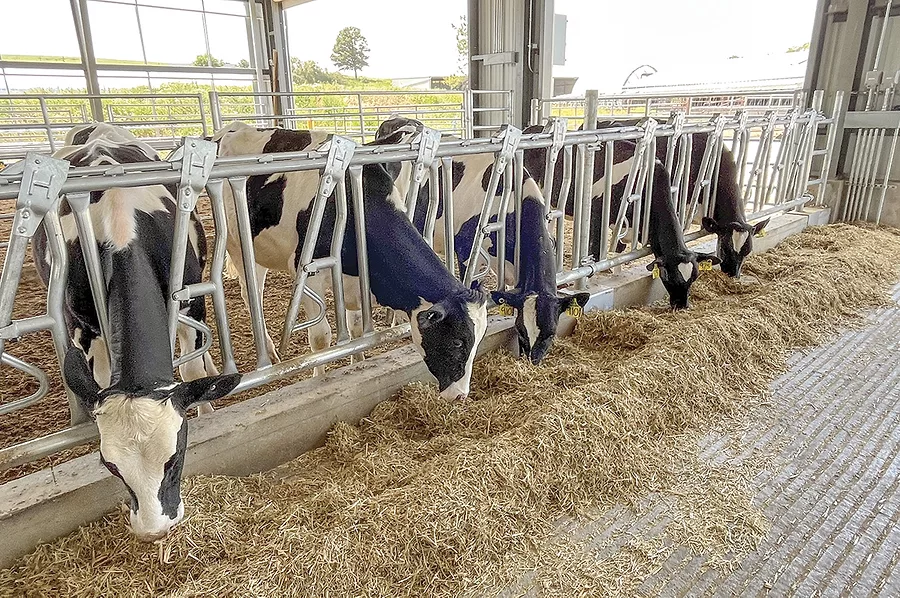
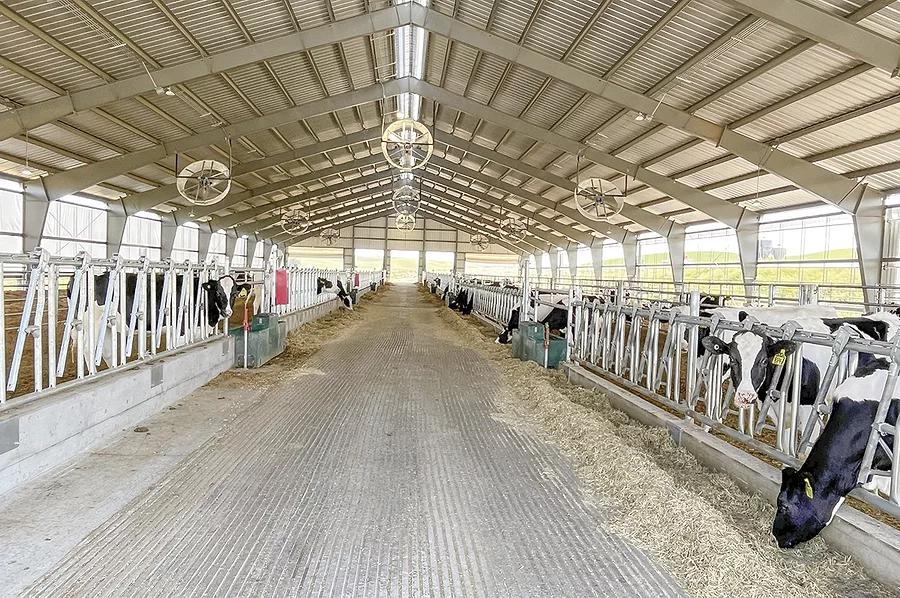
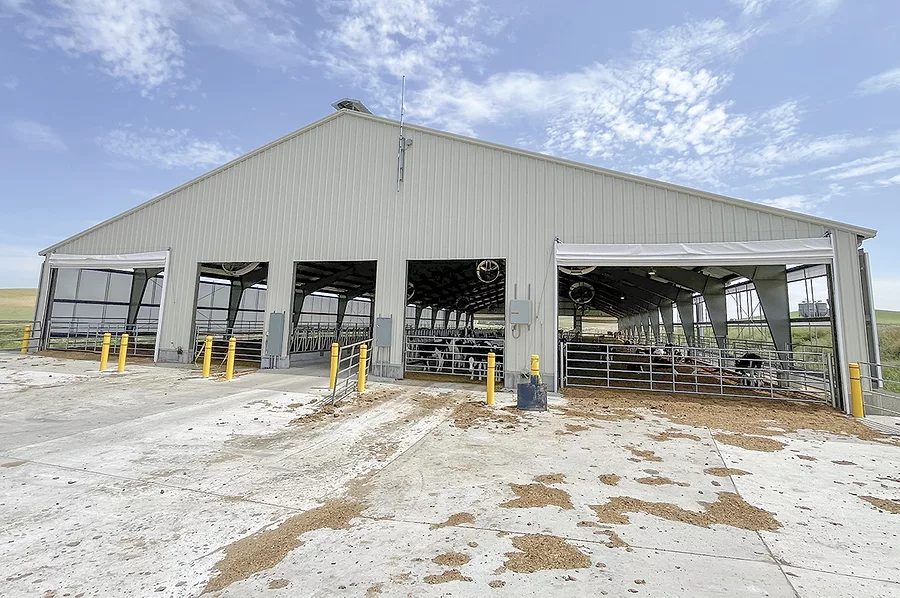
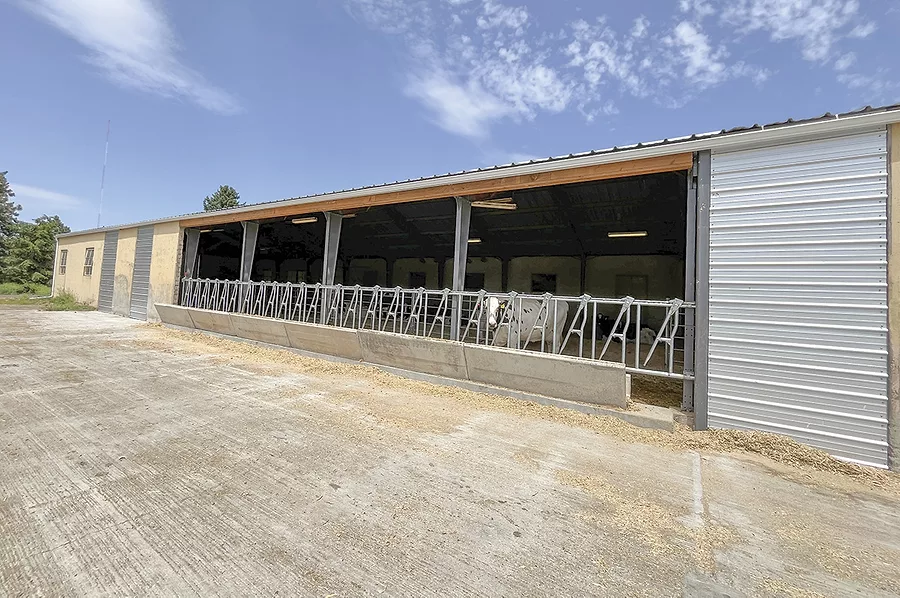
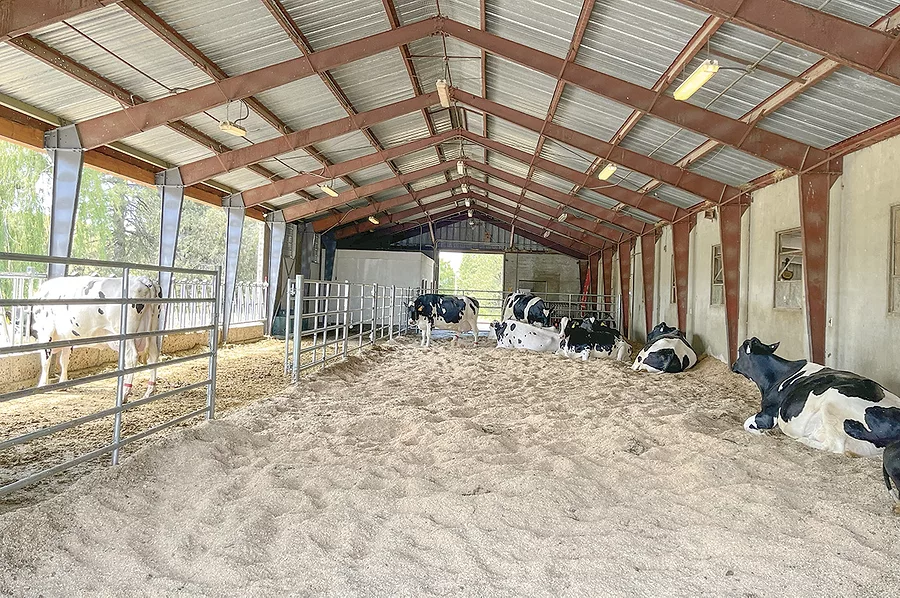
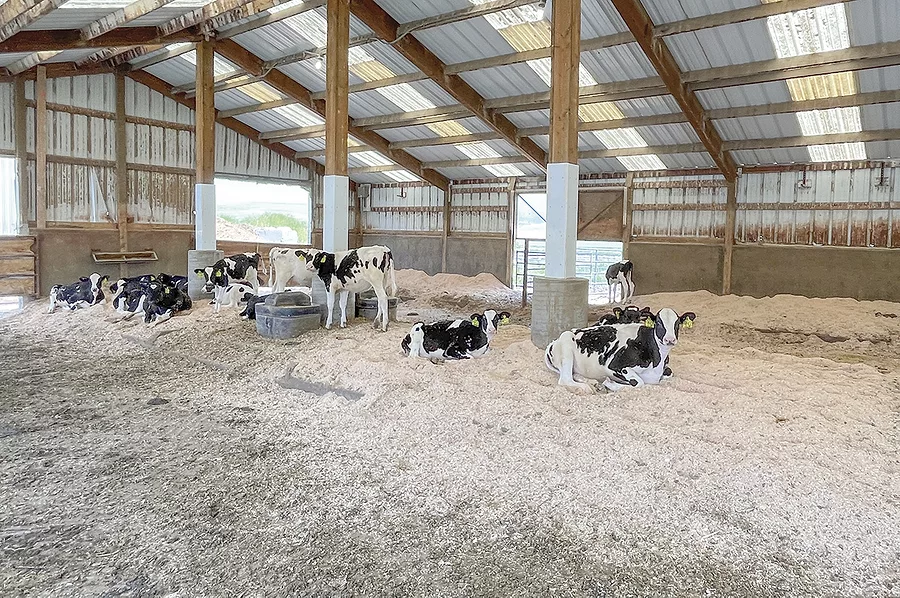
The newest addition to Washington State University’s (WSU) Knott Dairy Center (KDC) is a flexible, compost-bedded pack barn that houses developmental and pregnant heifers, dry cows and has space for a pen of research animals. Construction began in July 2024 and was completed in June 2025.

“The new barn dramatically reduces our bedding needs while maintaining a cleaner and healthier environment for our livestock,” says Gordon Murdoch, professor and animal sciences department chair at WSU. “There are fans along with open sides and curtains to maximize airflow and improve air quality. Additionally, pen sizes can be modified for specific research, teaching and extension needs. These new facilities will allow our teaching to be more representative of the industry and also makes our research and its transferability to modern dairies more effective.”
Murdoch notes that these renovations were a “critical step to ensure that WSU retained the dairy” in Pullman. The original KDC facilities were built in 1959 and were operational in 1961. Conversations between the WSU Animal Sciences Department and allied industry have been underway since the 1980s, with several variations of a new dairy and/or renovations discussed throughout that time period.
“Every facility has a serviceable life. On commercial or private dairies, upgrades are typically made regularly, but budgets are tighter at a land-grant university and each funding request must be prioritized,” Murdoch says.
Now that the new barn is operational, other barns and buildings previously used to house calves, heifers and dry cows will be repurposed or torn down. Below are some of the changes.
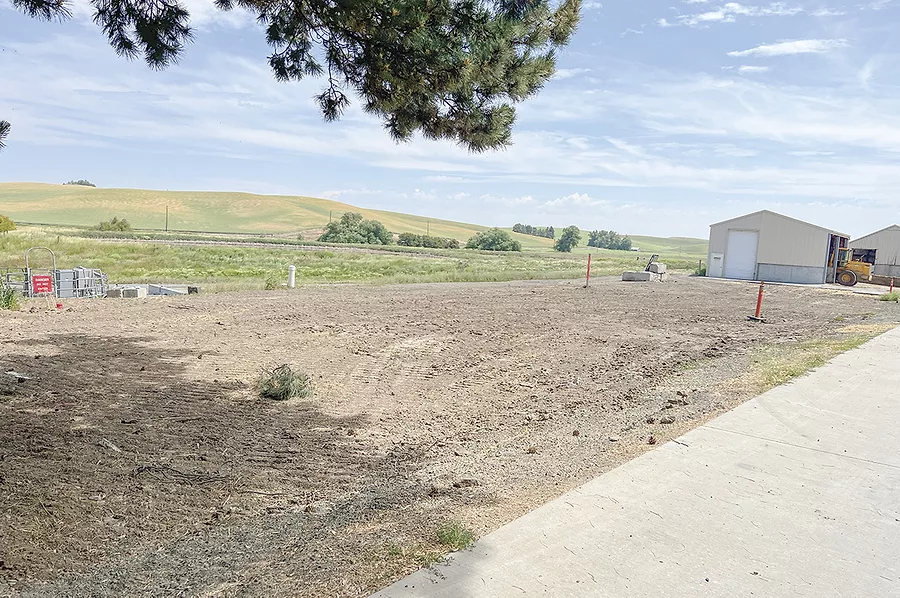
- The old calf barn will be demolished and in its place will be a new anaerobic digester, currently under construction. The digester is projected to be operational by July 2026.
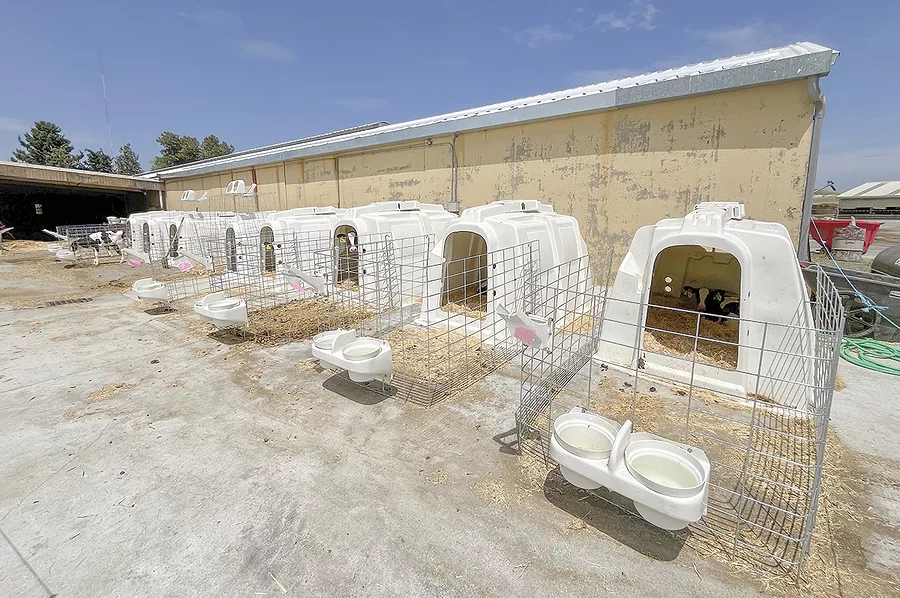
- Pre-weaned calves that were previously in hutches or in the calf barn will move to a new hutch-based calf housing area on the other side of the dairy.
- The building where the calves moved to after weaning has been renovated to provide an improved area for close-up cows.
- The former heifer barn is renovated and offers additional flex space for small heifers and research projects.
- The dry cow barn will be converted into a livestock-handling facility as additional resources are secured.
With enrollment on the rise, Murdoch says it was “critical” to align WSU’s curriculum and facilities with the needs of the state’s dairy industry.
“We expect that the improvements will help retain more in-state students as well as attract more out-of-state students to our institution, especially considering many land-grant institutions have closed their respective dairy centers,” he says. “Once we add new dairy expertise with new faculty hires, we can also re-invigorate the practical learning extracurricular activities offered through Cooperative University Dairy Students (CUDS) and Dairy Challenge.”
More renovations on the horizon
The next set of renovations and updates to the dairy include the anaerobic digester that is slated for completion next summer, as well as upgrading the milk chillers and adding a plate cooler.
“Additionally, we would like to upgrade our feeding equipment and systems, the barn housing lactating cows and the milking parlor,” Murdoch says. “We need improved handling and interaction areas – and of course, we aspire to have feeding and milking robotics to match the level of technology broadly used in the dairy industry. We have a vision for an interdisciplinary teaching, research and extension dairy, and we have received 500,000 dollars in state funds to perform a feasibility study for that facility.”
The new facilities will allow for improved research in the areas of reproduction, genetics, mammary development, metabolism, nutrition, milk production and animal health that is relevant to Washington’s dairy industry while training the next generation of dairy industry leaders.
“This investment will impact the education, training and acquisition of industry-relevant competencies for the next 60 years, much like the initial construction of KDC did in the past,” Murdoch says.
Funding
The renovations and new construction were funded by $10 million in state funds under Major Capital Requests (MCR) as part of the WSU budget requests and prioritization. In fall 2020, Murdoch wrote a request for dairy improvements and was notified of the MCR funds approval in 2023. The biennium funds were received in 2024.
“The budget, though large, was still insufficient to make all of our desired improvements, so prioritizing our expenditures based on cost and return was challenging,” Murdoch says. “Unit MCR requests are submitted and prioritized at the college level and then proceed to be selected as a top priority by WSU prior to advancing for state consideration. We made it through all those hoops, hurdles and challenges, received the much-needed MCR and finally are thrilled to have made some considerable improvements to the dairy.”