To make high-quality silage that drives milk production, your focus should be on preserving energy, protein and digestibility; minimizing spoilage; and maximizing intake potential. There are some key factors to help you achieve the optimal balance, ensuring your rations contain high-quality forage, driving not only milk but cow health and longevity in the herd.
1. Choose the right crop for your farm and growing conditions
- Corn silage: High-energy, great for milk. Aim for one-half to three-fourths milk line at harvest.
- Alfalfa or grass silage: Higher in protein, good complement. A strong-quality first cut is critical for a good year.
- Cereal silage (barley, oat): Can work well with the right maturity and management.
- Cover crops (rye, triticale): Consider your growing conditions and what crop will go in next for timing. Both are high-sugar-content crops when harvested at the right time. They are excellent for maintaining healthy cows through temperature swings in our Canadian summers.
2. Harvest at the right stage
- Corn silage: 32%-35% dry matter (DM) with the kernel in soft-dough stage to one-half milk line.
- Alfalfa/grass: Early bloom stage with 35%-45% DM. Visually, when dandelions are turning to seed but not yet ready to blow away, it is time to get in the field.
- Moisture: If conditions are too wet, it can lead to seepage and poor fermentation; too dry and you get poor packing and mould risk.
- Yield: Digestibility is often improved with a lower yield, so plan for lactating cows first – less yield but more milk will always drive profit; otherwise, more milk will come at the expense of purchased feeds.
3. Chop to the right length
- 3/8- to 3/4-inch theoretical length of cut (TLC) is recommended for kernel-processed corn.
- Consistent chop length promotes good packing and digestibility.
- High-forage rations make chop length less important – consistency in the total mixed ration (TMR) is critical to holding it together to reduce sorting, which is the key factor to most nutritional issues on farms. This promotes strong rumen health, and rumen function is what drives milk and component production.
4. Pack tightly
- Oxygen is your enemy.
- Aim for 15 pounds DM per cubic foot in bunkers or piles.
- Use heavy equipment and layer silage in thin layers (6 inches maximum).
- It is optimal to put one crop in a bunk at a time.
5. Cover quickly and well
- Use oxygen-barrier film and plastic and weigh down with tires or gravel bags.
- Seal the silage within 12 hours of harvest to prevent aerobic spoilage.
6. Use a proven inoculant
- Choose Lactobacillus plantarum or Lentilactobacillus buchneri (for corn silage) for better fermentation and bunk life.
- Inoculants can boost lactic acid production and reduce pH faster.
- Often, we figure out we needed an inoculant only after fermentation is set, so using it as a tool to boost forage quality is a good investment.
7. Allow silage to ferment
- Wait three to six weeks before feeding a silage.
- Silage pH should drop below 4.2 for grass/alfalfa and approximately 3.8 for corn silage.
- Test your silage. Forage labs have come a long way. Get forage tested so you know what you and your cows will be dealing with.
8. Feed it out correctly
- Remove silage evenly across the face (6-12 inches per day in summer).
- Keep the pile face smooth to limit oxygen infiltration.
- Don’t overfill TMR; clean bunks daily to avoid heating.
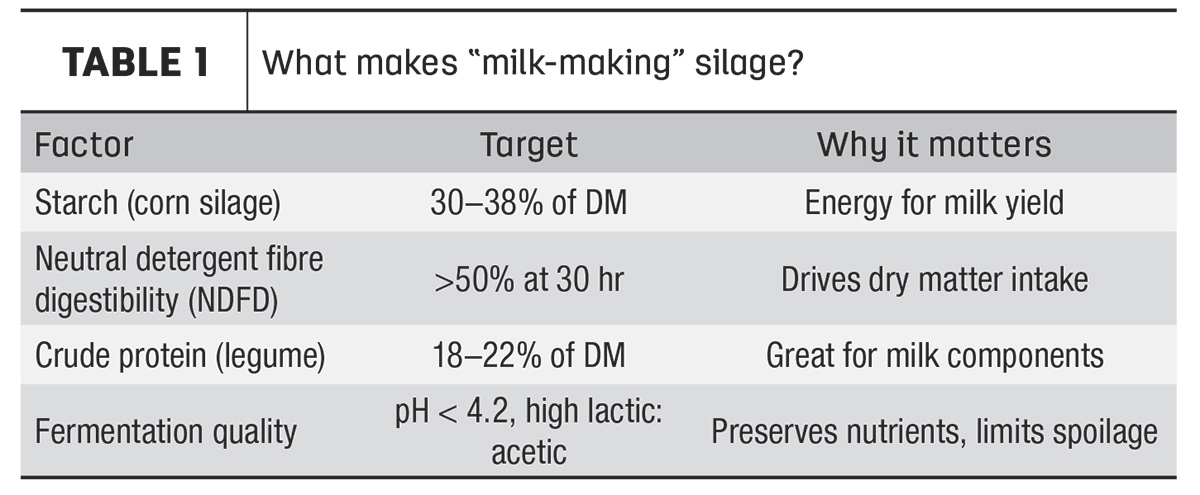
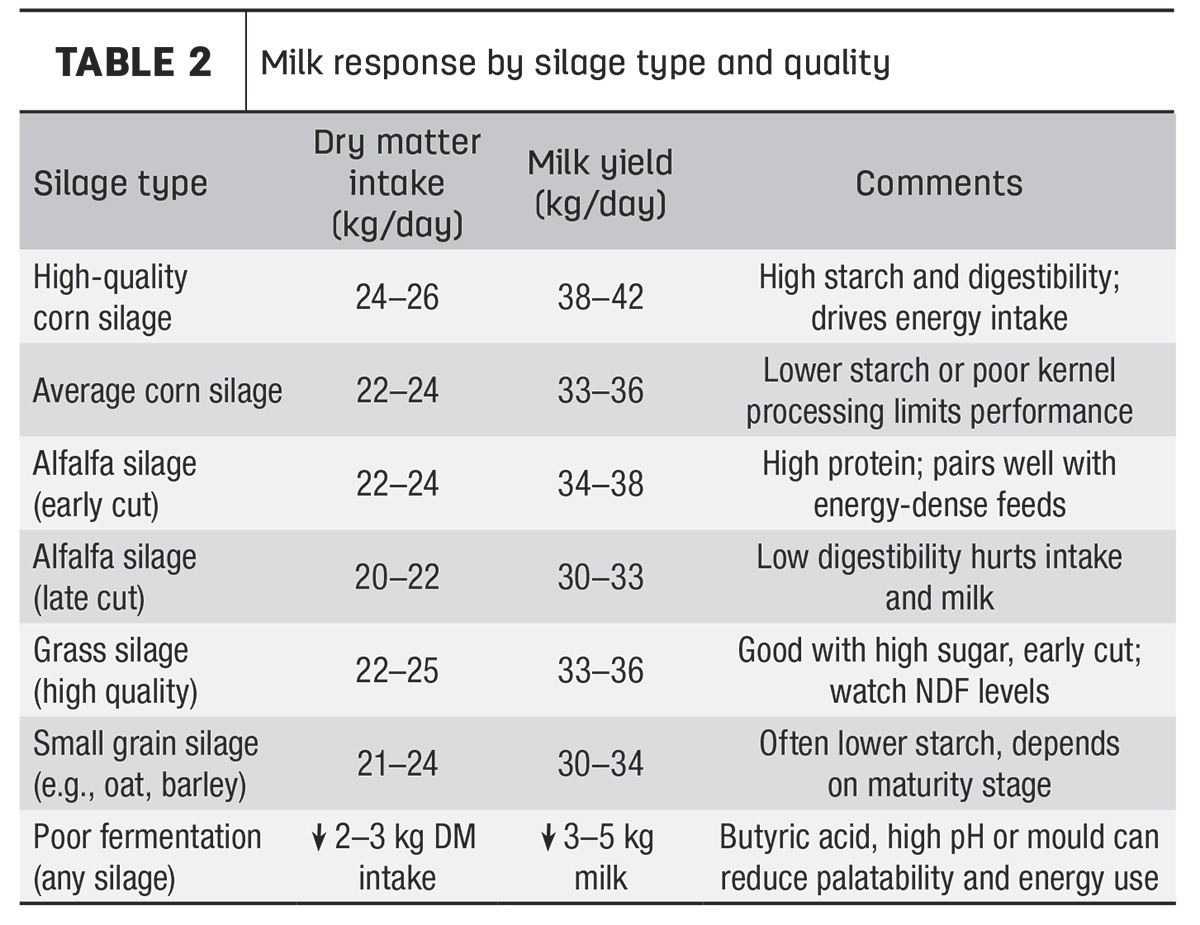
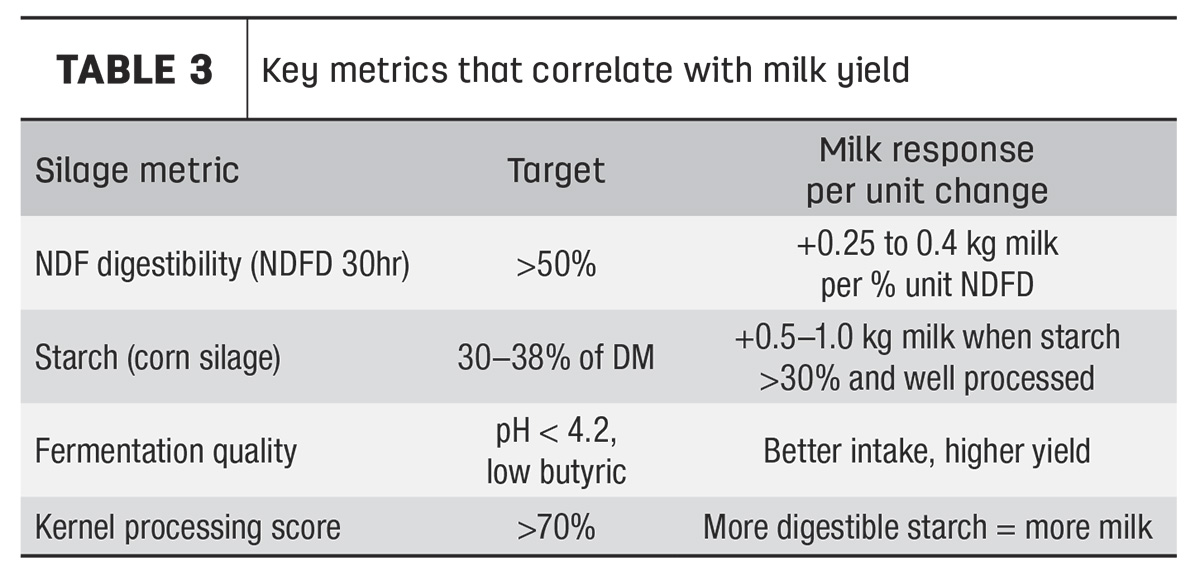
When nutritionists put a ration together, we know we are dealing with quality forages when balancing at least 65% forage comes easily. The struggle occurs when a ration consists of lower-digestibility forages, because then cows get full too quickly. Full rumens are great for cow comfort, but there is a limit to how it drives milk. If cows are too full to continue eating, we need to use other inputs such as corn and/or protein to bring energy to the cow. In summer weather, that full rumen will drive extra heating, adding to her heat stress. Forages that are highly digestible have a faster rate of passage through the rumen. That said, if digestibility is too fast, cows start to paint the walls – fourth-cut haylages are often a good demonstration of this.
Further challenges are poor fermentation – this creates an imbalance in acids, which can affect rumen pH (and rumen pH is a key factor in maintaining healthy bug population in the rumen), and it also leads to free ammonia (breakdown of the protein in the forage too quickly). Ammonia acts like urea in the rumen, so we can see high milk urea nitrogen (MUN) or some diarrhea in the cows. Both are signs that the ration needs a rebalance, and this is where having straw or some dry hay on-farm can always be helpful. It settles these imbalances down when harvest, storage and feeding do not go exactly as we had hoped.
Bottom line is if we can get highly digestible starch, sugars and proteins from forages, we reduce the need to increase purchased feed costs to make up for those nutrients. Further to that, we improve cow health through healthy rumens, and healthy rumens produce more milk and components.
Key takeaways
- High starch plus high fibre digestibility equals best milk response.
- Poor fermentation equals palatability losses and energy waste.
- Early-cut alfalfa can support high production if paired with an energy-dense source.
- Cover crops, when managed in a good rotation, are a high-sugar, digestible feed that help drive intake and milk and are great for maintaining high-forage rations in the summer.