All livestock managers must also have a plan to manage deadstock. In most states, carcasses must be disposed of within 48 to 72 hours, and a good plan is essential to ensure timely management. The most common strategies include rendering, incineration, burial, and composting. Each approach has different benefits, drawbacks, and management requirements, so it is important to choose the option that best fits your operation.


- Rendering may offer dairy farms the simplest means of mortality management, where deadstock are picked up and transported to an off-farm facility for upcycling. It can be expensive and rendering services may be limited and unreliable (pick-ups only on certain days, or for only mature cows) or even unavailable in some areas.
- Incineration, or combustion of mortalities in a properly sized cremator, can effectively reduce a carcass to ash and kill pathogens in the process. Incinerators are, however, expensive to purchase and maintain, can require over 30 gallons of fuel to combust a single mature cow, and can be an odor nuisance. Additionally, incinerators often require air quality permitting, stack testing, operator certification, and additional record keeping. While commercially available units may meet air quality regulations in some states, that is not true everywhere. For example, in New York no commercially available units meet the state’s existing air permit requirements and operation of unpermitted incinerators would be in violation of state laws.
- Burial may seem like a simple answer at first blush, but it is the least desirable option as it has the greatest number of environmental, safety, and public health risks. It requires careful siting to protect surface and ground water, as it does not capture nutrients nor kill pathogens. Most states have specific requirements for siting that include being outside of flood zones, 100 to 200 feet from surface waters, wells, sinkholes and property boundaries, depth restrictions that keep the carcass at a minimum distance above bedrock and seasonal high-water tables and away from highly permeable soils, and minimum soil coverage depths. These requirements may make burial a challenging strategy to manage mortality for many farms, particularly those with larger herds.
- Composting is a relatively simple, low-cost and effective strategy for mortality management. Like burial, composting should be sited in a location that protects water quality. Unlike burial, however, composting doesn’t require any soil excavation, is very effective at killing pathogens, and nutrients released from the decomposing carcass are sequestered in a stable compost product that can be recycled to agricultural lands. For these reasons, composting may offer dairy farms a very reliable mortality management strategy.
MORTALITY COMPOSTING
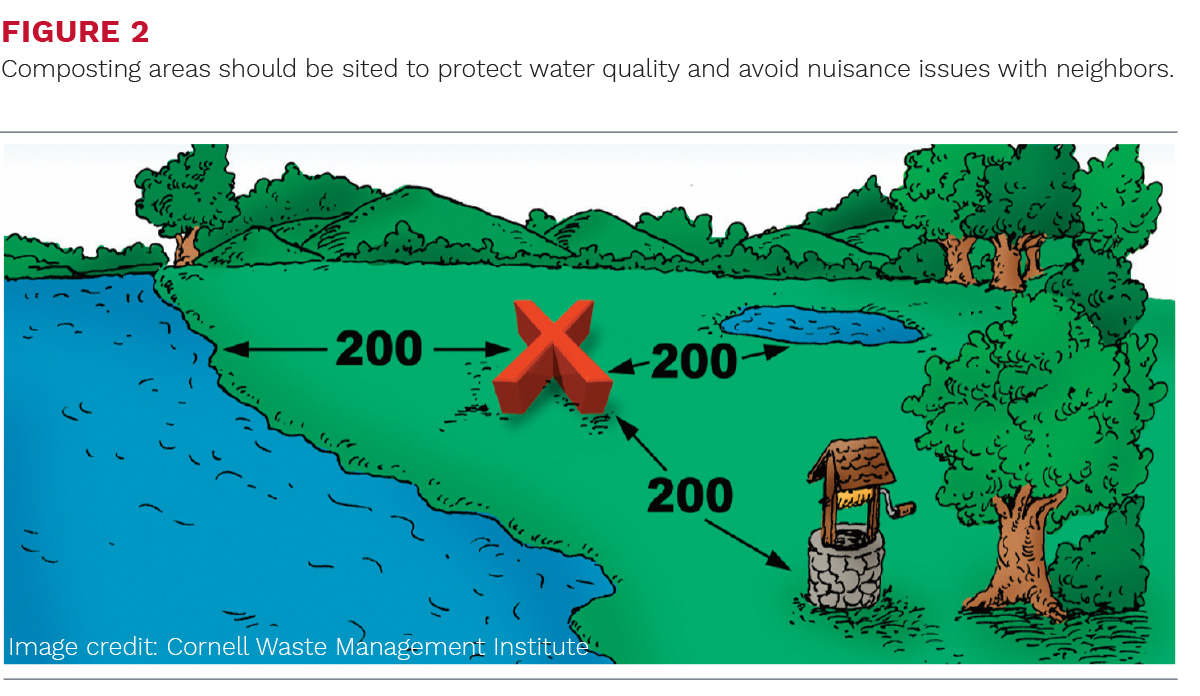
Effective mortality composting can be accomplished using resources available on most dairy farms and without the need for a specialized structure or facility, provided the composting site is properly located. Composting should be conducted outside of a flood zone and at least 200 ft. from surface water, wells, or wetlands. If relatively small numbers of deadstock need to be managed, a farm may locate their composting site along field edges, laneways, or the back part of the farm. Siting should also include consideration of public visibility and proximity to neighbors, as well as accessibility during inclement weather.
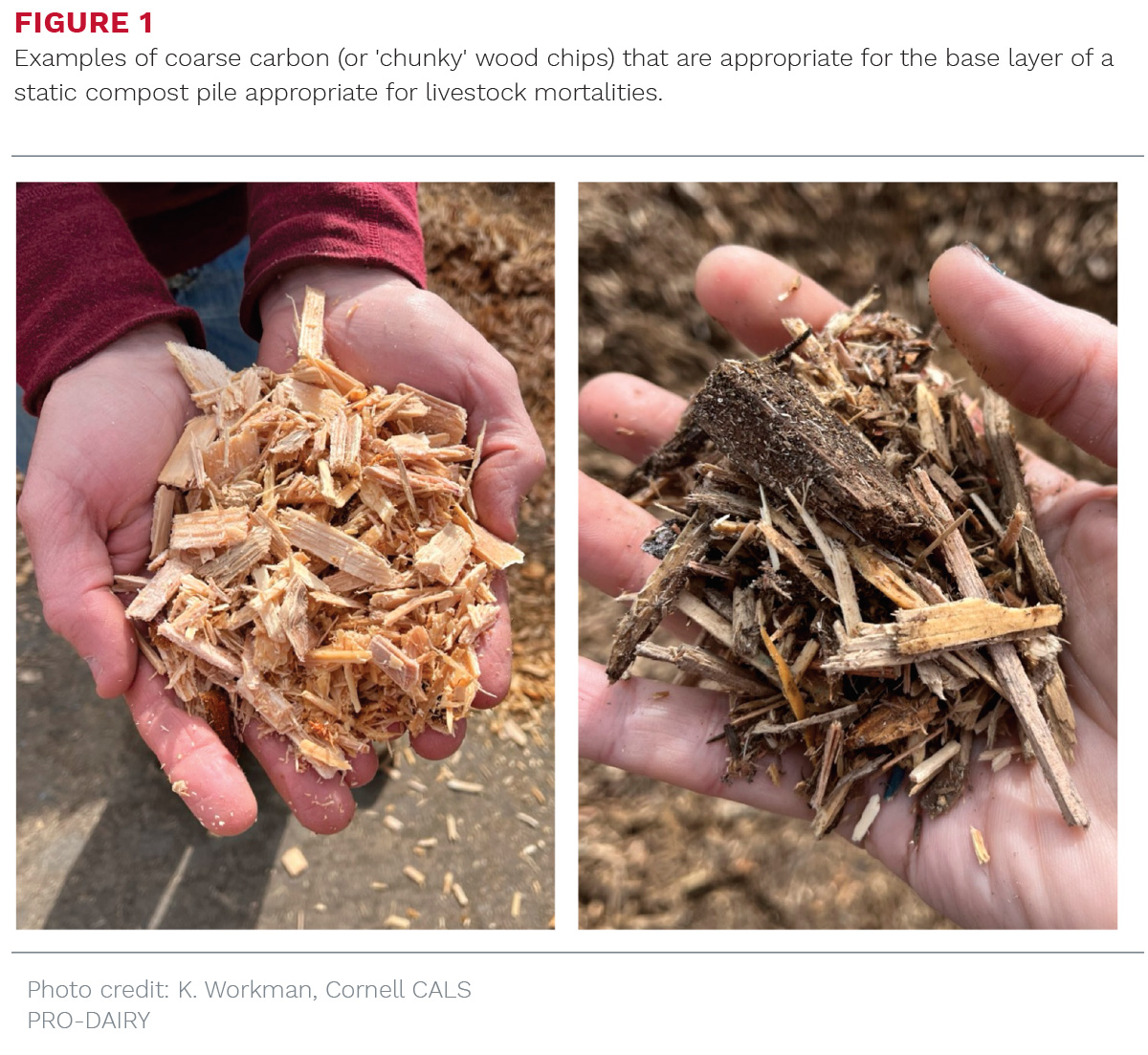
A coarse, bulky carbon source (chipped or shredded wood) is the key component to successful mortality composting and should be secured in advance. These “chunky” wood chips may be available for free from utility companies, local municipalities, tree care companies, or purchased from regional suppliers. (Figure 1)
STATIC PILE CARCASS COMPOSTING STEPS
- Select the appropriate site (see above and Figure 2 for some criteria).
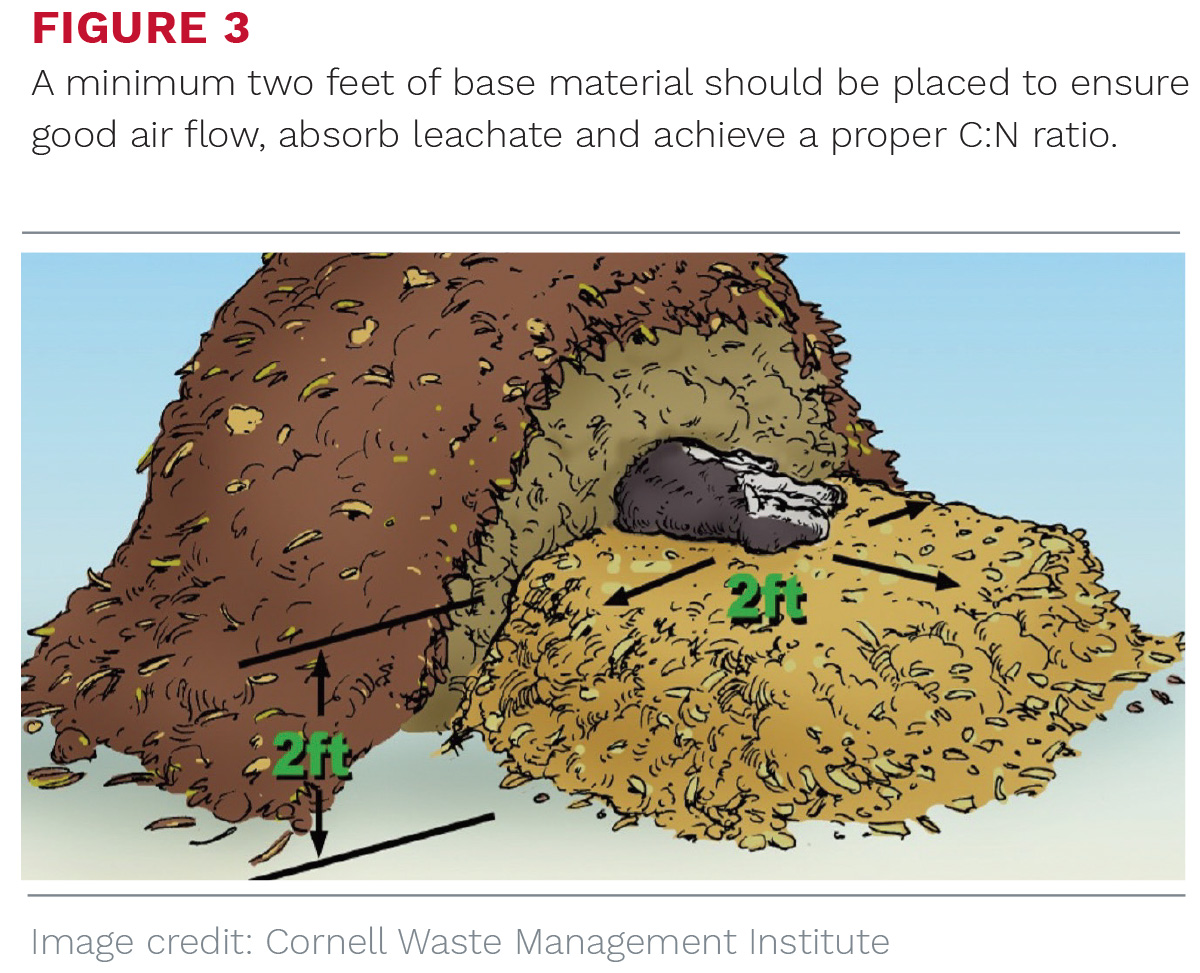
- Prepare a base by spreading a two-foot-thick layer of coarse, bulky carbon (Figure 3). It can also be helpful to prepare more than one animal’s worth of base ahead of time to make the task more efficient.
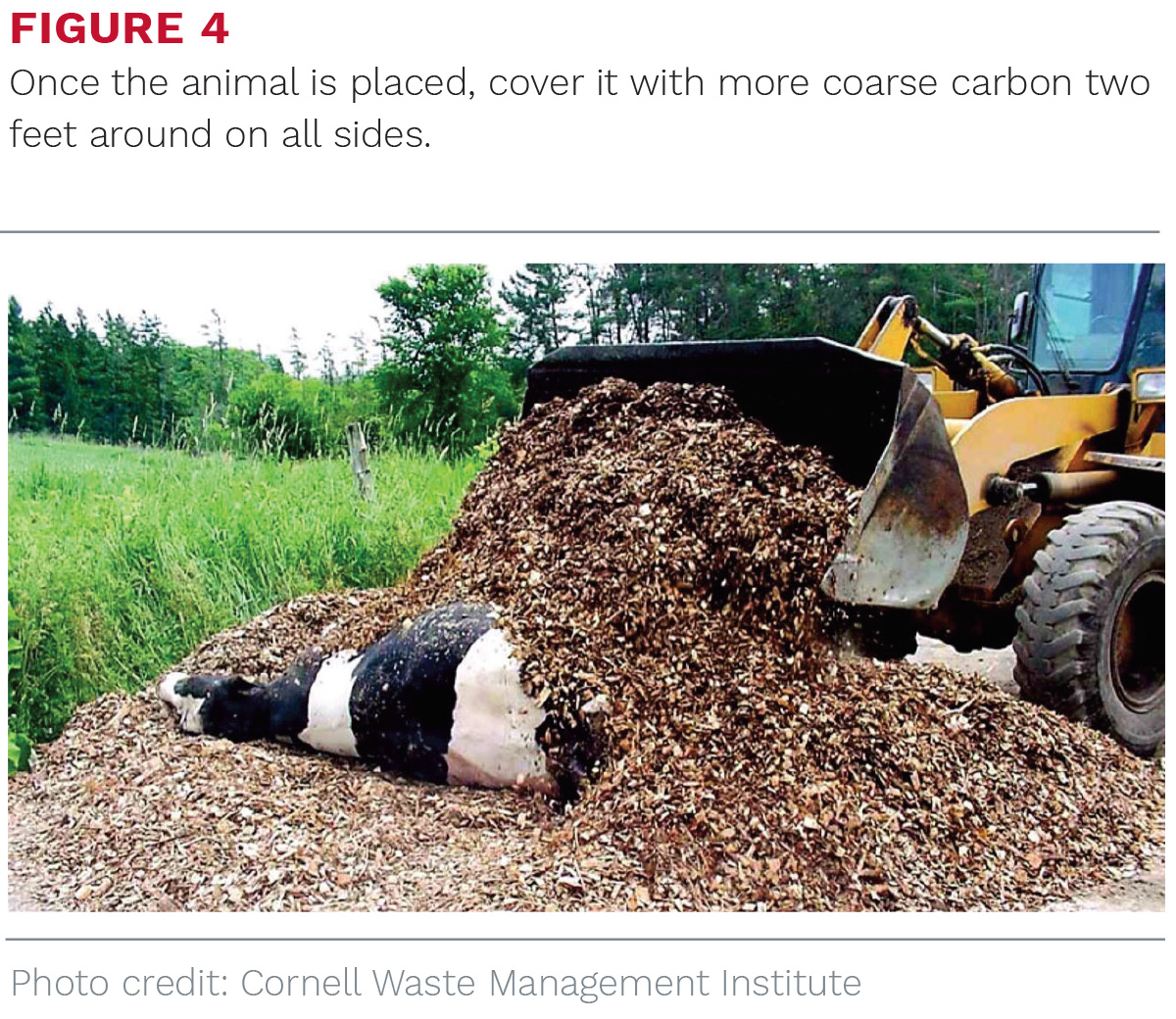
- Lay the carcass(es) on the base and cover on all sides with an additional two feet of carbon (Figures 3 and 4). Smaller animals can be layered with one to two feet of carbon in between layers. Build the windrow by placing additional animals down the row.
- Leave the pile to compost for six to 12 months, making sure to top with extra carbon material should at any point a carcass becomes uncovered. Do not turn the compost until the initial composting process is complete (four to six months depending on the animal type).
- Apply the finished compost to crop fields using sound nutrient management practices.
TIPS AND TRICKS
The coarse, bulky base material allows air to flow up to the carcass while also providing absorption for any leachate. While the same carbon used for the base is preferred as the cover, finer carbon materials like shavings, sawdust, straw, waste silage, or manure solids can be used provided they are dry, bulky, compostable, have a high carbon-to-nitrogen ratio, and do not attract pests. The covering material provides the compost with additional carbon, insulates the compost pile, sheds precipitation, reduces odor, and deters pests.
The compost can be set up as individual piles or longer windrows where animals are laid one after the other. A well set-up compost pile should reach 130 to 170 degrees Fahrenheit for five days to ensure effective pathogen kill and can be turned after the first six-plus months to speed finishing and help ensure large bones degrade. Large bones not entirely composted from a finished compost pile can be mixed with the base of a new compost to enable their eventual decomposition. Finished mortality compost is a nutrient-dense soil amendment and can be safely recycled to agricultural lands. Be sure to include this in the farm’s nutrient management planning.
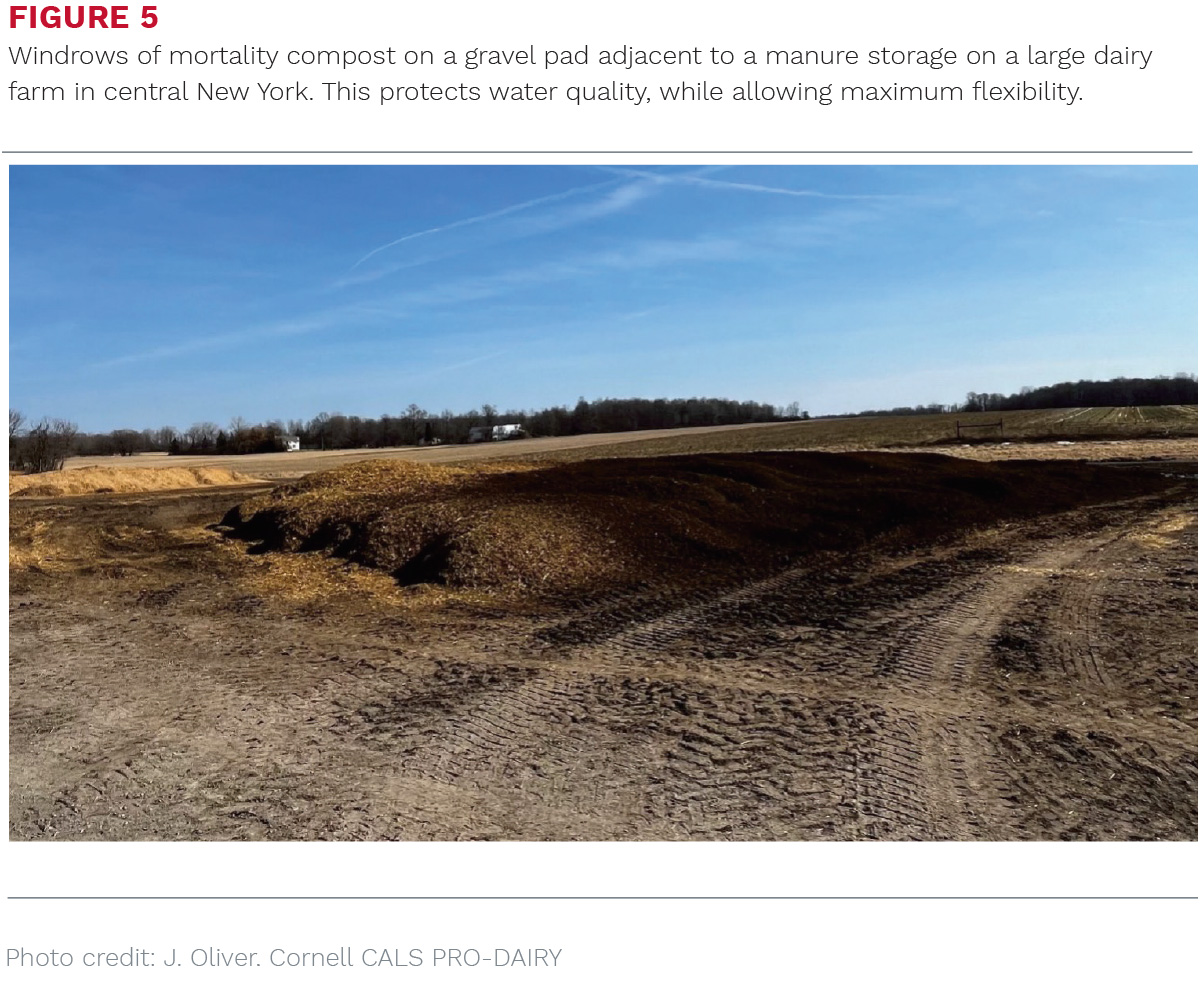
Farms that prefer a more permanent composting site can utilize engineered waste management facilities. The simplest, most flexible and cost-effective design is a fabric and gravel pad (Figure 5). For larger sites, leachate (which should be minimal) and surface runoff can be directed to a vegetated treatment area or waste storage. Pads have effectively been established adjacent to manure storages to aid in leachate collection. Structures with high concrete walls and roofs can also be utilized, and may help facilitate management, though they add substantial costs, can restrict flexibility, and if not sized and laid out properly, can impede composting due to overloading and air flow restriction. Regardless of which type of facility is chosen, the best structures allow for flexibility, air flow, and the capacity for expansion.
Mortality management should not be ignored and when planned well, should be something that can be dealt with in a timely and easy fashion. Is the current management acceptable? Are other options feasible? Has composting been considered? Has it been tried without a successful outcome? Reach out. We are happy to help strategize and ensure responsible and respectable management of deadstock.
RESOURCES
Bonhotal, J., Schwarz, M., Rynk, R. 2014. Composting Animal Mortalities. Cornell Waste Management Institute, https://hdl.handle.net/1813/37369
Catastrophic animal mortality
The focus of this article is on management of routine livestock losses. Different rules and standards apply for a catastrophic animal mortality (or mass casualty) event like a structure collapse, barn fire, or disease outbreak. All farms should have an emergency action plan that includes handling mortalities in these situations. Know the local rules and identify resources ahead of time, so that the farm is prepared to respond accordingly. When these events happen, there are a lot of moving parts to a response, and the last thing a farm will want to have to figure out is handling animal losses. A sound plan that is communicated to the farm team can keep an already horrible situation from getting worse. Composting is still a viable option in these situations. To facilitate the timely handling of mass mortalities in this way, work with the farm’s advisors to identify an appropriate site, and calculate and source the volume of coarse wood chips needed for potential situations.
 |
This article appeared in PRO-DAIRY's The Manager in August 2025. To learn more about Cornell CALS PRO-DAIRY, visit PRO-DAIRY. |