Periods of low milk prices and tight margins put pressure on every dairy operation, but history shows that the most resilient farms do not rely solely on cost cutting to survive. Instead, they focus on precision, consistency and execution of fundamentals. These are all areas that often provide the quickest return on investment when margins are thin.

Precision nutrition is a central pillar of this approach. Precision feeding is not about feeding more nutrients; it is about feeding exactly what the cow needs, every day. Achieving this requires accurately describing the cow, accurately estimating bodyweight, accounting for production level, stage of lactation, body condition and health status, while also adjusting for facility design and environmental stressors. High‑quality formulation software is essential, but its value depends entirely on the quality of the inputs. Inaccurate ingredient assumptions quickly erode performance and profitability.
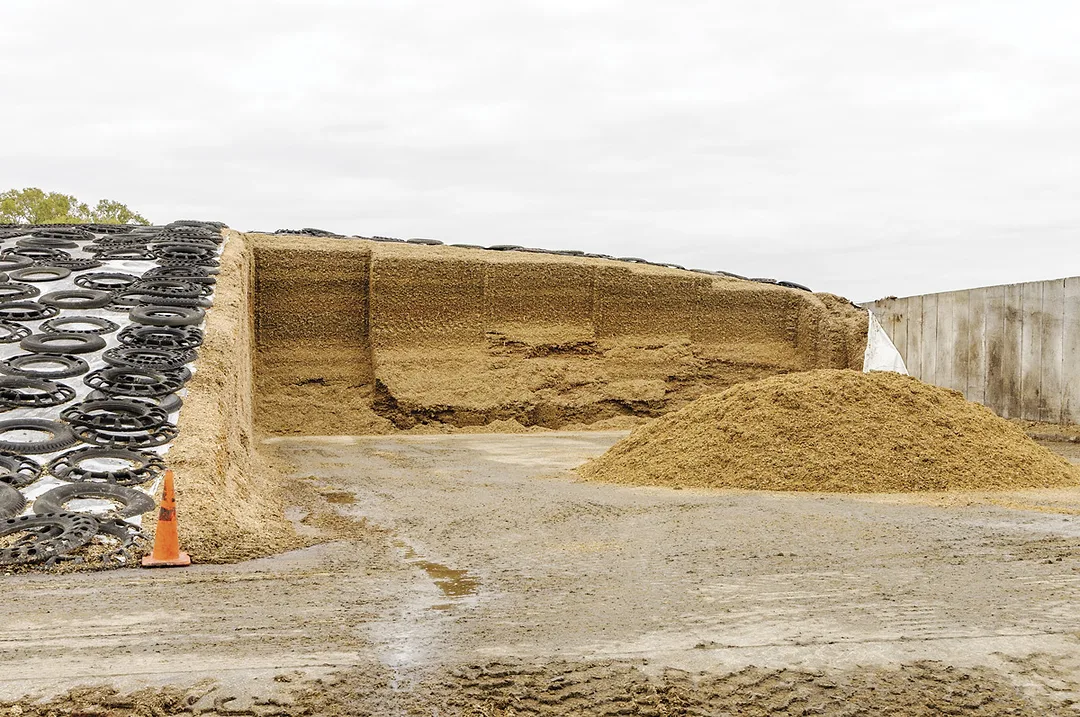
One of the most overlooked drivers of precision nutrition is dry matter management. Forages routinely vary 2 to 5 percentage units in dry matter from day to day due to weather, silage face management, bunker location and exposure time. If dry matter is not measured and rations are not updated accordingly, cows are simply not receiving the diet that was formulated or paid for. Missed adjustments alter nutrient density, affecting crude protein, RDP/RUP (rumen-degradable and -undegradable protein) balance, metabolizable energy and feed cost per ton.
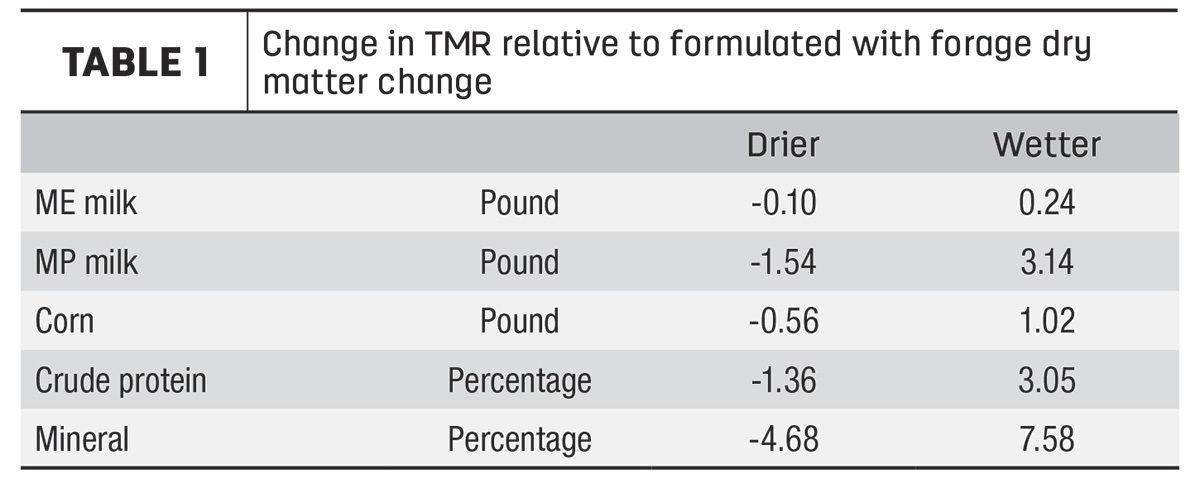
What impact would a missed dry matter adjustment for wet forages have on TMR nutrient composition? Let’s assume we have a diet that contains 15% corn silage and 19% alfalfa haylage on a dry matter basis. Table 1 shows the change in predicted ME (metabolizable energy) and MP (metabolizable protein) milk, dietary crude protein and amount of corn and mineral concentration relative to formulated with either a 5 percentage point increase or decrease in dry matter content of the corn silage and alfalfa haylage.
Additionally, these shifts increase variation in intake and raise the risk of metabolic and rumen health challenges. Frequent dry matter testing is a low‑cost practice with outsized economic impact during tight margin environments.
Beyond formulation, consistency may be the most undervalued tool on dairies today. Consistent loading order, mixing time, feed delivery, push‑ups and refusal targets reduce day‑to‑day intake variation and support stable rumen function. Cows respond favorably to routine, and even small inconsistencies can quietly reduce milk yield and feed efficiency. Consistency is free, yet it delivers returns comparable to many higher‑cost interventions.
Another significant but often hidden drain on profitability is chronic inflammation. While acute disease is easy to identify, subclinical immune activation diverts nutrients away from milk synthesis and depresses feed intake. Activated immune cells consume large amounts of glucose, which is energy that would otherwise support milk production. Contributors to chronic inflammation include SARA (subacute ruminal acidosis), poor fiber effectiveness, protein imbalance, mycotoxins, heat stress, cow comfort issues and subclinical mastitis. Reducing these stressors, even modestly, can yield meaningful economic returns through fewer health events, improved feed efficiency and better persistency.
The overarching message during low‑margin periods is clear: Success is rarely driven by dramatic changes. Instead, it comes from doing the fundamentals exceptionally well such as precision feeding, quality control, consistency, data‑driven decisions and open communication with nutritionists, veterinarians and suppliers. These strategies not only protect performance during challenging markets but also position dairies to capitalize quickly when margins improve.