Soil fertility. The phrase is common enough and probably invoked mental images of the letters N, P and K in your mind – probably even in that order. Now, as ever, those three letters reign supreme in any fertility program. However, as the science of agriculture continues to grow in sophistication, it’s becoming more apparent that the soil and plant relationship is driven by a team of chemical and biological processes.

Nitrogen (N), phosphorus (P) and potassium (K) are the star players. Whether the end goal is higher yield, improved sustainability or more nutrient-dense feed, farmers are finding benefit in looking to the biology and micronutrients in the soil. One micronutrient touches on biology and chemistry, and preliminary data shows that it has the potential to shake up the traditional fertility routine: nickel.
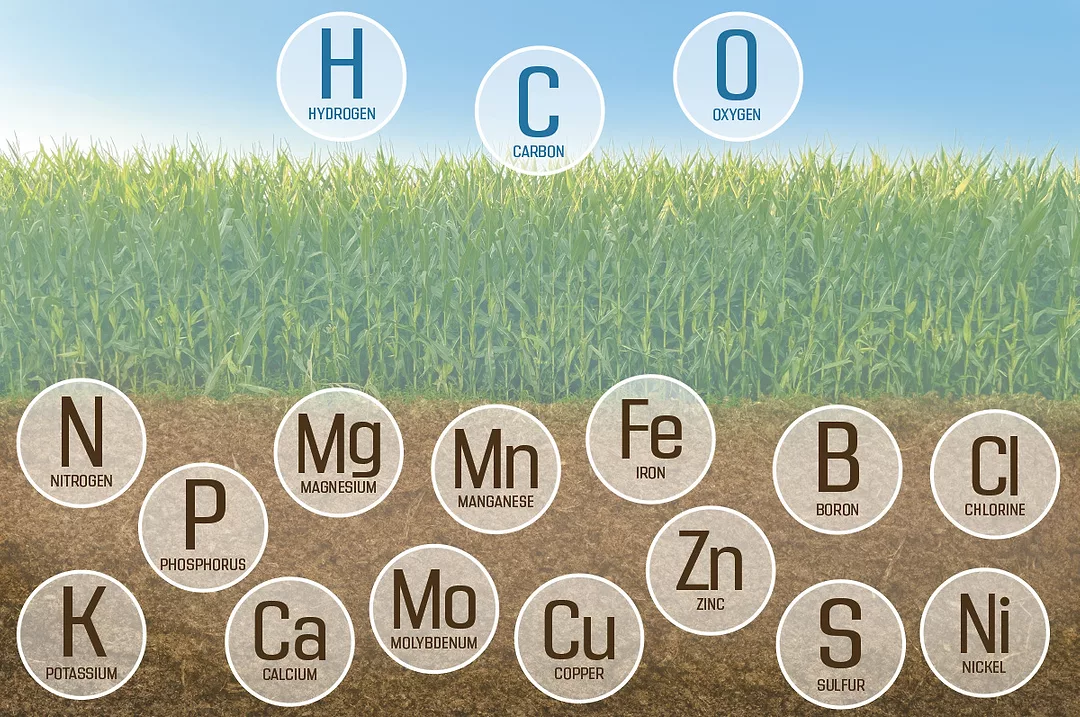
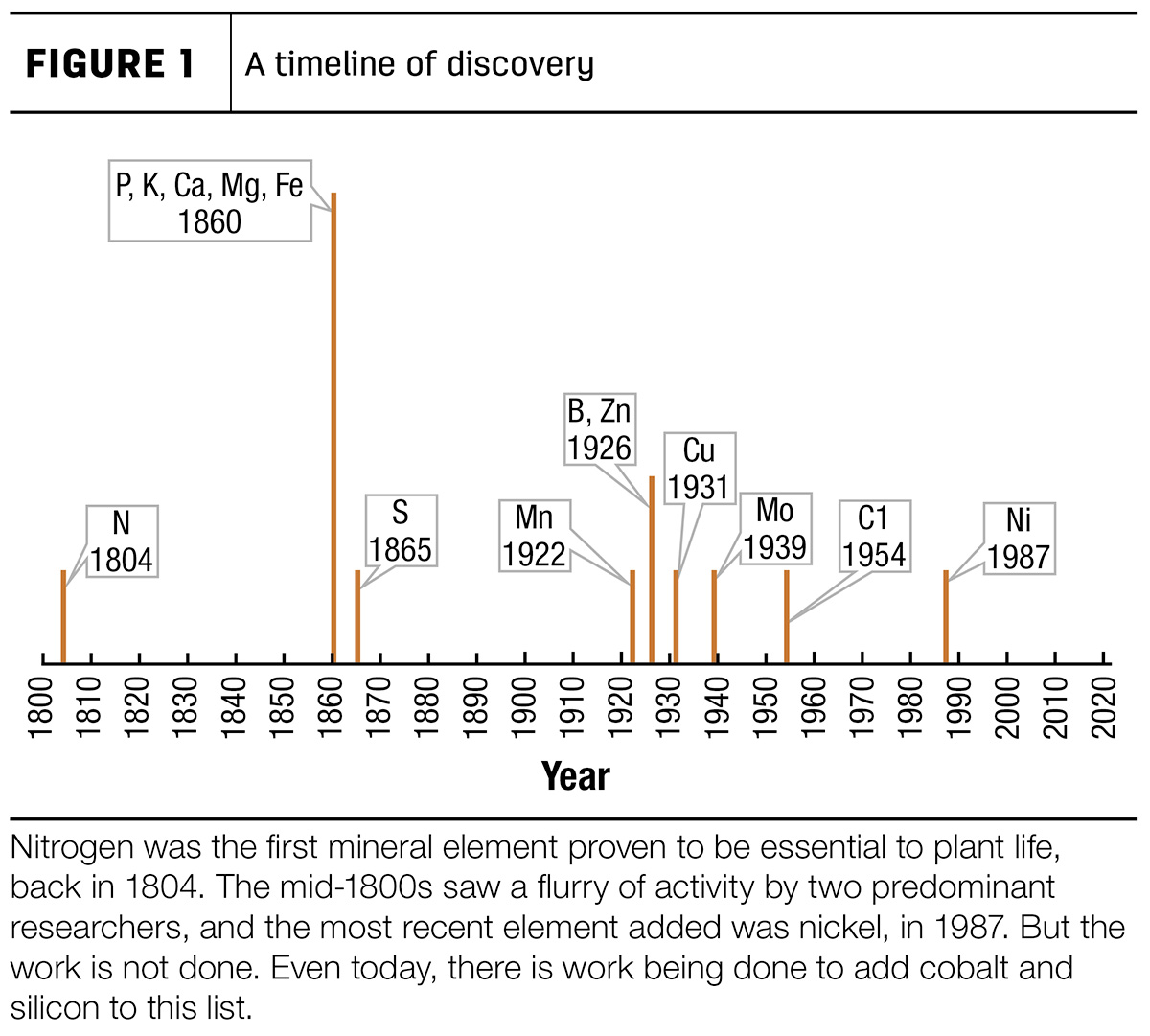
There are currently 17 elements in the periodic table that are considered essential to plant life. These are broken into three non-mineral elements: hydrogen (H), carbon (C) and oxygen (O), and 14 mineral elements: N, P, K, calcium (Ca), magnesium (Mg), molybdenum (Mo), manganese (Mn), iron (Fe), copper (Cu), zinc (Zn), boron (B), sulfur (S), chlorine (Cl) and nickel (Ni). The final element in that list, Ni, was proven to be essential in 1987 and is the most recent nutrient to be deemed as such (Figure 1).
Despite being found essential, little work has been conducted to see how management of soil Ni levels can impact agricultural outcomes. In fact, until recently, Ni fertility was only considered in two agricultural enterprises: grapes and pecans. Grapes because the plant will suffer Ni toxicity if the soil Ni levels are too high, and pecans because the trees will develop mouse ear if the soil Ni levels are too low.
Nickel is an interesting plant nutrient because it isn’t a direct part of the plant, but rather a crucial ingredient in the N cycling process within the plant. It all comes down to urea, a form of N that most people are familiar with. The thing about urea is that it’s a form of N that plants cannot use directly – it must be converted to ammonium for the N to become plant-available. An enzyme known as urease handles that transformation, and Ni is a necessary ingredient in urease.
To get nerdy for a moment, one former line of thinking was that the source of urea in plants was a byproduct of biological N fixation, and therefore Ni was only important for legumes. More recently, it has been learned that urea is the byproduct of the breakdown of arginine, a process that occurs in all plants and animals. Animals can excrete the urea in urine; meanwhile, plants have devised an ingenious way of recycling the urea using urease to convert it into a usable form. This means Ni fertility can improve N use efficiency for all plants, not just legumes or trees.
A 2024 paper by Rabinovich et al. published in Environments does an excellent job of summarizing the many benefits of Ni fertility. Aside from the increased N use efficiency in the plant, feedstuffs with adequate Ni concentrations can enhance nutrient conversion efficiency in the gut microbiome of animals. Through increased urease activity in the gut of ruminants, researchers have seen improved weight gains. The current hypothesis is that improved retention of ammonia and protein is the driving factor.
Urease continues to work outside of the animal, too. Excreted N-urea in feces is a substantial contributor to livestock nitrous oxide greenhouse gas emissions. A secondary benefit of feeding Ni-sufficient feed is that the excreted manure will be sufficient in urease to facilitate the breakdown of urea N into ammonium, thus mitigating the production of N oxides (NOx).
Caution is urged, however. Random applications of Ni can cause serious damage to land and people that can last for years. More research is needed to know exactly how much Ni, and in what form, should be applied in any given case. One of the main reasons that research on Ni fertility has been slow is that nickel is a heavy metal and has historically been labeled an environmental toxin. Most plants, apart from hyperaccumulators, will not survive in soils with Ni levels more than 100 parts per million. Thankfully, soils in the U.S. are generally well below that level.
A study conducted by the U.S. Geological Survey (USGS) shows that 90% of U.S. soils are below 28.1 parts per million. Nickel levels are highest along the West Coast (explaining why grape production is concerned with high Ni) and lowest in the Southeast.
Thankfully, researchers are working on this now. In a few unpublished greenhouse studies, it was shown that both corn and soybeans with soil-applied Ni had greater aboveground biomass gains than control plants, by significant margins. Foliar-applied Ni has also been shown to mitigate drought stress in tomato plants. Could this translate into a benefit for alfalfa production in the southwestern U.S., a place where aboveground biomass accumulations in droughty conditions are a challenge that is likely to get worse?
The USGS survey levels mentioned above do not consider the bioavailability of the Ni, and that’s the next step. Researchers are working to identify the correct soil test method and how to interpret the results. The only thing that is known for sure is that this is an interesting story that we will be watching unfold.