Milking robots are becoming increasingly popular worldwide. There are several reasons why farms consider moving from a milking parlor to automated milking. Some farmers are motivated by labor shortages or the desire for a more flexible daily schedule. Others see the potential in automated systems to collect valuable data that can support herd management and decision-making. In some cases, the transition also offers a chance to modernize facilities in the barn and improve working conditions. For farms with an aging parlor in need of significant investment, automated milking can be a smart alternative.

However, the transition is not always straightforward. Existing buildings, routines and management styles may not align easily with the requirements of an automated setup. That’s why it’s important to carefully consider all the aspects involved in the process. In this article, we’ll look at some of the most important factors to address when planning the shift from a parlor to an automated milking system.
Barn age and retrofitting
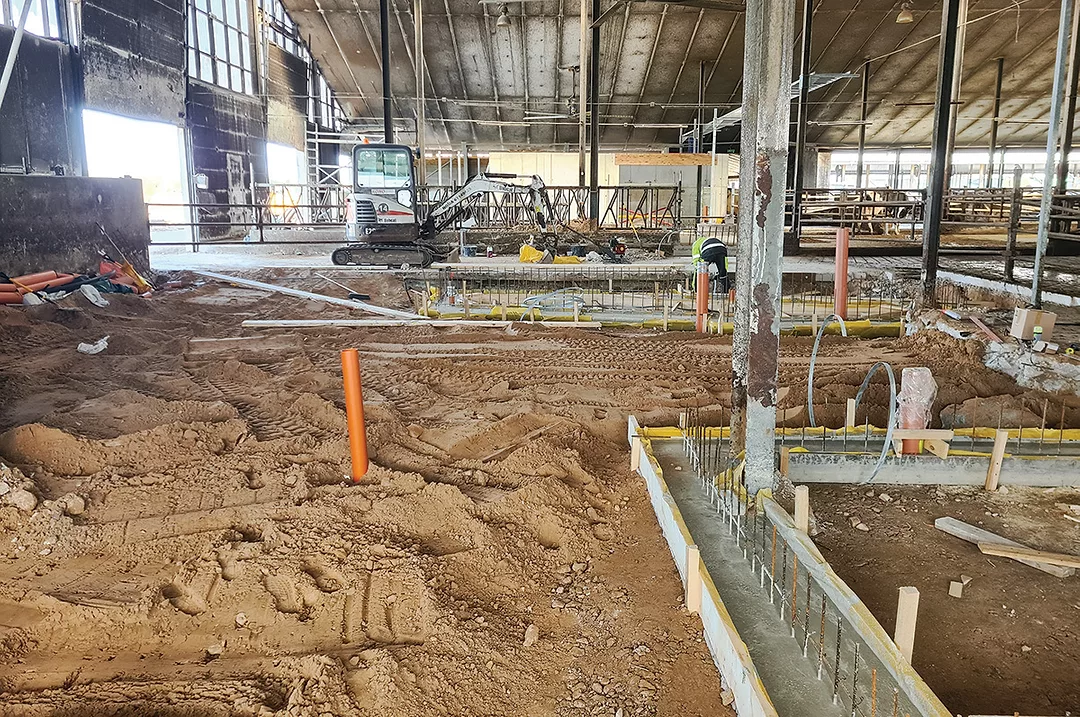
One of the first questions in any transition project is whether the existing barn can be retrofitted to support automated milking. Many barns were built for parlor systems and may not be suited to the requirements of automated milking without significant changes.
A rule of thumb is that a retrofit project should cost no more than 50% of a new barn. Building a new barn may be the wiser long-term investment if it exceeds this threshold. Also, certain limitations, such as poor ventilation or stall and alley dimensions in the barn, are often difficult and expensive to fix.
Retrofitting can work well, but it must be approached with realism. The goal is not to squeeze milking robots into the old space but to create a barn that functions smoothly for cows and people.
Robot placement in the old barn
Robot placement is one of the most critical design decisions in any retrofit, and too often it is based solely on installation convenience. Robots are frequently placed in the easiest spot to install. While this may reduce installation time, it can severely compromise cow flow and daily operations.
In automated milking barns, cows must move independently to the robot. Any obstacle that interrupts this flow can negatively impact health, productivity and labor needs. That’s why robot placement should not be driven by construction logic alone but by how well it supports daily functionality, for both cows and people. In an automated milking barn, often all the handling tasks are done in the barn, which requires decent facilities for handling and special-needs cows.
A good robot location enables natural cow traffic, minimizes stress and creates functional routes, for example, handling tasks and separated animal flow. Though installation may only take a few weeks, the effects of poor placement last for years.
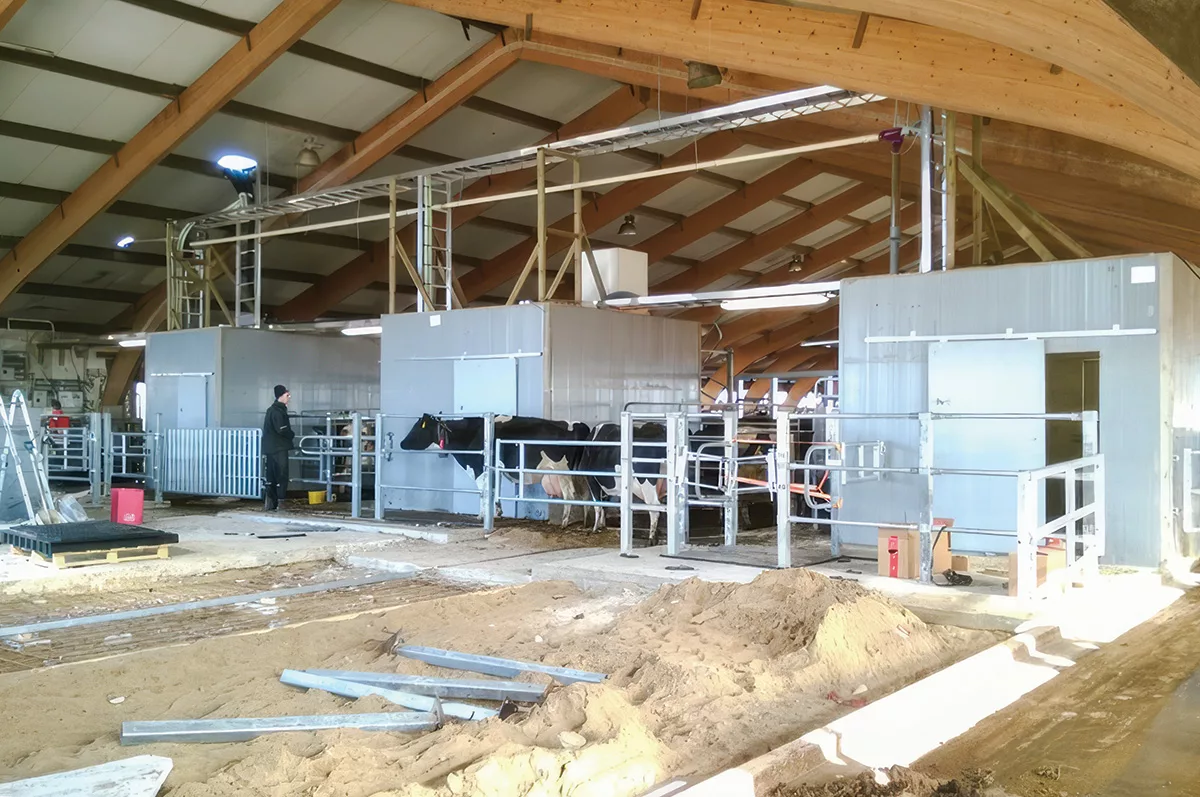
In retrofit projects, milking robot placement must prioritize long-term impacts on cow traffic and overall barn functionality. Courtesy image.
Management differences between automated milking systems and parlor barns
One of the biggest differences that any farmer must understand when moving from a parlor to an automated milking system is the fundamental change in management philosophy. The way work is organized, how animals are handled and how time is used in the barn differs significantly between the two systems.
In a parlor-based system, work is typically highly structured, routine-driven and focused on groups of cows. Tasks follow a predictable schedule and are repeated in the same order every day. Cows are moved in large groups as a herd and milked in batches. This system is built around handling masses of animals at specific times of the day.
In contrast, automated milking systems operate on a different philosophy – one that is built around individual cows. The goal is to interfere as little as possible with the cow’s natural rhythm, stepping in only when something is abnormal. This means the daily workflow shifts from physical routines to digital monitoring, with a focus on individual animal performance.
Understanding this shift is crucial for a successful transition.
Cow comfort
Automated milking systems rely on cows being healthy and mobile enough to visit the robot on their own. This makes cow comfort an essential foundation for any automated milking barn.
In parlor barns, all cows are brought to the milking area, even those with lameness or illness. In free-flow automated systems, cows must choose to go to the robot. If a cow is lame, she may avoid the robot, miss milking and reduce her feed intake. This increases the work involved in fetching cows and stress for both animals and staff.
That’s why design elements like stall comfort, flooring, ventilation and cow flow must be taken seriously. They directly affect animal health and, in turn, the functionality of the automated milking system.
It’s also important to remember that a milking robot is only a machine. It does not fix underlying problems in cow comfort. If there are issues with lameness, bedding or barn layout, they must be addressed separately. Without this, the robot’s full potential will never be realized.

In automated milking barns, all special care and treatments often take place inside the same building, making cow, people and equipment flows more complex than in a conventional barn. Courtesy image.
People management differences
The change in barn management also brings a shift in people management. In parlor barns, work is often narrowly defined; some workers focus solely on milking, while others might handle group movements or cleaning.
In automated milking barns, work becomes more diverse and often more demanding. Employees are often expected to make decisions, interpret data and respond to individual cow needs. A typical worker might start their day by checking the herd management system for cows needing attention, then proceed with tasks like stall cleaning, cow fetching, robot cleaning and even simple maintenance. Calving and calf care may also be included in their responsibilities.
This broader role requires better training and more independence from employees. On smaller farms, a single person may have to handle everything. On larger farms, roles can be more specialized. Either way, people management becomes more complex, and investing in the right training and support is essential.
Conclusion
We have covered some of the main areas every farmer should think through when considering a move from a parlor to automated milking. While these principles apply broadly, it’s important to recognize that each farm is unique. There is no one-size-fits-all solution. A 100-cow farm and a 1,000-cow farm will face different challenges, even if the goals are similar.
That’s why careful planning is the key to success. Every small decision will have long-term consequences. Barns are always built for at least 20 years of use, and once you build it, you live with it. If planning is rushed, key details often go unnoticed, details that shape everyday work, animal welfare and barn efficiency. These gaps can compromise the entire system and risk undermining the main objective – saving labor and improving daily operations.
One of the best ways to prepare is to visit robot farms in person. Not just for a guided tour during the day but to actually participate in the work shift. Watch what the morning shift looks like. See what staff actually do in the barn. Observe how cows move, eat and interact. These experiences offer practical insight that no brochure or presentation can fully capture. In general, reserve a lot of time for thinking and start planning at least one year before the investment.
And finally, use experts. Work with experienced designers, consultants and technical partners who can help you avoid costly mistakes and design a system that works.
When done well, a transition to automated milking can be a transformative investment. It can improve productivity, working conditions, cow welfare and even team motivation. But it all starts with thoughtful preparation.