On a dairy farm, where milk is being produced for eventual human consumption, creating a clean environment should always be present on a dairy producer’s mind, for many reasons. There are the obvious reasons like food safety, milk quality, animal welfare and more. But it also paints a better picture for consumers and it’s just a good business strategy, something that connects to many facets of your operation.

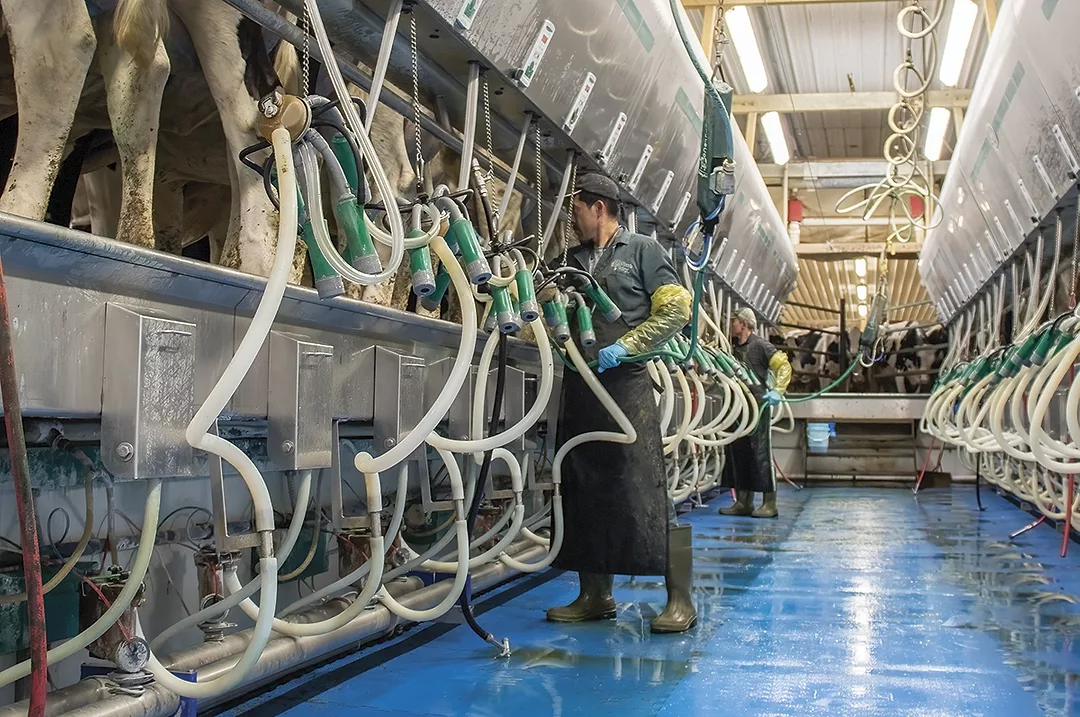
There’s no more important place on the dairy to focus on cleanliness than in the milking parlor. That’s the point that impacts not only milk quality but also the health of the animals making it. When we look at areas to address from a cleaning, disinfection and sanitization standpoint, we look at three things: milking, facilities and water hygiene.
Hygiene starts at the udder
Proper milking hygiene starts with the first touch of the cow. You want that first touch to generate oxytocin and subsequent milk letdown, which means tactile stimulation. That’s the first step before administration of a good predip to help sanitize the teat.
There are different schools of thought on how long to leave a predip on the teat before removal to make sure a good pathogen kill is established. A good pathogen kill depends on the dip’s oxidizing reduction potential (ORP). The ORP indicates the killing power of the teat dip solution, which will indicate how long it takes to effectively kill pathogens. Our dips utilize chlorine dioxide with an ORP of over 700, which indicates a kill time of less than a second. With this efficacy, we don’t have to worry about kill time and we can move on to making sure we are allocating enough prep time to initiate good milk letdown.
If we’ve done our job right when the milking unit goes on, there’s immediate milk flow and cows milk out quickly and easily. That leaves postdipping, where our first goal is to sanitize the teat and remove any lingering residual milk. We also want to inhibit any bacteria from going in through the teat end. There should also be emollients that help the teat skin recover.
Beyond udder hygiene, we can reduce the population of pathogens that could potentially cause a milk quality issue by keeping a regular cleaning regimen in the parlor. Paying attention to a strict cleaning protocol using the right ingredients is important.
Residues harbor pathogens, create hazards
Any parlor has surfaces that can be impacted by several different agents – from manure to milk residue, teat dips and other products. Spraying surfaces with water from a drop hose may remove the visible organic material, but residues are left behind that can cause significant damage. Plus, unless you’re treating the water going through those drop hoses, they can carry a high volume of bacteria like pseudomonas and other pathogens that are sprayed right back on milker units if you don’t take the time to clean those hoses. Residues from milk or teat dips that get spilled or splashed on walking surfaces can leave a film that causes slippery conditions. Milk residue left on milking units can create a pathogen load that can end up inside the udder and lead to mastitis.
A clean environment inside the parlor is possible if a regular cleaning protocol is followed. Some dairies clean and scrub inside the parlor after every milking. Other dairies may do a deep clean once a week. The more often you clean, the easier each cleaning becomes. Cleaning happens when it’s empty and while the CIP system is running, but cleaning less frequently – once per week, for example – can make it a struggle to get a proper cleaning done in the time it takes to run a CIP wash cycle.
Using a good bit of elbow grease to really get a parlor clean isn’t something that a milker will necessarily want to do after a tough seven-hour shift. It will help if you can remind them that their hard work is paying off in better milk quality and animal health.
Another area to consider when thinking about milking hygiene is the process that is used to clean the towels used to clean udders. When those towels are thrown in the washing machine, it takes more than a simple laundry detergent to actually get them sanitized. The detergent may remove the milkfats and teat dip emollients, but it won’t sanitize the towels. If a small amount of chlorine dioxide is added near the end of the wash cycle, it will effectively kill the bacteria on and help sanitize the towels.
Keep it clean
Protecting cows – especially their udders and teat ends – from pathogens goes beyond just parlor and milking hygiene. It extends into all areas where cows walk, drink, eat and rest, and much of it centers on removing things that we can’t normally see.
In barns where recycled sand is used, a biofilm can coat the sand and cause considerable issue. Besides making alleys slick, it can stick to teat ends and cause somatic cell counts to rise. We have found that applying a chlorine dioxide-based liquid at 30 parts per million directly on sand as it comes out of the manure separator helps remove that bio-slime to reduce deposits. We’ve found that removing the biofilm helps reduce the moisture content by 25%. At the same time, when the biofilm is removed there is also an 8X reduction in bacteria. That helps control pathogen loads and makes for a safer, cleaner bedding area.
Create clean drinking water
Dairies have been treating water to control pathogens for several decades using peroxide and chlorine. While the idea was sound, the level of product needed to be completely effective was cost prohibitive, so producers weren’t completely successful in eliminating pathogens. When chlorine dioxide became available for water treatment about eight years ago, producers were able to use it to get an effective clean with less product.
If you don’t think cleaning water troughs is important, take a minute to watch cows drink. Some just dip their noses in, and some dunk half their face in the water right up to their eyes. All that mucous membrane discharge from their nose, eyes, the back of their throat, is exposed through the water. When they’re done drinking, they lift their head up and all that water from inside their head drains back out and into the water trough where other cows will drink. That’s why we test water in drinking troughs and treat accordingly – to clean the water and reduce any residual slime or pathogens that may be left over.
Making hygiene a priority across the dairy
Dairy producers need to put good hygiene at the top of their priority list. Good hygiene protocols need to start at the teat end and work out to all parts of the dairy. This includes good milking protocols, plus disciplined parlor cleaning to help keep pathogens at bay. Good hygiene even moves out of the parlor to where cows eat, drink and rest. Using the right products and protocols will help make a focus on hygiene part of everyday management.