Traditionally, alfalfa is planted in the spring following multiple tillage passes along with a cultipacker or land roller pass to ensure a clean and firm seedbed. Newly seeded fields of alfalfa are often at a high risk of soil erosion due to limited soil cover and an ultrasmooth field soil surface. These field conditions create soils vulnerable to raindrop impact, reduced water infiltration and increased risk of soil loss during heavy rainfall events.

Field research and demonstration trials in southern Wisconsin have shown that establishing alfalfa into a green growing cover crop holds promise as an alfalfa establishment practice to reduce the risks associated with spring-seeded fields of alfalfa.
“Planting green” is the action of planting the seed of an intended cash crop directly into a green and growing cover crop. A popular winter-hardy cover crop option used for this practice is cereal rye. Begin preparing the field in the fall before alfalfa establishment by applying agricultural lime and fertilizer or manure according to soil test requirements, and follow with tillage where necessary to incorporate nutrients and level out the field. Plant cereal rye seed shortly after the field is prepared to promote adequate fall vegetative growth. In the spring, plant alfalfa directly into the living cereal rye using a no-till drill. This practice offers several benefits, including reduced weed competition, lower rates of soil erosion and nutrient loss, and improved soil carrying capacity.
 A new alfalfa stand developing within cereal rye sown at the time of rye forage harvest. Image by Josh Kamps.
During 2022 and 2023, the University of Wisconsin (UW) Division of Extension staff, in collaboration with local farmers and industry partners in southern Wisconsin, evaluated this practice. Cereal rye was no-till drilled following the soybean harvest in mid-October at the seeding rate of 60 pounds per acre. The goals for these trials were to better understand the alfalfa stand establishment outcomes and the yield and forage quality expectations for this practice. The treatment comparisons studied in this trial included no-till versus tillage, cover crop versus no cover crop, and herbicide versus forage harvest cover crop termination. In early April of the following spring, glyphosate-tolerant alfalfa was planted into green cereal rye at 18 pounds per acre.
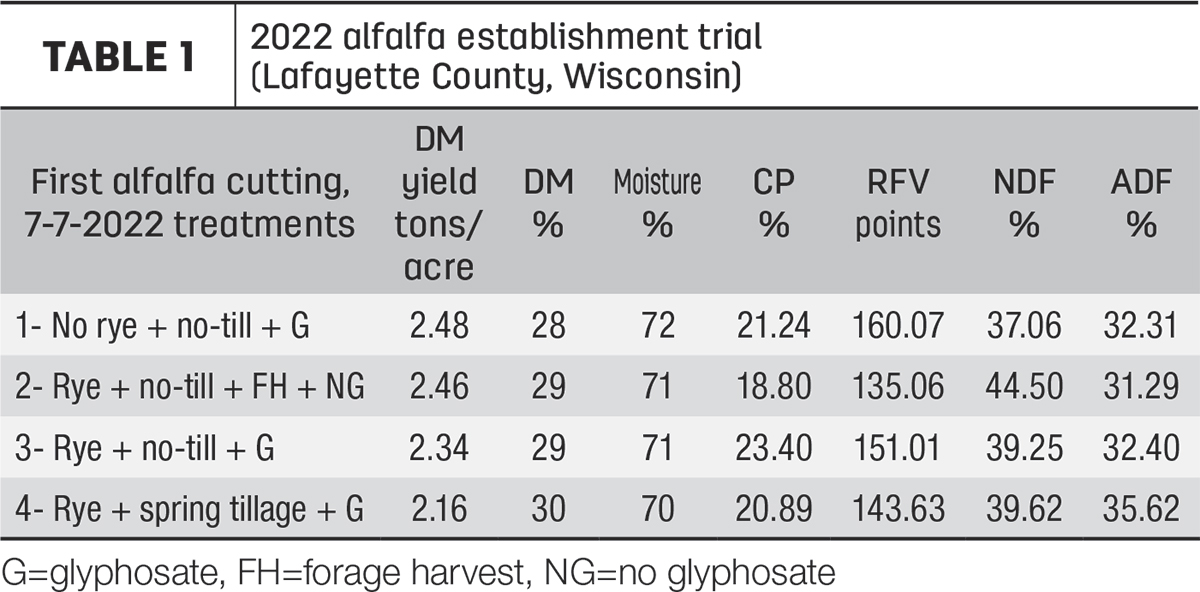
In 2022, during the beginning of July, the first cutting of alfalfa at the Lafayette County plot was harvested at the midbloom maturity stage. Table 1 outlines the average yield and quality data of four replications for the first cutting of alfalfa for each of the trial treatments. This dataset implies that tradeoffs for each management practice exist with the first crop of new alfalfa seeding. The uniformity of the treatments increased throughout the establishment year, and differences in later cuttings became minimal. Fall alfalfa stand assessment indicated maximum yield potential for all treatments, as the presence of a cereal rye cover crop did not appear to affect stand establishment in 2022.
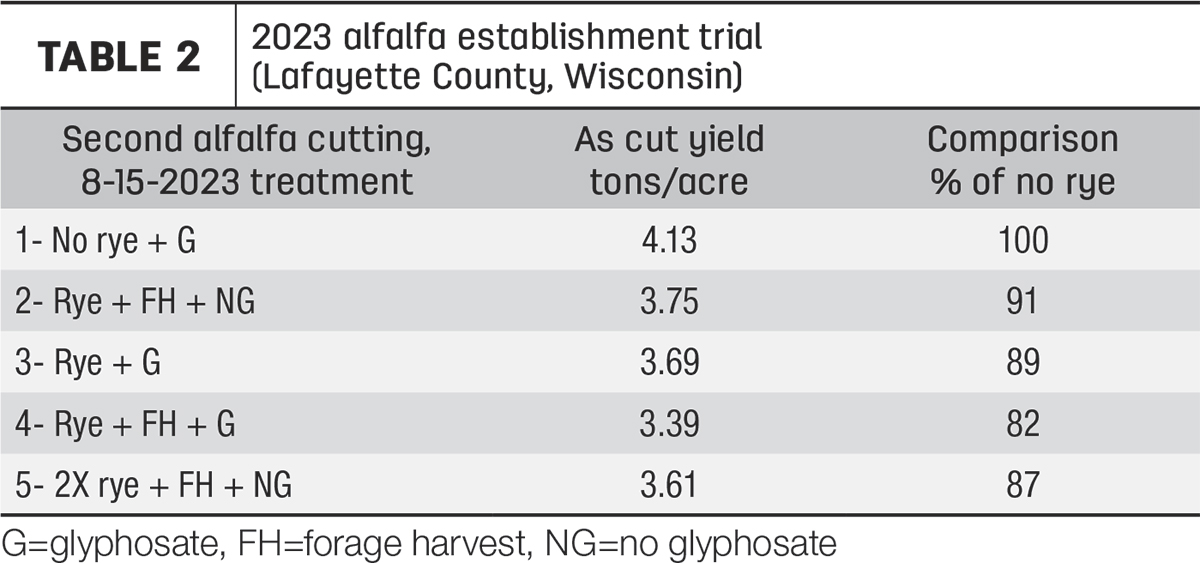
In 2023, the “planting green” alfalfa establishment practice was tested by the stress of an abnormally dry early growing season. The alfalfa establishment treatments in the trial with cereal rye were very slow to recover following the cereal rye forage harvest in mid-May. A rye forage harvest plus glyphosate treatment was added to the trial, along with a two-times rye seeding rate treatment replacing the spring tillage treatment. Table 2 below outlines the average yield and percent yield to the no rye treatment for all treatments in the trial at the second alfalfa harvest timing in mid-August. Although there were noticeable differences in the alfalfa yields between treatments, as in 2022, fall stand assessment in 2023 indicated maximum yield potential for all treatments within the trial.
Finding success with this practice on your farm begins by following alfalfa agronomic guidelines for soil fertility and pH and having planting equipment in good working order. Next, prepare the field for alfalfa seeding at the time of cereal rye planting, since alfalfa will be no-till planted early the following spring. Finally, decide on how you plan to terminate the cereal rye cover crop, either by a timed forage harvest, herbicide application or both, as this will direct the type of alfalfa seed that is purchased.
Please direct any questions on this alfalfa establishment practice to Josh Kamps via email or by phone (608) 673-0680. To view a short presentation on planting alfalfa green, use the following YouTube link. This presentation was shared during the 2025 Focus on Forage Program – Focus on Alfalfa Companions from the UW – Madison Division of Extension.

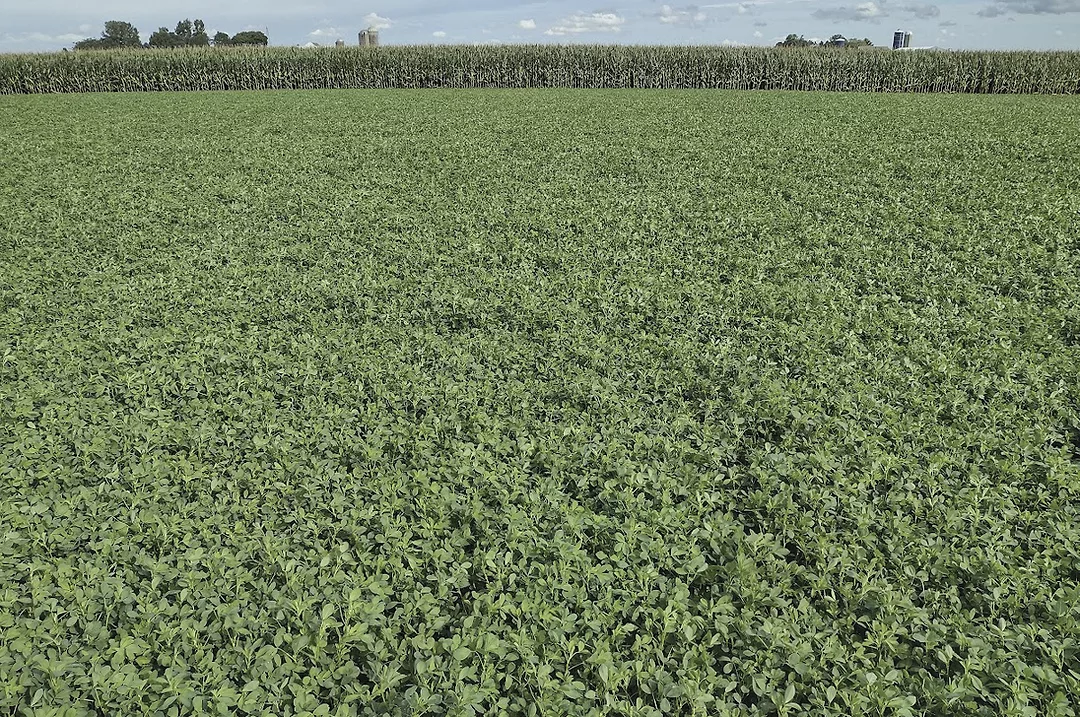
This alfalfa seeding stand displays uniform regrowth following its first cutting, indicating healthy establishment and promising stand density. Image by Josh Kamps.