Recently, I started working with the Rocky Mountain Llama and Alpaca Association to answer some nutritional questions.

Like our other grazing livestock species, the bulk of a camelid’s diet is forage. However, llamas and alpacas have a limited gut capacity relative to beef cattle and sheep. So their dry matter intake (DMI) remains constant even whether they are grazing or receiving hay. Therefore, these animals need more protein, energy and micronutrients provided by the forage in their diet. Additionally, unlike cattle but similar to sheep, there are some key nutrients required for fleece production.
General nutrition requirements
There is little research about camelids' nutritional requirements; however, a general understanding is still valuable when choosing forage to feed and making dietary supplement determinations.
Table 1 outlines the protein and energy requirements for llamas and alpacas based on physiological stage. These values assume animals are in a drylot.
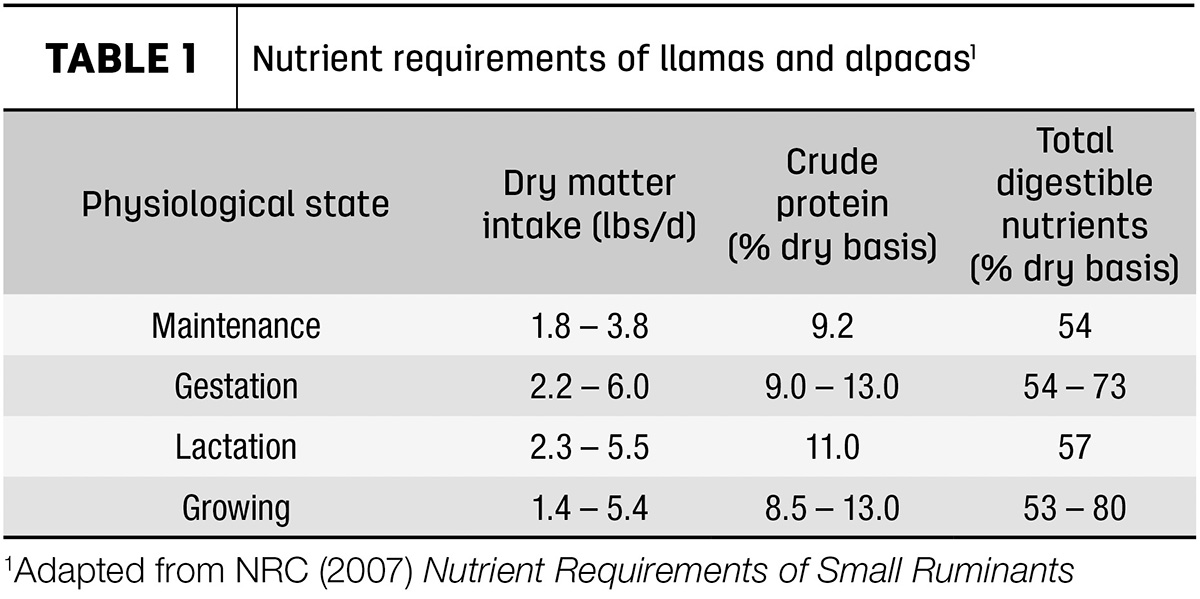
Grazing requires more energy because the animal is exerting energy when walking across the field or pasture to consume forages. Energy in a pseudo-ruminant diet is represented by total digestible nutrients (TDN). Energy comes from digestible carbohydrates, fiber broken down by gut microbes and fat. Camelids do have the ability to graze preferentially, so they will typically select a high-protein, high-energy diet while grazing.
Nutrition for fleece production
Protein and energy are both required to support fleece production. Additionally, there are several micronutrients that are key to not only fleece production but also fleece quality.
Zinc (Zn) is essential to skin and hair follicle health, and a deficiency can result in brittle fleece that easily breaks and feels coarse instead of soft.
Copper (Cu) is responsible for melanin production and the color of the fleece. A deficiency in Cu can be observed through lighter-color fleece and a change in texture.
Molybdenum (Mo) is a well-known antagonist to Cu absorption, and for other livestock species just 5 parts per million on a dry basis can interfere with Cu in the diet.
Sulfur (S) is another antagonist that can interfere with Cu absorption when they are at high levels in the diet. However, despite the potential to interfere with Cu, S is also a key component of the amino acid building blocks that make up the structure of fleece.
Iron (Fe) is another micromineral required for healthy skin and hair follicles but that can interfere with Zn and Cu absorption when in excess in the diet.
So just looking at fleece quality and production alone, we can see quite a balancing act arising when it comes to micronutrients in a camelid’s diet. We haven’t even started looking at biological function requirements for maintenance, growth, lactation and immune function.
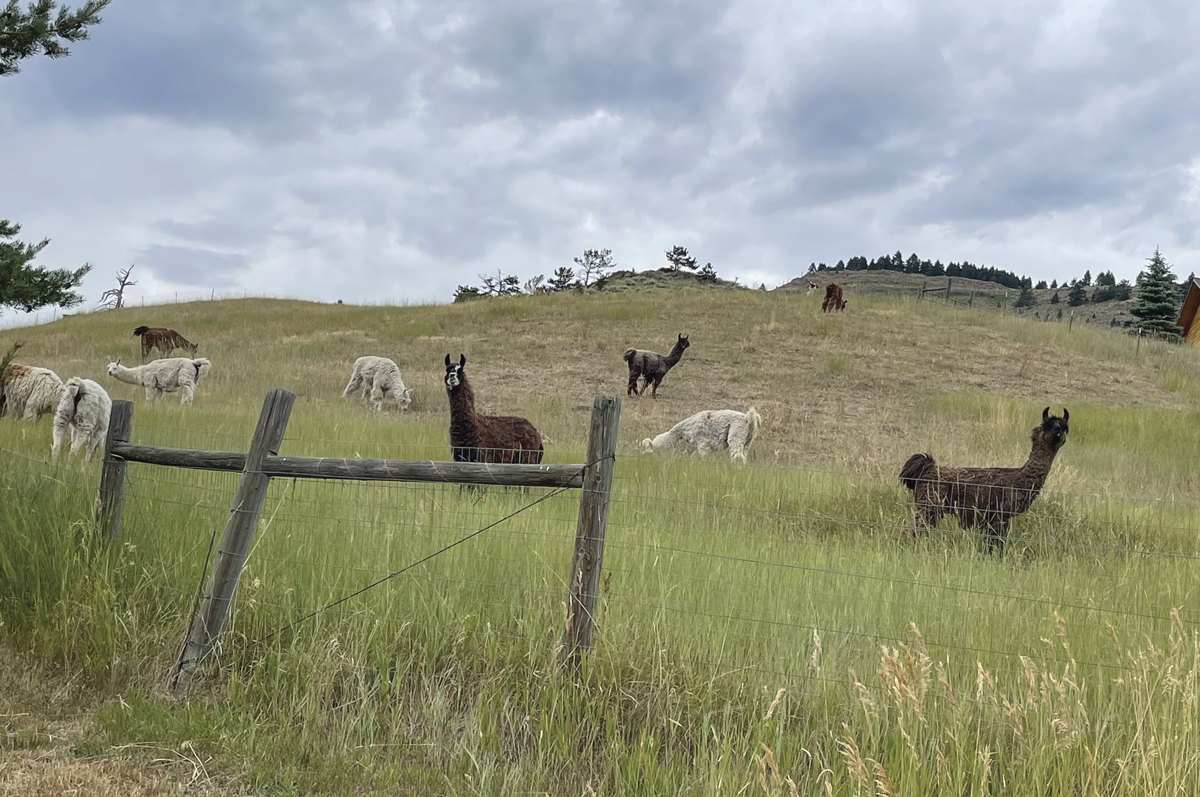
Llamas graze in a pasture in Montana. Image by Susi Huelsmeyer-Sinay.
Forage for llamas and alpacas
With limited gut capacity being a key consideration, choosing a forage that provides protein, energy and micronutrients is imperative to meet biological needs in addition to quality fleece production. Most good-quality grass forages will meet protein requirements (8.5% to 13% dry basis). Alfalfa hay with higher protein content that exceeds protein requirements of camelids, also have higher calcium (Ca) content. So they would need additional phosphorus (P) supplementation relative to the other forages to ensure an ideal ratio of 1.5-to-1 to 2-to-1 Ca-to-P.
Across forages, protein has been correlated with micromineral Ca, P, magnesium (Mg), S and potassium (K) concentrations. So lower-protein forages probably require not only more protein supplementation but also more mineral supplementation. Conversely, microminerals including Zn, Cu and Fe, key for fleece production and quality, were not correlated with the forage protein concentration. So camelids likely need supplementation for these key nutrients regardless of forage mineral profile.
Implications for llama and alpaca owners
Test your forage
Forage typically makes up most of the diet. A forage report helps assess protein, energy, fiber and other key characteristics to inform feeding decisions. While macrominerals are correlated with protein, microminerals are likely lacking in forages. Although present in forages, Zn and Cu are often very low in concentration and for other livestock species can be supplemented without worry of resulting in a toxicity issue. With the extra fleece requirement for llamas and alpacas, it is highly likely they will need supplementation of these microminerals. Understanding what is available in your hay or pasture can aid in making the best possible supplementation decisions.
Choose quality forages when possible
As mentioned earlier, the limited gut capacity of llamas and alpacas means it is important to fill that gut with nutrients. So when making hay-purchasing decisions or determining the timing for grazing pasture, choose forages that match their needs as closely as possible and fill minor gaps with targeted supplementation.
Work with your veterinarian or nutritionist to formulate a supplementation plan
As stated above, the requirements for camelids are vague. So working with professionals who have experience of working with both the numbers as well as the animals can help ensure success in meeting micronutrient requirements. Nutrition is both science and art; even in species with well-defined requirements, other factors such as genetics and environment can play a role.
In conclusion, even though we don’t have clearly defined nutritional requirements for llamas and alpacas, that doesn’t mean we should ignore their importance. Protein, energy and minerals like Zn, Cu, S and Fe are essential for fleece quality and overall health. Forage testing gives us a starting point to see what’s already in the diet, but it’s not the whole picture. Supplementation decisions should be based on both the forage nutritional profile and the specific needs of your herd. Working with a vet or nutritionist who understands camelids can help you fine-tune your feeding program. Paying attention to the details of mineral nutrition can go a long way in supporting healthy, productive camelids.
For more information about the Rocky Mountain Llama and Alpaca Association, visit the website.