Livestock grazing and distribution is affected by many factors. Weather, the animals themselves, topography, vegetation type and availability, and water all play a role in distribution across a smaller frame pasture or a much larger rangeland pasture. We will explore some of the challenges and opportunities grazing managers can utilize to improve grazing management across the pasture or across the landscape.

We tend to talk quite a bit about the weather. It is generally too hot, too cold, too wet, too dry or some combination thereof; however, there is little we can do to change it. Topography is another factor that we cannot change and have little if any influence over.
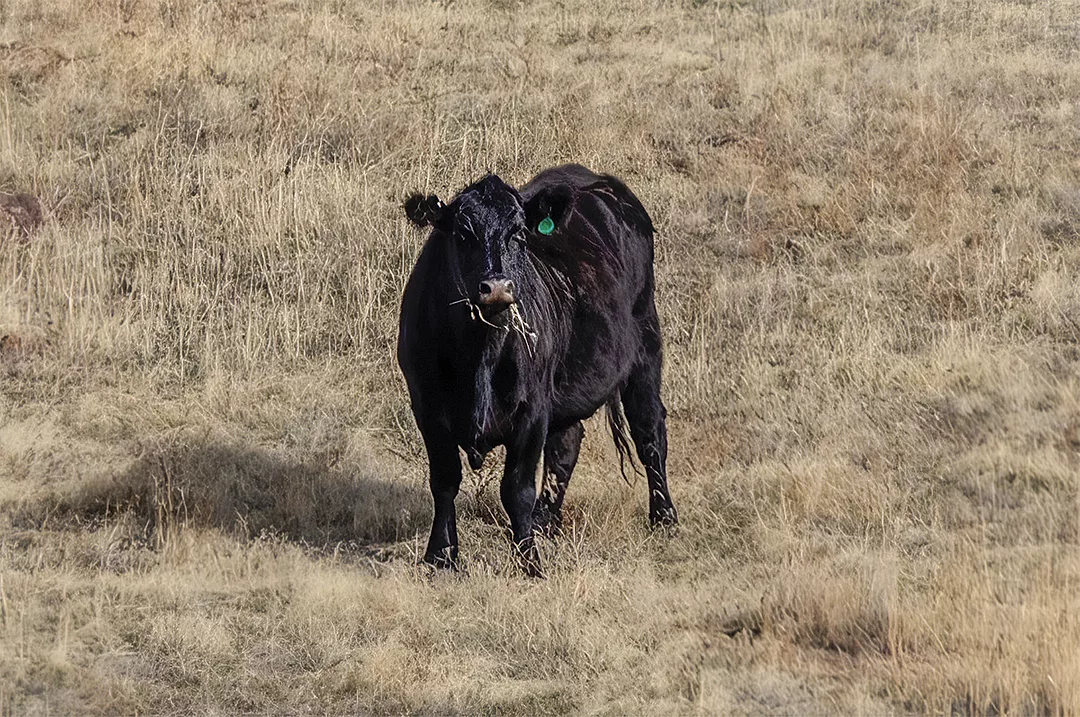
One thing that we do have influence over is the genetic makeup of our livestock. Take a hard look at the genetics of our livestock. Are your cattle willing to work for a living by ranging out and up, or do they spend the majority of their time hanging out in the riparian areas? Recently, some University of Idaho research conducted by graduate student Landon Sullivan and his mentor Jim Sprinkle has determined that cattle classified as efficient spend less time in sensitive riparian areas and more time grazing the uplands than inefficient cattle.
With the aid of Brenda Murdoch, they have identified a genetic marker that may aid in selecting more efficient, hill-climbing cattle (see Life on the Range video “Searching for the Perfect Range Cow”). Selecting for animals that will spend more time in the uplands can improve grazing distribution and management. This is definitely not a quick fix but can provide significant benefits over time.
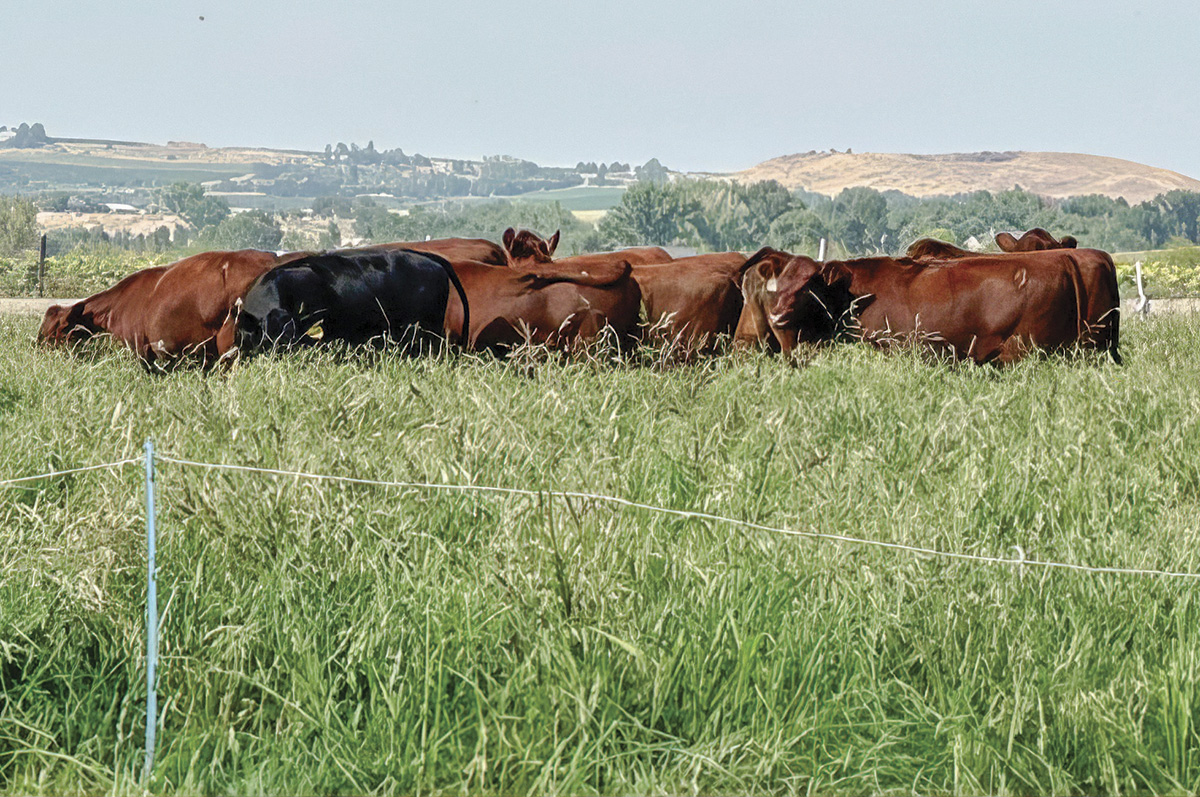
Temporary electric fencing is used to control grazing distribution. Image by Scott Jensen.
Vegetation type and availability can affect grazing patterns and distribution. Do you have areas in your pasture that your animals prefer or areas that are avoided? On the southern end of my tame pasture, I have a higher density of tall fescue. If left to their own accord, my cows will avoid that area while severely grazing the rest of the pasture that is predominantly orchardgrass, which is much more palatable. I can manage grazing distribution there by utilizing electric fencing to force cattle to graze that area. In a larger rangeland pasture, grazing distribution can be managed utilizing herding, permanent fencing, virtual fencing and strategic supplementation of salt and mineral.
It also may be appropriate to consider options for improving areas of avoidance. Is seeding with more desirable species an option? If invasive annual grass is an issue, perhaps applying a preemergent herbicide might help. In another personal example, I had bristle foxtail show up in my pasture a few years ago. It is a summer annual with high silica content. Cattle and horses absolutely do not care for it. A few years ago in late October, I applied indaziflam (active ingredient) at a rate of 5 ounces per acre. It significantly reduced the amount of bristle foxtail for the next few years.
Water is perhaps the most influential factor affecting grazing distribution. A research study conducted at the University of Wyoming in the 1980s by Dick Hart documented some interesting facts regarding grazing distribution in relation to the distance from water. In a 2,500-acre range pasture, 77% of the grazing occurred within a quarter-mile of the water source. This caused the rangeland close to the water source (within 660 feet) to be severely degraded. Rangeland farther than 3,000 feet from the water source was vastly underutilized. The bottom line is that 77% of the total grazing use was coming from only 35% of the pasture.
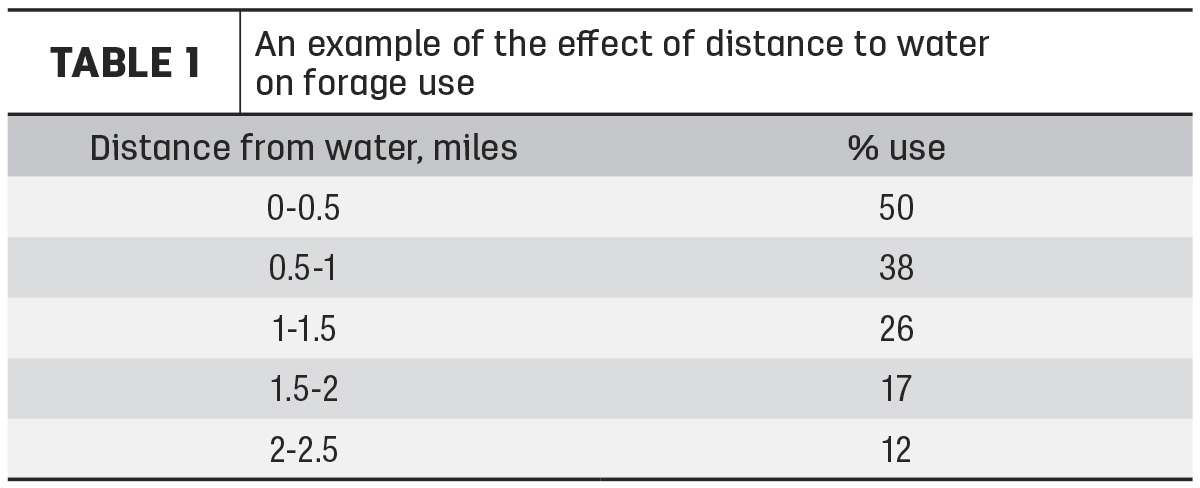
Research conducted by Jerry Stuth from Texas A&M in the early 1990s on rangeland in south Texas showed similar results. Table 1 shows that compared to cattle grazing within a half-mile of the water source, forage utilization dropped 24% at distances between a half-mile to 1 mile and declined by 66% at 1-and-a-half to 2 miles.
At the University of Idaho Extension’s Lost Rivers Grazing Academy, Jim Gerrish shares a real-life example from a ranch he has worked with. They had a 2,640-acre range pasture that historically wintered 450 cows for 42 days. It was a mix of native and seeded range with no interior fences and one water source. An evaluation of the grazing pattern showed severe use close to the spring and light use at distances more than 1 mile.
During the summer of 2005, they drilled a well, developed the spring and piped water to several additional watering points. This nearly doubled the carrying capacity and they were able to feed 800 cows for 45 days in the same pasture.
During the summer of 2006, they installed some interior fence, creating 16 160-acre paddocks. The following winter was a trial year as they learned how best to rotate the cattle through the pasture, but during the winter of 2007-08, they were able to carry 900 cows for 85 days.
These project developments and management changes have allowed this ranch to go from feeding 2.5 to 3 tons of hay per cow each winter to just 300 pounds of hay per cow. Where did this extra feed come from? It was there already and just needed some infrastructure improvements to be able to have the cattle harvest it. It did require some investment, but the hay savings will continue to pay dividends for a long time to come.
As you look ahead to the next grazing season, take time to think about these and other options that will improve livestock distribution and your grazing management. It may not only help you improve your grazing resources but might also help improve your bottom line.