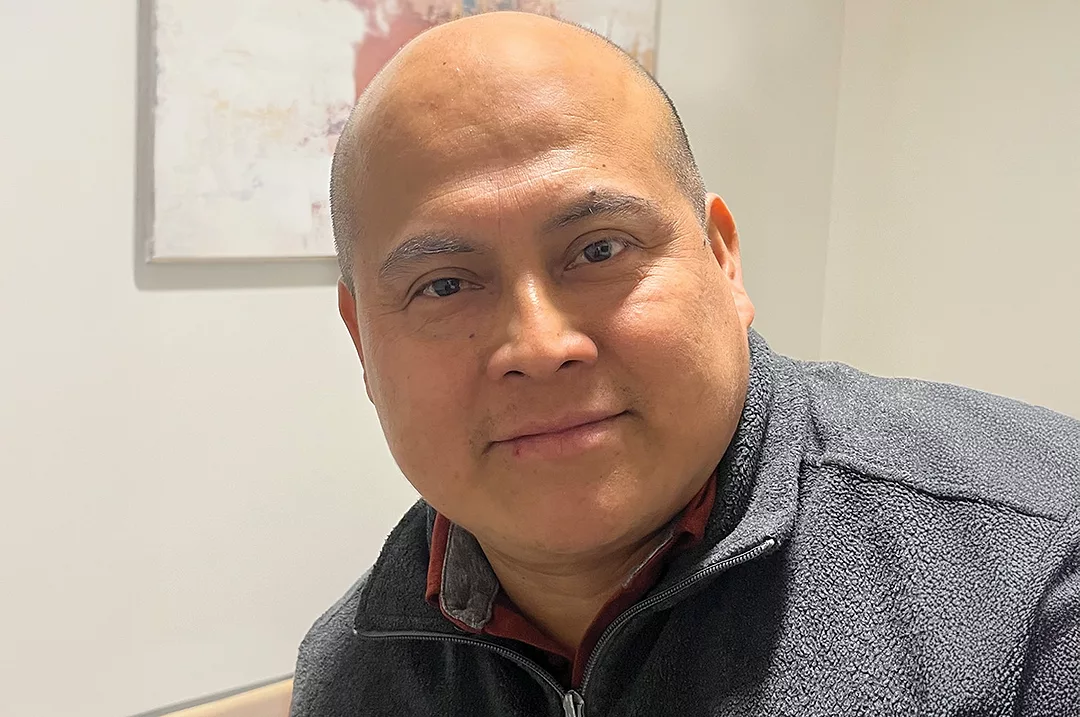
Progressive Dairy connected with Demetrio Bautista Ortiz, a hoof care consultant with Save Cows Network, to discuss on-farm training, employee engagement and creating a support network for improved hoof health on U.S. dairy farms.

What does your work look like as a hoof health adviser?
ORTIZ: As a consultant, I try to convey that passion and compassion about caring for cows. Seeing people wanting to get better at their job as hoof trimmers pushes me to do my best so that they understand the importance of animal welfare because of good hoof care practices. Something I like to tell people during training is, "Cows don't decide which dairy they go to, but we can choose to do the best for them."
What can farm teams learn from an adviser?
ORTIZ: Teams on farms can learn to see problems from another perspective. Being on the farm daily, farm staff tend to believe the processes they execute are the best. This approach to process management can inhibit the farm’s growth. There is always an opportunity to learn, and each person observes things from a different perspective. Learning this aspect from someone externally increases the possibility of taking things to the next level.
For me as an adviser, I am able to help the hoof care team so they are part of the success of the health of the herd. Their contribution to herd health makes big changes – and it starts with the small details.
Describe a way farms can implement this support network into a schedule that works for employees.
ORTIZ: As an adviser, it is important to be flexible around the farm’s schedule. For hoof care instruction, I suggest at least two days of training for the initial session at a frequency of two to three times per year. This ensures progress continues to be made for the hoof care team. After the first year, I suggest two one-day training sessions per year to ensure procedures are being followed and the staff have the resources they require. I also recommend managers attend the theory portion of the training to understand the economic impact and repercussions of lameness on the productive life of the cow.
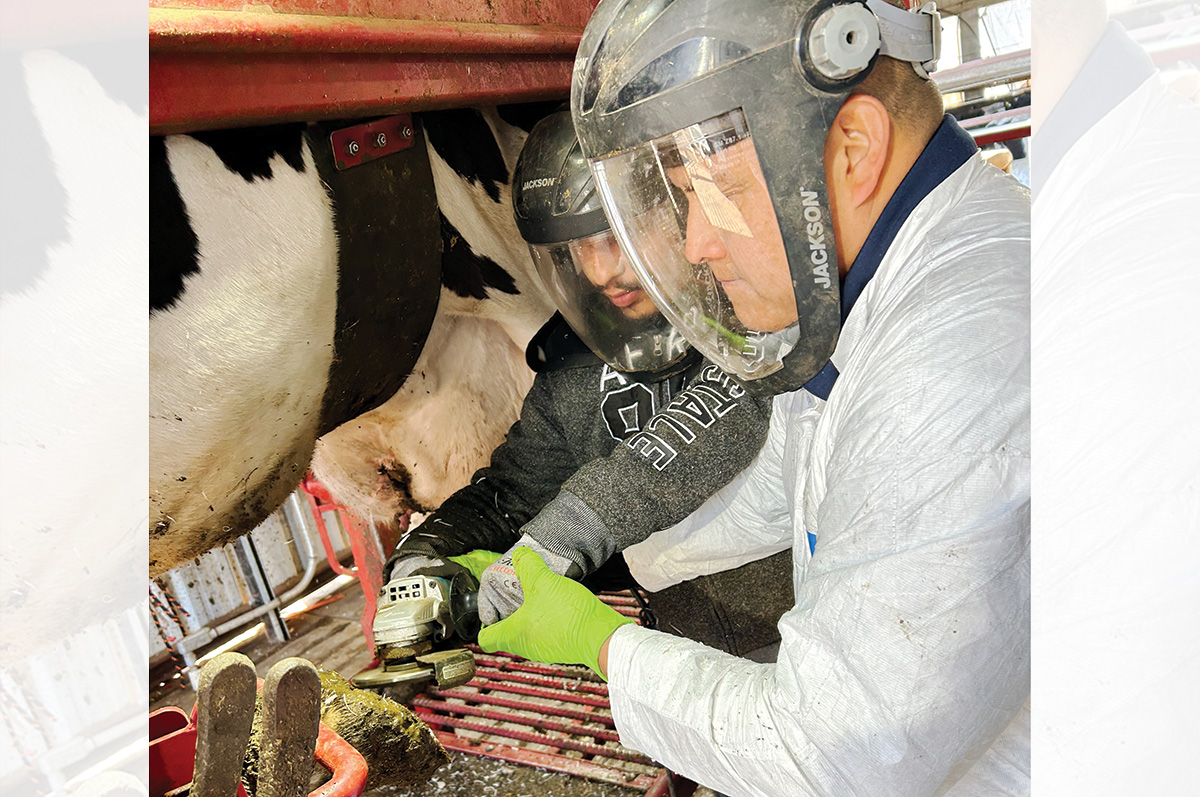
Demetrio Bautista Ortiz helps train an employee on hoof trimming during an on-farm consultation. Image provided by Demetrio Bautista Ortiz.
How is this relationship effective in creating more awareness for proper hoof health management?
ORTIZ: In my experience, to be effective and raise awareness, you must invest in your hoof care team. The question is how to do that. Provide reliable, easy-to-understand information, tools and basic knowledge to improve hoof health and take the hoof trimmers to the next level, sharing the knowledge with simple analogies. Hoof health is important and has a large effect on the herd. The work they do contributes to the sustainability of the dairy within the industry.
Tell us about one of the greatest success stories you’ve watched or been a part of.
ORTIZ: During my first training experience, the dairy had reduction in digital dermatitis events of more than 50% four to six months after training. This was because we implemented and executed an action plan focused on the main problem affecting the cows. Three months later, I was called back to follow up and coach two new people.
On another farm, they had seven people trimming every day of the week. The range of errors was wide, difficult to control and hindered the development of the technique. Later, we reduced it to two people, which facilitated the improvement of the technique, safe and correct handling of the tools, fewer errors – therefore, more healthy cows.
In another, the farm had an external trimmer and they only wanted to train two people to correct lameness. The external trimmer did not apply blocks and they did not have record of the events of previous years. He was generating cows with chronic lesions. The manager decided to bring the trimming in-house. For the first five months, it was challenging to decrease the number of infectious and non-infectious events. After those months, the cows with a first event decreased drastically and the commitment of the technicians translated into excellent results.
The success of the technicians is part of my success. If they are successful, I am successful as a consultant. My goal is to be able to contribute to the dairy industry for the welfare of cows and have the opportunity to teach people about hoof care.