The dairy industry stands at a crossroads. Labor shortages, rising input costs and growing expectations around animal care are forcing producers to think differently about how they manage their operations, not just for today but for the next five to 10 years and beyond. For many, the question isn’t if they’ll adopt new technology, but when and how.

For large herds especially, automated milking is emerging as a serious and strategic consideration.
When talking about the farm of the future, everything comes back to focusing on individual cows. Whether it’s milking, manure handling, feeding or pushing up feed, every system and decision on the farm revolves around meeting the needs of each cow. Today’s technology is giving dairy producers new ways to accomplish that. By focusing on the individual cow, understanding what she needs and when she needs it, producers can help her reach her full genetic potential. That means improved health, increased production and greater efficiency across the herd.
Increases in genetic potential of cows, management
While management plays a critical role, the evolution of genetics have been a powerful driver of progress in modern dairy operations. The Holstein cow, for example, has incredible genetic capacity.
According to the Council on Dairy Cattle Breeding, from 1970 to 2020, Holstein cows increased their production potential by more than 900 pounds of combined fat and protein; 62% of that gain is attributed directly to genetics, which indicates how far the industry has come.
In addition to genetic changes, dairy production trends show that the 1990s were a turning point in the industry. That’s when sand bedding became more common, barns opened up with better ventilation, and cows moved from tiestalls to freestalls. These cow comfort-focused changes led to a major jump in milk production.
Genetics have set the stage for increased production, but to truly capture that potential, management systems must evolve alongside genetics. That is where automated milking systems are reshaping the future of industry, not just for small or mid-sized dairies but increasingly for large herds looking to drive efficiency.
Milking when cows want to be milked
In traditional parlors, the best and the worst cows are both milked three times a day. High-producing animals don’t always get the opportunity to be milked more often, and lower-producing cows can create bottlenecks. With robots, each cow’s milking schedule can be individualized.
With automated milking, the top cows in the herd may visit the robot four or more times a day, while lower producers might come twice. That flexibility means the system adjusts to the cow and not the other way around. This shift allows cows to reach their full genetic potential. It also creates a calmer barn environment, where cows move on their own terms. For owners and employees, that can translate to less stress, quieter barns and an increased focus on herd health and performance.
The 1,440-minute challenge
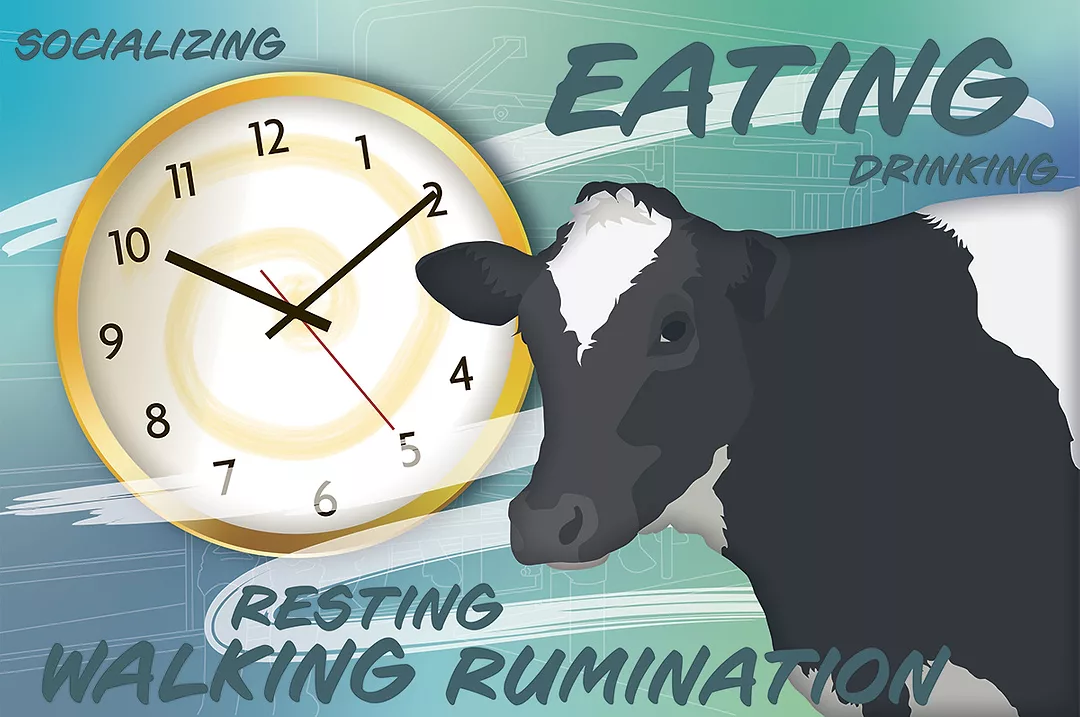
A dairy cow has just 1,440 minutes in her day, and how she uses that time has a direct impact on both production and health. Research from the Miner Institute shows how a typical cow’s daily routine breaks down:
- Eating: 5 hours
- Resting: 14 hours
- Ruminating: 10 hours
- Socializing: 3 hours
- Drinking: 0.5 hour
- Walking to/from parlor: 3 to 3.5 hours
When you add it up, the total exceeds 24 hours. Something has to give, and it is often resting time, which is essential for optimal milk production.
Automated milking changes that equation. By eliminating long walks to the parlor and time spent waiting in holding pens, cows gain back valuable minutes for resting and ruminating. With the freedom to visit robots on their own schedule, they spend less time idle and more time engaged in behaviors that drive production. That’s why resting time is often higher in well-managed automated milking barns compared to conventional parlors.
Not just for small herds anymore
Automated milking was once viewed as a technology best suited for herds of 60 to 250 cows. Today, that perception is changing quickly. Large dairies across North America, including operations with thousands of cows, are adopting automated milking systems either fully or as part of hybrid strategies.
Large-herd producers are proving that automated milking can scale. They’re using them to create calmer environments, improve reproduction and make better use of their labor force.
Some dairies are adding automated milking pens alongside existing rotary or parallel parlors to target specific cow groups, such as high producers or fresh cows. Others are building new facilities designed entirely around free cow traffic and automation.
Early adopters, like Ward Dairy in Idaho and County Line Dairy in California, have demonstrated how well-planned automated milking systems can thrive in large-herd settings. A common factor of these successes is education before installation.
Producers who visited automated milking dairies and participated in farm management support (FMS) programs reported smoother startups and fewer disruptions, setting the stage for long-term success.
The power of cow-level data
Each automated milking interaction generates a stream of data including milking frequency, visit patterns, milk flow curves, health and reproduction indicators, conductivity readings and more. When combined with feeding and manure data, it forms a real-time picture of each cow’s performance and behavior.
Visit behavior reveals which cows are maximizing robot access and which might need encouragement or grouping adjustments.
Milk flow curves help identify bimodal milkings, prompting changes to stimulation settings or teat preparation. Heat detection and health alerts flag potential problems early, allowing interventions before they become costly.
For large herds, this level of granularity isn’t about micromanaging thousands of cows individually. It’s about managing issues quickly and acting efficiently.
Animal welfare meets ROI
Animal welfare is often discussed as an ethical priority, but for dairies it’s also a business driver. Improved cow comfort and improved well-being have direct impacts on reproduction metrics, including:
- Shorter days open
- Fewer services per conception
- Improved pregnancy rates
Better reproduction translates into reduced replacement costs, steadier milk flow and more efficient herd turnover. Add in labor savings and increased production, and many large-herd producers are seeing tangible returns from their automated milking investments.
Reproduction is a silent profit center. When cows are comfortable, they get pregnant more consistently. That’s where the numbers really add up.
Shifting the labor model
Labor remains one of the most pressing challenges in large-herd dairies. Automated milking doesn’t eliminate labor. It reshapes it. Instead of focusing on repetitive tasks like pushing cows and attaching units, employees can concentrate on cow health, maintenance and management.
Automated milking also creates a more attractive work environment. A quieter, calmer barn can improve employee retention and reduce training time. For dairies struggling with turnover or workforce shortages, this shift can make a meaningful difference.
Education is the first step
The learning curve for automated milking is real but it is also manageable. Many successful large-herd producers began their journey with farm visits, peer groups and farm management services training. These resources help teams understand cow flow, pen design and data management before the first robot is installed.
The opportunity ahead
The dairy industry has always evolved around innovation, from genetics and nutrition to housing and management. Automated milking is the next step in that evolution. By giving cows more control over their time and producers more insight into herd performance, automated milking is helping large dairies reach new levels of efficiency and profitability. The genetics are ready. The technology is here. The future belongs to dairies that build systems around the cow.