Magnesium (Mg) is one of many essential minerals in dairy diets, and while most rations exceed magnesium requirements on paper, variability in magnesium source quality can make the difference in your transition cow program.


Unfortunately, solubility of our supplemental magnesium sources is a significant challenge in the feed industry today. Mined sources of magnesium, especially magnesium oxide (MgO) sources, can vary widely in solubility and it is difficult to visually assess whether you have a high-quality source or not. However, there appears to be consistency within supplier and brand level; thus, screening a source and sticking with that source can help improve the stability of magnesium supply to your dairy.
It is important for nutritionists and feed mills to have an open discussion on supplemental magnesium sources for the ration with an emphasis on consistency, then quality of the supplemental sources. Even a known poor solubility (within reason) magnesium oxide source that is consistently poor is easier to manage in a ration than a magnesium source that oscillates unpredictably between high and low quality on a weekly basis. Simply hedge against poor quality by adding in extra magnesium oxide. However, low-solubility magnesium oxide not only reduces absorption but can inadvertently increase ration cost by taking up valuable space.
Although dietary magnesium is critical to the organizational structure of bone, NASEM (2021) clearly states that bone is not a significant bank of magnesium for the cow to use on a daily basis, even when she mobilizes calcium (Ca) (and phosphorus) from that same bone storage during the transition period. Excess magnesium is excreted in the urine, and this means that delivering magnesium to the cow on a daily basis is necessary to avoid clinical hypomagnesia (grass tetany), but also to prevent additional risk factors for hypocalcemia (milk fever) caused by marginally low magnesium status. Combine this with our knowledge that net positive absorption of magnesium in the cow must occur in the rumen, and it becomes quite clear that soluble magnesium delivered into the rumen is a high priority because the risk to cows increases as magnesium solubility declines.
Assessing magnesium status
How can you assess the magnesium status of the lactating cows in the herd to know whether magnesium is limiting their performance? This is certainly a challenge, and the answer that “the cows will tell you” is common, practical, yet troubling for someone who thrives on data. Plasma magnesium concentrations may be a good benchmark to know if magnesium status is contributing to hypocalcemia risk on your farm; NASEM guidelines indicate blood magnesium below 1.25 milligrams (mg) per deciliter (dL) impairs parathyroid hormone (PTH) ability to increase calcium absorption from the diet. A safer blood target is likely between 1.7 to 2.4 mg per dL, and a comprehensive review on mineral absorption by Dr. Jesse Goff in 2014 suggests 2 mg per dL within 24 hours post-calving as an indicator of adequate magnesium. Knowing that excess magnesium is excreted in the urine, the nutritionist can also assess improvements in magnesium status (typically changes in magnesium source) by measuring increased urinary excretion, as seen in several recent studies published in the Journal of Dairy Science.
Variability of magnesium source solubility
Our team recently illustrated the variability of magnesium source solubility in the industry by developing a time-point solubility test in collaboration with Cumberland Valley Analytical Services, Celtic Sea Minerals and CSA Animal Nutrition. This test titrates small amounts of product in a weak acetic acid solution at pH 5.5 – intended to be closer to rumen pH than the more acidic vinegar test – commonly called the “Goff test” – at a pH of around 2.5.
Using 20 different samples collected from across the U.S., we assessed solubility of magnesium over time and presented these findings at the 2025 American Dairy Science Association meeting in Louisville, Kentucky. A key feature of this test is that magnesium is directly quantified from solution, meaning the results aren’t based on pH change but instead on how much magnesium can be measured in the solution itself. This gives a clearer, more realistic picture of how much magnesium is available for absorption in the rumen.
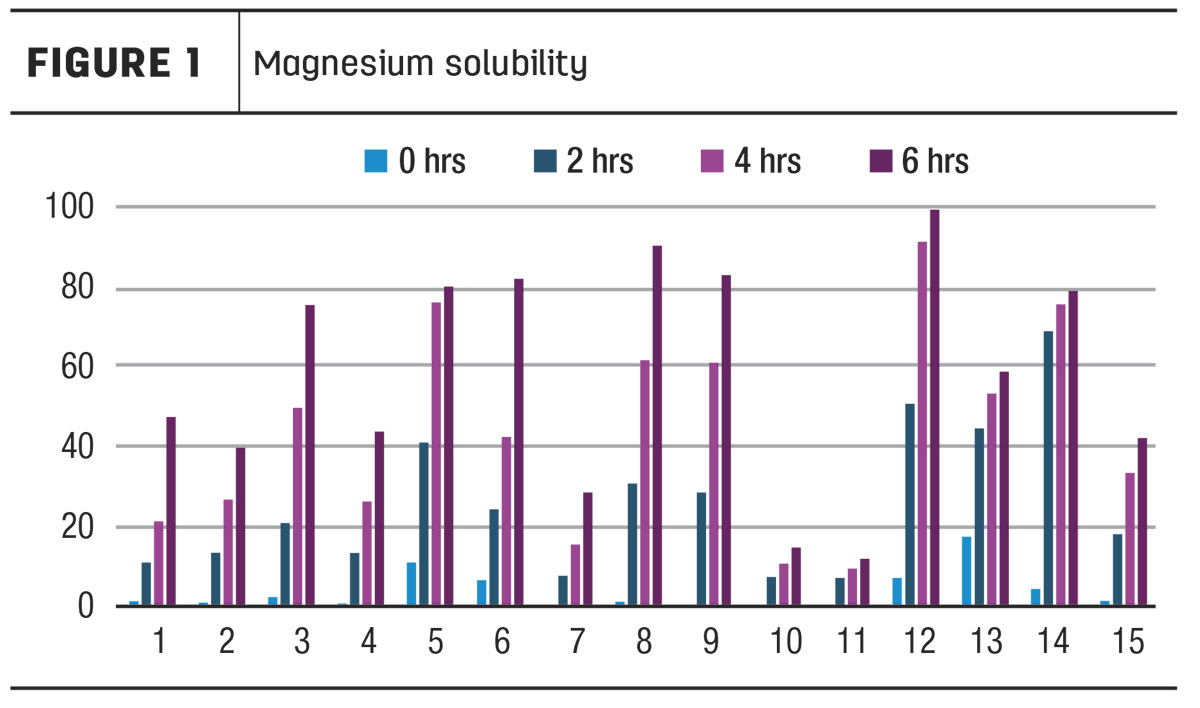
Solubility results from 15 of these samples are illustrated in Figure 1, demonstrating dramatic differences in magnesium solubility among various carbonate, oxide and blended feedstuff products. Early solubility (zero and two hours) reflects how quickly magnesium becomes available for absorption in the rumen, a critical factor during periods of high demand like calving or early lactation. Meanwhile, solubility at six hours provides a better indicator of total dietary magnesium availability. While there are certainly times when rapidly soluble magnesium has greatest benefit, such as the transition cow, there is also value in knowing how much magnesium from a product will be unavailable during its residence in the rumen. This insight allows for more strategic formulation and sourcing decisions.
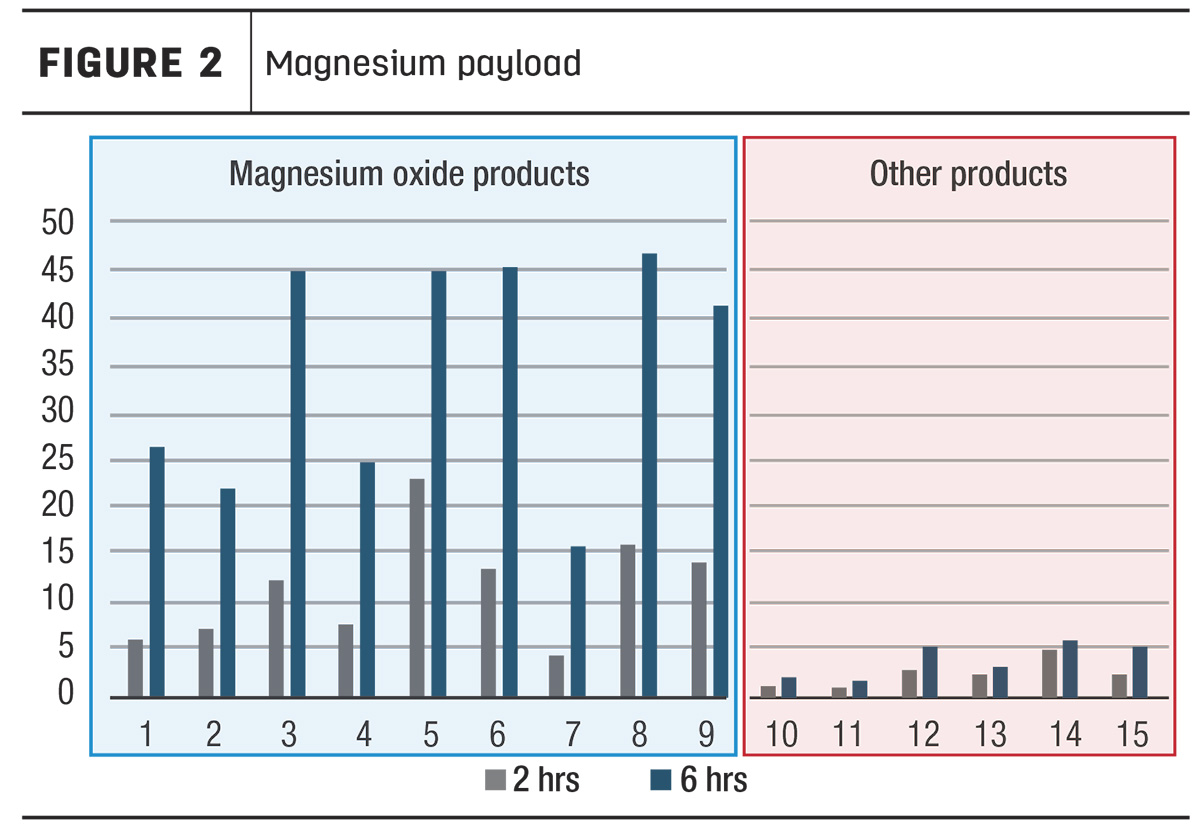
Equally important, however, is considering the total payload of available magnesium each product delivers to the cow. We estimated this by multiplying the percentage of magnesium from the product specification by the solubility measured at six hours. This data is presented in Figure 2, which demonstrates how some of the most soluble magnesium sources provide low total payload to the theoretical cow. These are likely carbonate-based products that dissolve quickly but contribute little magnesium because they are primarily calcium carriers. In contrast, there are also low-solubility, low-payload products that take up valuable space in the rumen but provide little nutritional value. These may displace fermentable carbohydrates, lipid supplements or additional protein that could support production. Likewise, there are high-payload magnesium oxide sources with low, moderate or high magnesium solubility. These demonstrate that not all magnesium oxide sources should be priced in the same bracket. However, the pricing structure for these products likely does not reflect their nutritional value in terms of magnesium payload.
Our recommendation from this work is straightforward: Both the nutritionist and the feed mill should collaborate to screen magnesium oxide for solubility more regularly. Because magnesium oxide remains the predominant supplemental source in dairy rations, a simple vinegar test offers a quick and inexpensive way to monitor quality. Beyond this simple test, other mineral sources containing magnesium should also be evaluated for their solubility in the animal. Low magnesium-containing mineral sources with high availability can still make a meaningful contribution to the magnesium status of your herd, and differences in solubility should be priced accordingly. Paying attention to solubility and payload ensures that every gram of mineral in the diet delivers value to the cow. Ask yourself if you are paying for nutrients or just paying for rocks?
References omitted but are available upon request by sending an email to the editor.