Farmers who came to the 2025 Dairy Sustainability Alliance Fall Meeting did not travel to hear theories. They wanted workable tools, proof points and honest dialogue about how sustainable practices can work for them and deliver a return on investment (ROI).
By the end of the meeting, many said they felt a team-oriented focus that the industry is aligning around continued progress that pays off on the farm.
The alliance – created through the checkoff-founded Innovation Center for U.S. Dairy – brings together farmers, cooperatives, processors, retailers, food service, researchers and non-governmental organizations to collaborate to advance dairy’s shared social responsibility priorities.
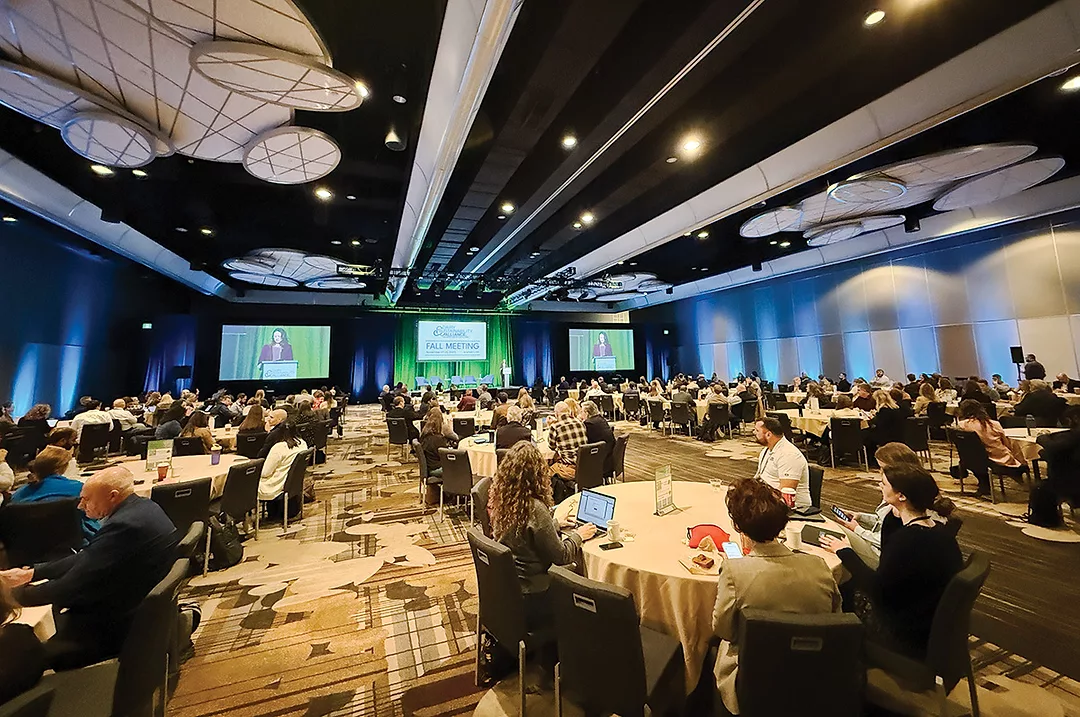
The fall meeting – held Nov. 17-18, 2025, in Anaheim, California – emphasized that farmers are not being asked to shoulder the sustainability journey alone. More than 270 people from across the dairy value chain were in attendance.
“Farmer participation – whether it is on stage, in group sharing sessions or hallway conversations – has always been a highlight of the Dairy Sustainability Alliance meetings,” said Sarah Hanson, executive vice president of the Innovation Center. “Hearing directly from producers gives attendees a fuller understanding of the realities of running a dairy and how they can be better partners in advancing shared goals.”
With stronger data, clearer measurement and a growing suite of science-based solutions, industry leaders made it clear that progress at the farm level must come with economic viability. Sustainability cannot succeed without ROI.
Lori Captain, group executive vice president of sustainability strategy, science and industry relations at Dairy Management Inc., was energized to see 28 farmers at the meeting, including 10 first-time attendees.
“It demonstrates the commitment that U.S. dairy farmers have to continuing the sustainability journey and recognizing how important it is to their business success,” she said.
The agenda covered a range of subjects with Captain emphasizing that sustainability comprises more than environmental targets. It includes nutrition, cow care, community well-being and product safety.
Turning pilots into scaled action
A clear message emerged that the industry is shifting from pilot projects to efforts that scale. Captain noted the last five years have built the science, tools and partnerships needed for faster progress. Life cycle assessments are strengthening how progress is measured. The checkoff-founded Newtrient company is connecting innovation, financing and implementation. Feed and enteric research is expanding. And more than 1,000 FARM Environmental Stewardship assessments have been completed.
These advances matter because they give farmers more reliable information and options. The meeting reflected a growing understanding that sustainability cannot be approached with one-size-fits-all solutions. What makes sense in California may not work in Pennsylvania or the South. Herd size, feed availability and local regulations all uniquely impact farm operations.
California dairy farmer Steve Shehadey said the pace of innovation is exciting, yet daunting.
“You’ve got new technologies coming out almost weekly now, and evaluating those technologies to see which ones work best for our farm is hard,” he said. “Digesters might work great for bigger farms, but other farms need different options. It’s tailoring to what works for your farm.”
Being at the meeting allowed him time to compare challenges with farmers from across the country. He said the conversations reinforced that while farms differ, one truth is shared.
“Our margins are tight. It’s a tough business, but it was encouraging to hear that what we do has to have a good ROI for the farmers,” he said. “We cannot afford to miss on something and go backwards.”
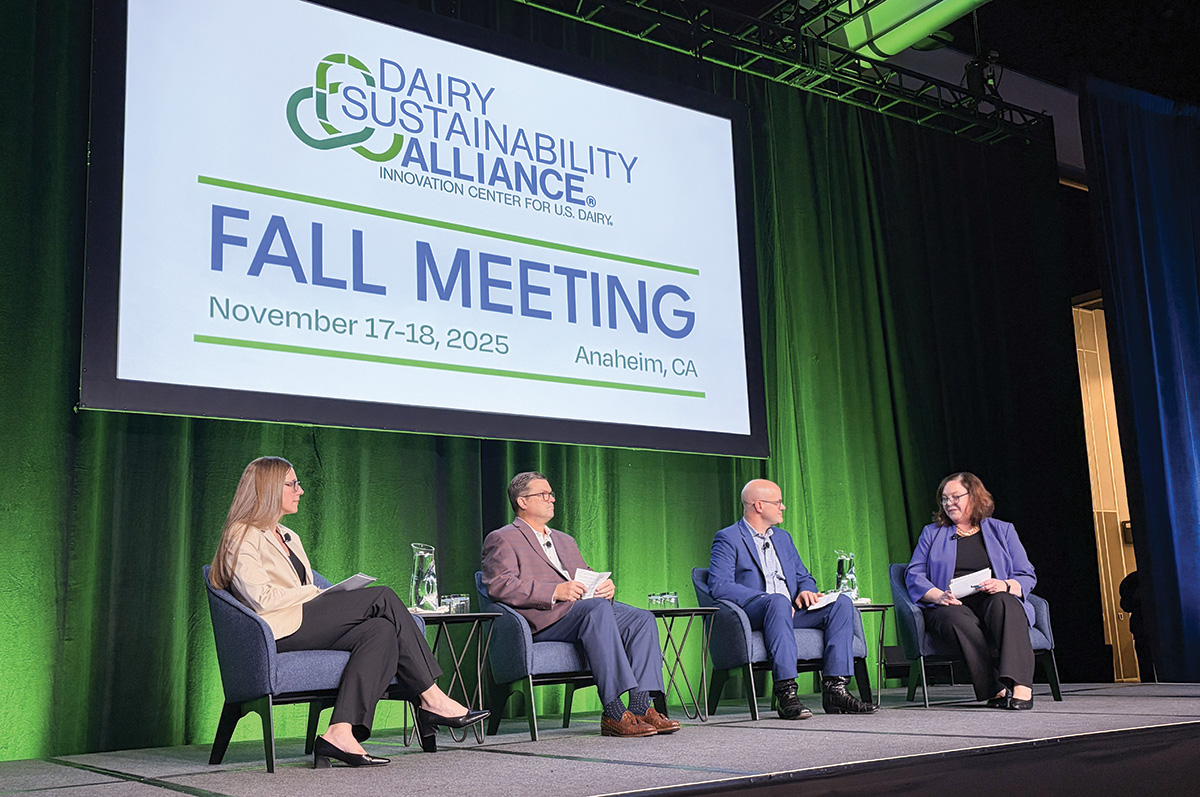
Sessions discussed workable tools, proof points and honest dialogue about how sustainable practices can work for dairy producers and deliver a return on investment (ROI). Image courtesy of Dairy Management Inc.
Measuring progress and building confidence
The newly released 2023-24 U.S. Dairy Sustainability Report served as a backdrop to meeting discussions. The report highlighted a 2.5% reduction in greenhouse gas (GHG) emissions intensity since 2020 during a period of increased milk production. It also showed long-term progress in farm-level emissions intensity since 2007, along with continued leadership in animal care and gains in dairy processor worker safety.
Captain said the report gives the dairy community – and consumers – fresh data that shows credible, measurable advancement. For farmers, the report validates decisions they make every day and underscores the progress they have long achieved.
“It shows consumers that the dairy industry is moving forward and making big changes step by step,” Pennsylvania farmer Lolly Lesher said. “It’s a reflection of our desire to take really good care of our cows, our water, our land and our community.”
If one theme tied the meeting together, it was collaboration. Farmers heard consistently that progress will require shared responsibility and investment. Shehadey said he heard the word “team” used more than at any previous meeting he has attended.
“We have to tell our story. We have a great story to tell,” he said. “It is encouraging to see that retailers and the supply chain want to hear it and understand the challenges we face.”
As a first-time attendee, Lesher expected a lecture from the industry but instead found a meeting built around cooperation and problem-solving.
“They recognize that these investments cannot all fall on the farmer,” she said. “There has to be a way to bring money into the farm to finance improvements and make big changes.”
That sentiment reflects a shift that sustainability and profitability are not competing goals. Farmers need ROI. Processors and brands need transparent progress. Consumers need confidence that dairy is produced responsibly.
As the meeting wrapped up, there was a clear understanding that sustainability remains complex, but farmer input must remain part of the process.
“We’re being more efficient producing milk with a lower carbon footprint, and we have proof we’re moving the right way,” Shehadey said. “But we’re also seeing the rest of the industry step up. We’re not being told to do this alone anymore, and that gives me confidence we can hit these goals.”
This article was provided by Dairy Management Inc.