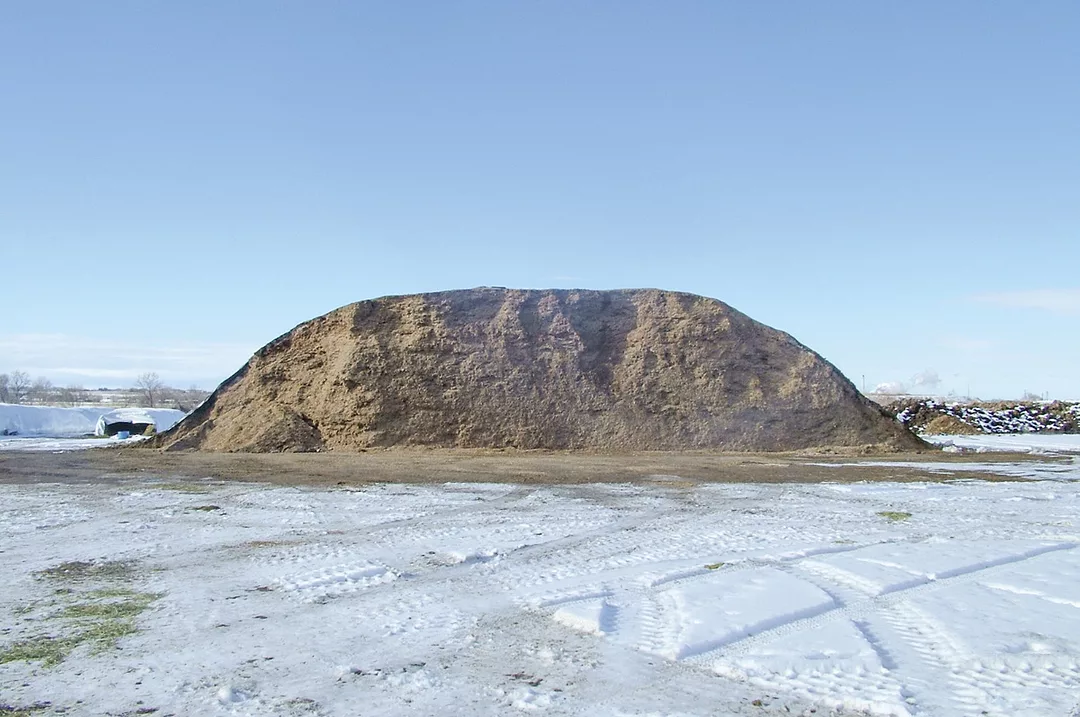
Packing density is a critical component of putting up high-quality corn silage. Packing is part of a multistep harvesting process, one that is critical to good silage formation and quality storage. The minimum packing density goal for any operation is 14 pounds of dry matter per cubic foot, but southern Idaho corn harvesters struggle to meet that standard.

Crops harvested when they are too dry inhibit proper packing, which leads to dry matter loss, poor fermentation and molding while in storage. Crops harvested when they are too wet, particularly corn harvested above 70% moisture, suffer too. Excess dry matter losses, due to seepage of highly acidic/corrosive liquids, and other fermentation problems can develop. Growers thus need to be very particular when timing their harvesting operation. Good packing, no matter the storage method, removes oxygen and allows anaerobic bacteria to begin breaking down the corn’s carbohydrates, sugars and cellulose into lactic acid, acetic acids, ethanol, carbon dioxide and other products.
In 2008-09, University of Idaho Extension faculty conducted a silage density study across southern Idaho and determined that producers on average were just meeting the 14-pound minimum. The study concluded that about half of the piles or bunkers are insufficiently packed, which creates larger storage losses. The purpose of this article is to discuss the methods used to determine silage density and to discuss some pros and cons of each method. The research team evaluated three methods:
- Dairy One master forage probe
- University of Wisconsin forage density calculator
- Feedout method
The Dairy One master forage probe, available on the company website, is a steel cylinder with a sharp tip, similar to a hay probe, only larger in diameter. The probe would remove the core of silage, and a wooden dowel, included with the probe, was inserted into the hole to determine depth. An Excel spreadsheet calculator, available on the Dairy One website, was used to determine density by entering the weight of the sample, the depth of the hole and the dry matter percentage of the silage.
Silage piles are denser toward the middle and bottom of the pile, and the top and sides tend to be less dense, so sampling several places on the face was necessary to get a good representation of overall density. The probe method was found to be the most accurate and simple of the methods used. The major downside to probing a silage pile is the safety risk involved with a possible avalanche. There have been major awareness campaigns about silage safety, and it is no longer recommended to work around the face of a silage pile.
The density calculator, developed by University of Wisconsin and USDA Dairy Forage Research Center faculty, uses several inputs to determine density. The inputs include percent of dry matter as chopped, number of loads per hour, weight of each load, layer thickness as the pile is built, packing tractor weight and percent of time each tractor is on the pile, and the dimensions of the final bunker or pile. There are separate calculators for bunkers and drive-over piles. The researchers found that when using this method, the major challenge was getting good data, especially if the farm was using a custom harvest team.
The weights of silage and tractors are simple enough to obtain, but the most important factor, layer thickness when building the pile, is the most difficult to get exact and maintain over the time the pile is built. In the study, the density calculator method correlated well with the forage probe method with 15 of the 18 storages being plus or minus 2 pounds of the forage probe method, and it is much safer. It takes some coordination to make sure the data is accurate, but like the term from the early days of computing: garbage in, garbage out. The results will only be as good as the input data.
The feedout method was conducted over several weeks. An Excel spreadsheet was used to input silage face dimensions to determine the area of the face in square feet. The feeder would then feed from the silage for 10 to 14 days, making sure to record the exact weight of all silage removed. At the end of that period, the silage face was again measured to get the area of the current face. An average was taken of the two face measurements. Then, a length measurement was taken from the spot of the first face to spot of the second face to determine the cubic feet of silage removed during the 10- to 14-day period.
Entering this data along with the total tons of silage removed from the storage into the Excel spreadsheet gave an estimate of silage density. The process was repeated one additional time to improve the accuracy of the data. Taking several measurement points during feedout of the pile would likely improve the data. During the study, visiting all 18 facilities multiple times was an issue.
The feedout method was the least accurate of the three methods compared. There were too many guesses when using this method. Getting precise face measurements for area proved difficult. Several of the cooperators gave estimated feedout weights, not actual weights. If the face of a storage sloughed off, it was difficult to guess the weight of the sloughed feed. Some of the storage facilities were nicely faced, and others were not. The silage that was part of the waste pile was not weighed, so could not be figured into the calculations. A feed manager on a single-farm facility could overcome some of the challenges faced by the research team, and electronic area calculators are available now that were not then.
Silage density is a critical part of putting up high-quality silage. Checking density is one way to ensure the harvest team is doing a good job to help preserve as much of the feed as possible. The forage probe method can’t be recommended due to safety concern. The density calculator and feedout methods are two examples of ways the farm or feed manager can check silage density. The biggest drawback to all of these methods is they give results after the silage is in the pile, so making corrections is not possible. The data can be used as a talking point with the harvest crew before the new corn crop is brought in for storage.
If you want to use the calculators, the forage probe calculator can be found on the Dairy One website and you can contact the author for the others. A full article with the study results can be found in the Journal of Extension.