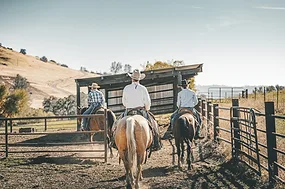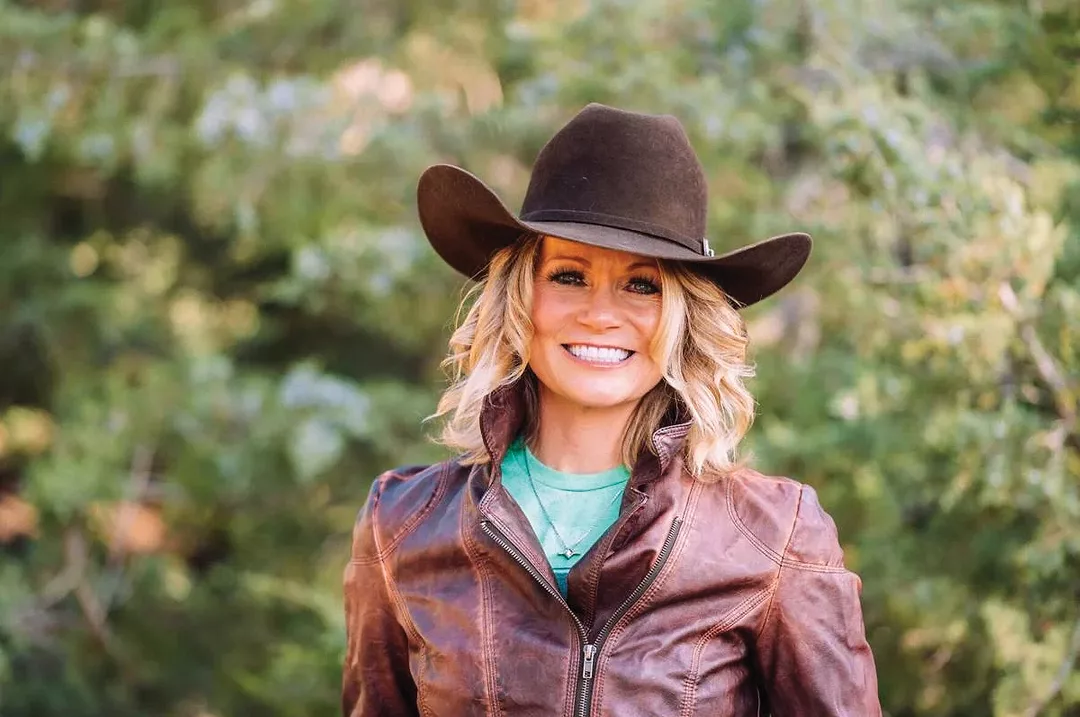
Jaclyn Wilson is co-owner of Wilson Flying Diamond Ranch/Flying Diamond Beef, located in the Nebraska Sandhills. She has been full time on the ranch since 2002. Her responsibilities include but are not limited to running the cattle operation: calving, marketing, rotational grazing, trucking, recordkeeping, etc. She also manages employees and takes part in day-to-day activities like fencing, feeding and more. She has also written for several different ag publications and speaks at beef industry events.
How have your experiences working on your ranch influenced your growth, personally and professionally?
WILSON: I was raised in a household that did not see gender to determine who did a job. I was taught to always find a solution, think outside the box, to work hard, to surround yourself with a network of people smarter than you, to respect the land and livestock, and be loyal to God and family.
What roadblocks have you run into, and how have you overcome them?
WILSON: There have been a lot of roadblocks. A business partner passing away from an accident, a divorce, living with a chronic disorder, having a voice in a male-dominated industry, the struggles of building a couple of businesses. Dad taught me whenever something challenging comes, you put your head down and work through it with resilience and tenacity. You don’t roller coaster with emotions; instead, you analyze and come up with the best solution you can.
Who has influenced you in your role as a rancher? Why?
WILSON: I have an inner circle that I would die for. My dad is the biggest influence because of the respect and belief he has in me, and our relationship is my greatest pride. Followed up by my mom, best friends and then the network of industry experts and even those not in the industry from all around the world that have made me a better person, a better listener and expanded my mindset beyond anything I could have imagined.
What is the best piece of advice you’ve ever been given?
WILSON: The best piece of advice was when I was heading off to college and my uncle, who at that time was partners with my dad, said, “If you go away, and you decide to come back, remember you don’t know it all.” That has stuck with me since then and I use that philosophy in everything I do, trying to learn more and see all sides and angles of problems, scenarios and solutions. I also think of a friend I served with on my first time on the Nebraska Cattlemen Board that, when I asked him in the hallway after a meeting, why he had voted against something, his reply was, “Thank you, not one other person has asked me that, and we do not always have to agree with everyone.” That has stuck with me ever since – to get others’ insights and realize that it’s OK if we don’t agree, but we can do it with respect and character.
How do you balance work with family and/or personal time?
WILSON: I have no work/life balance. I love work and it just happens that I work with family, so it’s even better. I do have set appointments every week with a trainer. The accountability to me is huge, and the mental and physical effects make me a better teammate, especially when dealing with Ehlers-Danlos Syndrome. I’m not married and have no kids, so the time that others commit to that, I’m working, speaking, writing or traveling to learn more about the industry. The best thing that I do for me besides working out is not having cell service or Wi-Fi at my house, so when I go home for the couple of hours in the evening, I can refocus and regroup.
Tell us about a time you were most proud of being a woman in ag
WILSON: I’m most proud of being a woman in ag every time I step into a meeting room or conference and see all the young ladies that were not in those seats when I was getting my feet wet on the volunteer side. It’s exciting and so rewarding.
What is the hardest thing you’ve ever had to do on the job?
WILSON: I think everything we do is hard. That is also why it can be so rewarding. But the hardest thing I’ve ever had to do was call the parents of a friend and business partner in two out of the three businesses I was involved with at the time, and tell them she had passed in an ATV accident helping me move cows. I still sleep with a lamp on most nights because of it. Also, realizing months after that I needed to get help, and was so incredibly blessed that a dear friend pointed me in the right direction, where I was diagnosed with PTSD and went through treatment. I’m a huge advocate for mental health in agriculture and speak about it often.
What accomplishment are you most proud of?
WILSON: There are so many things I’m proud of: my relationship with my dad, the interns and employees that we grow and develop, the numerous partnerships, the recognition that the ranch has received, the relationships in all sectors of the industry and outside that we have fostered. I’m also dang proud of our cows and our land. For me personally, I took a leap this last year and expanded the business internationally; I’m proud of myself for stepping up to something new. Most importantly, I’m proud of our philosophies, our mindset and that we are willing to share our piece of heaven with those from around the world.
If you weren’t doing what you are now, what would your job be?
WILSON: If this ranching thing doesn’t work out (complete tongue in cheek), my dream job would be working for the U.S. Meat Export Federation (USMEF). Over the years, I have gotten to see firsthand the amazing job that they have done promoting U.S. beef overseas, and it would combine two things, my love for travel and beef.
Who are other female role models you look up to? Why?
WILSON: There have been some influential women in my life: my mom, my speech coach from high school, a staff person from NCBA, a packing plant/ranch owner from Paraguay and a number of peers that I see and interact with throughout the year that have had a lot of influence on who I’ve become and who I also want to be.
How did you end up in the occupation you have now?
WILSON: I ended up full-time ranching because of guilt. I was still in college at the time when I was asked to come home for the summer. At the time, I was looking at going to law school and becoming a lobbyist. That was now 23 years ago. The first couple of years were rough, and it took me a while to find my groove and realize that I didn’t want to be anywhere else.
What inspires you to come to work each day?
WILSON: I come to work every day because I have a purpose. That purpose is to give my livestock the best life I can so they can fulfill their purpose, and that is feeding the world. But it goes beyond that; I love the challenge, I love making ourselves better, I love the late nights and early mornings, I love the intern that is finding their confidence, the list goes on. I read this somewhere once and it was spot on: "Ranching is the closest you will get to heaven while on this planet," and I truly believe that.
What is the best part of your day?
WILSON: The best part of my day is right when the sun is coming up and I’m out checking cows before the rest of the crew shows up for work. It’s me, my dog, the cows and the land. Followed by the days that I can squeeze in a 15-minute power nap!
Do you involve your family in your work? How?
WILSON: My dad and I are equal partners. I had over 350 of my own cows at one point that I was running on a leased ranch and on shares in Nevada. We decided to join herds and the rest is history. We think alike, act alike, and he keeps me grounded and focused. We have our own areas of responsibility, and we are always sharing with the other what we are doing and thinking. The big decisions we talk through together. It makes every day worth it.
What is your 'North Star' – one guiding principle by which decisions are weighed?
WILSON: Guiding principles are huge. We focus on three main areas. Human well-being, livestock well-being and environmental well-being. They include thoughts on giving back, being involved, having a purpose, the type of animal we are raising, our impact on the environment and our impact on our community.