As warmer weather approaches, preparing fans and ventilation systems should be a top priority for dairy producers. Effective ventilation is one of the most important tools for managing heat stress, protecting cow comfort and maintaining consistent milk production. Heat stress can begin at relatively mild temperatures, especially when humidity is high, and its impact on intake, reproduction and health can linger long after temperatures cool. Taking time to evaluate and prepare ventilation systems before summer arrives can prevent costly performance losses during peak heat events.

Cows generate a significant amount of body heat, particularly high-producing animals. When ambient temperatures rise, their ability to dissipate that heat becomes limited. Without adequate airflow and fresh air exchange, cows struggle to regulate body temperature, leading to reduced dry matter intake, lower milk yield, compromised immune function and decreased reproductive performance. Fans and ventilation systems are most effective when they are clean, properly maintained and correctly configured for the barn layout and stocking density.
Preparation checklist
Many ventilation problems only become noticeable when systems are running at full capacity on the hottest days of the year. At that point, repairs are often rushed, parts may be unavailable, and cows may already be experiencing heat stress. Preseason preparation allows time to identify issues, make adjustments and ensure systems perform as intended when demand is highest.
A thorough inspection of all fans is a logical starting point. Dust, dirt and bedding particles accumulate on blades, guards and shutters over time, which significantly reduces airflow efficiency. Cleaning fans can restore a surprising amount of lost air movement while reducing energy consumption. Pressure washing or dry-cleaning methods can be used, but care should be taken to avoid damaging motors or electrical components.
Mechanical components also deserve close attention. Belts should be checked for proper tension and wear, especially since loose or cracked belts reduce fan speed and airflow. Bearings should be lubricated according to manufacturer recommendations, and any signs of noise, vibration or overheating should be addressed immediately. Motors nearing the end of their service life are more likely to fail during periods of continuous operation, so replacing questionable motors before summer can prevent unexpected downtime.
Fan performance should be verified as well. Fans that are spinning but delivering inadequate airspeed may have internal issues or improper voltage supply. Measuring airspeed at cow level helps confirm whether fans are providing the target airflow needed to cool animals effectively. In freestall barns, consistent airspeed across stalls and feed alleys is critical to avoid creating hot spots where cows congregate.
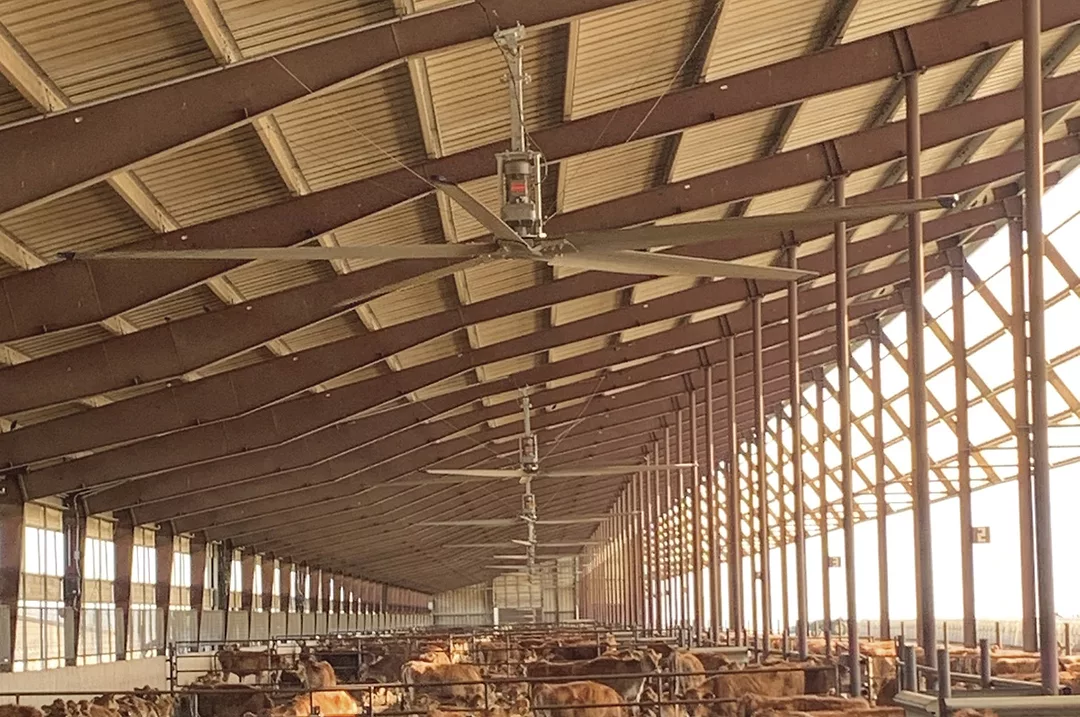
Proper fan placement is just as important as fan condition. Over time, changes in barn layout, stocking density or stall usage can alter airflow patterns. Fans should be spaced and angled to create a continuous stream of air moving across the cow resting and feeding areas. Gaps in coverage reduce cooling effectiveness, allowing heat to accumulate. In tunnel or cross-ventilated barns, alignment of fans and inlets should be reviewed to ensure air is moving evenly from one end of the barn to the other. Obstructions such as equipment, stacked materials or temporary barriers can disrupt airflow and should be removed. In naturally ventilated barns with circulation fans, verifying that fans are angled slightly downward toward cow level helps to maximize cooling rather than pushing air above the animals. Fans work best when combined with effective natural ventilation. Curtains, inlets, ridge openings and sidewall panels should all be inspected to ensure they open and close smoothly. Stuck or partially functioning curtains can severely limit fresh air exchange, even when fans are operating.
Before warm weather arrives, operate curtains through their full range of motion and make any necessary repairs to cables, motors or pulleys. Adjust curtain settings to promote maximum airflow during mild conditions while still protecting cows from drafts. Ridge vents should be checked for obstructions such as bird nests or debris that restrict warm air from escaping the barn.
Air inlets should be sized and positioned to allow fresh air to enter evenly. Poor inlet design can lead to short-circuiting, where fresh air exits the barn before reaching cow level, reducing ventilation effectiveness.
Modern ventilation systems often rely on thermostats, variable-speed drives and automated controllers to stage fans on as temperatures rise. These systems should be tested well before summer to confirm they are responding at the correct set points. Incorrect temperature or humidity settings may delay fan activation, allowing cows to become heat stressed before cooling begins.
Producers should review staging strategies to ensure additional fans come on progressively as conditions worsen. In some cases, adjusting set points slightly lower can improve cow comfort without significantly increasing energy costs. Backup controls and manual overrides should also be tested to ensure systems can operate during sensor failures or power disruptions.
Running multiple fans continuously places a heavy load on electrical systems. An inspection of wiring, breakers and panels can help identify potential issues before peak use. Loose connections, undersized wiring or aging components all increase the risk of electrical failure or fire.
Confirm that circuits are properly sized for fan loads and that motors are protected by appropriate overload devices. Ground fault protection and proper grounding are essential in the damp, dusty environments typical of dairy barns. Working with a qualified electrician can provide added confidence that systems are safe and capable of handling summer demand.
Other cow cooling strategies
While fans and ventilation are critical, they are most effective when integrated with other heat abatement strategies. Soakers or misters in holding pens and feed lanes can significantly enhance cooling when combined with airflow. Ensuring fans are positioned to evaporate water off the cow’s hide maximizes the cooling effect.
Shade structures, roof insulation and reflective roofing materials also influence barn temperatures and ventilation effectiveness. Evaluating the entire cooling system holistically helps identify opportunities to improve cow comfort without unnecessary redundancy.
Key takeaways
Preparation does not end once summer begins. Regular monitoring of fan operation, airflow and cow behaviour provides valuable feedback on system performance. Cows bunching, standing excessively or avoiding certain areas of the barn may indicate ventilation issues or that adjustments/additions are needed. Tracking milk production, intake and reproductive performance alongside temperature and humidity data can also help quantify the benefits of effective ventilation.
Preparing fans and ventilation systems for warmer weather is not just a maintenance task; it is an investment in cow comfort, productivity and long-term herd performance. By addressing potential issues early, dairy producers can reduce heat stress risks, improve consistency during challenging weather conditions and protect the return on their ventilation investments.
With proper preparation, ventilation systems can perform as designed when temperatures climb, helping cows stay cool, comfortable and productive throughout the warm season.