Steven Hines, an extension educator with the University of Idaho in Jerome County, has conducted extensive interseeding research – mostly in corn but also with cover crops. He emphasizes that anyone considering cover cropping should start with a clear management objective. Too often, he says, people attend a meeting or conference, get inspired and then decide to try cover crops without defining what they want to accomplish. Producers need to determine whether their primary goal is improving soil health, reducing erosion over winter, conserving moisture or producing extra forage for livestock. The motivations – and the potential benefits – can vary widely.

“I always suggest they try it on a few acres first – most producers are willing to start small; they are not going to make big changes until they are sure it will work for them,” says Hines. He adds that farmers often hear about cover crop mixes of 10 or more species, but the people who plant a high variety of species are generally farmers who have been cover cropping for many years and are at the top of their game. They have developed mixes for specific purposes and know how those species perform on their place and in their climate.
He suggests starting with three to six species. He recommends triticale as a grass because it grows well; turnips or radishes as good brassicas; and, generally, a pea is best as the legume. He suggests peas instead of clover or vetch because a lot of legumes are perennials and expensive, pound for pound.
“Most people who seed a cover crop aren’t going to leave it in for the entire growing season,” explains Hines. “It is planted in the fall and comes out in the spring before the next cash crop goes in.”
In this situation, perennial legumes don’t have the opportunity to grow enough in that short time; you don’t get enough “bang for your buck.” The cover crops don’t get big enough to start adding nitrogen (N) to the soil and are too small to add much to the forage mix if you need biomass for feed. Peas do a much better job.
Many commercial cover crop mixes include annual ryegrass. Hines adds that it grows well and produces a lot of mass, is very palatable and has a deep root system. The only problem is that in a cereal system, it can become a weed. The USDA Natural Resources Conservation Service (NRCS) quit recommending annual ryegrass in mixes for Idaho.
Hairy vetch is a good legume, but it also has issues and can become a weed. If you want to use a vetch, use common vetch because it’s easier to control. Hairy vetch has resistance to glyphosate.
“I’ve heard people say that, ‘If you plant hairy vetch, add it to the deed to the farm because it will be there forever,’” says Hines.
One species that Hines likes to see in a cover crop mix is cereal rye – it grows well, is the last thing to go dormant in winter and the first thing to break dormancy in the spring. It makes a great forage grass, but Hines notes, “In a cereal system, if it gets away from you, there could be rye contamination in your wheat or barley.
“Most farmers who grow wheat or barley don’t plant rye, but if you can control it before it goes to seed, it won’t be a problem.”
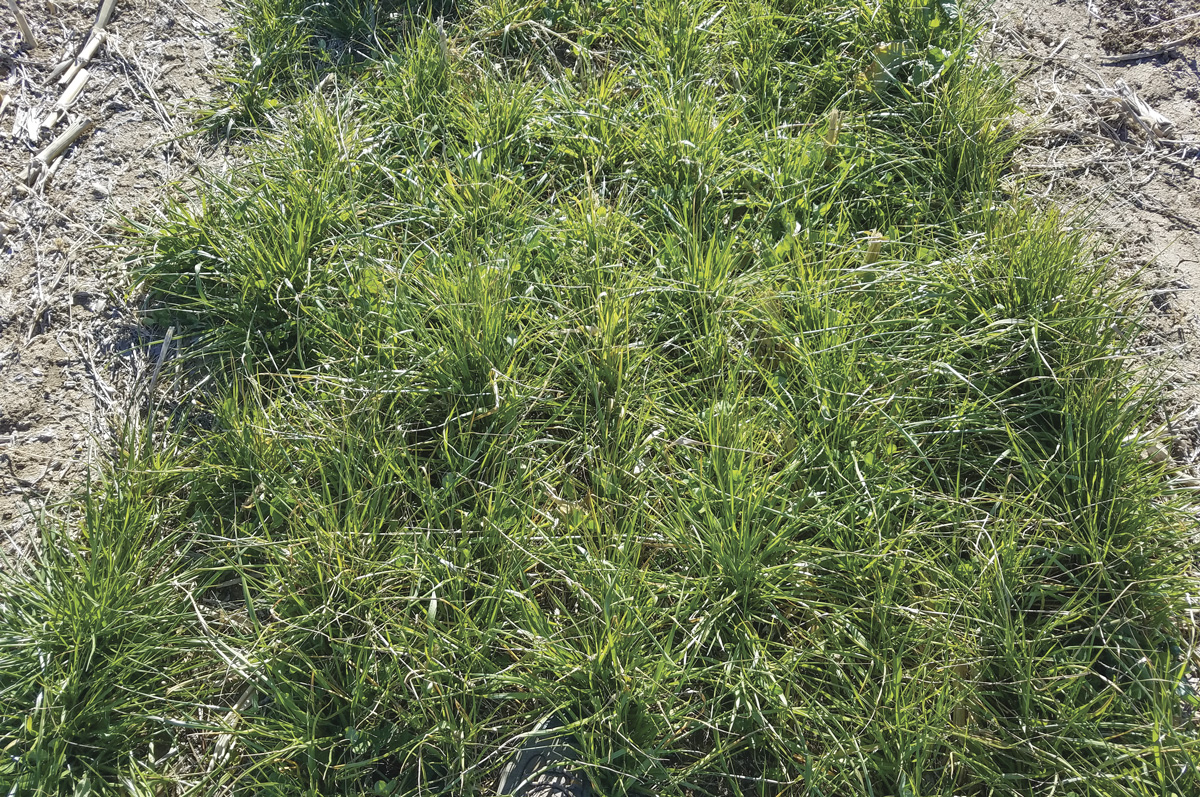
Healthy stands begin with smart interseeding – matching species to site conditions and using calibrated equipment at the right time. Image by Steve Hines.
Farmers need to plan ahead for how and when they will terminate a cover crop. Hines recalls a study in which they planted mixes containing red clover, yellow sweet clover, chicory and other species. Even after harvest, winter, spraying and disking, clovers were still emerging the following spring.
“Clovers are hardy perennials,” he notes, underscoring the importance of choosing species with termination in mind.
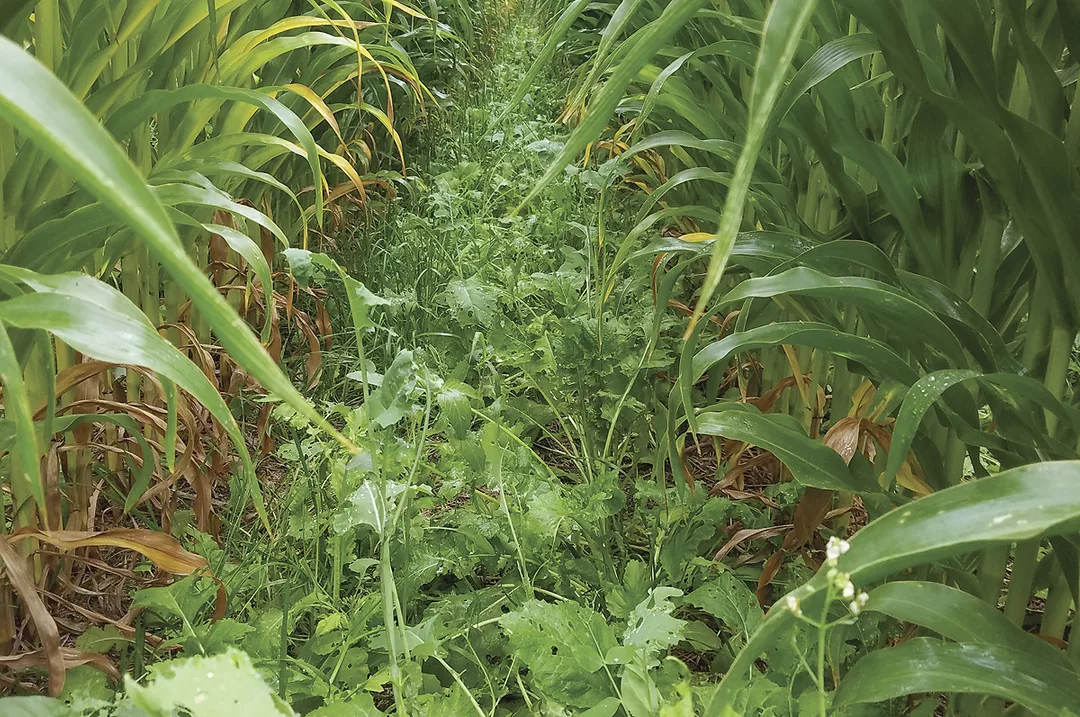
Most of Hines’ interseeding work has focused on corn, which he says is one of the easiest crops to pair with a living understory. Some growers broadcast seed by air or use a “high‑boy” type spreader to avoid damaging the corn. However, drilling remains the gold standard because it provides the best seed‑to‑soil contact. Drilling also allows the use of larger‑seeded species that won’t establish well when broadcast.
“A big seed might germinate on top of the soil but won’t root in. Smaller seeds can work down into the soil with irrigation, but larger ones don’t,” explains Hines. “Seed size really limits your species options with aerial or broadcast applications – an interseeder drill is the best way to do it.”
Hines has also tested the practice of running a standard double‑disk opener grain drill over broadcast seed while the corn plant is still small. He says the method does a good job of establishing the cover crop, but it comes with a challenge: early season weeds.
“Even if you make the first glyphosate application, it’s still early enough that you can get another flush of weeds. And once the cover crop is planted, you lose the option for weed control,” he explains.
In another study where seed was broadcast, Hines found the approach surprisingly effective. By the time corn is harvested in the fall, the cover crop is already established and ready to hold soil through winter or provide grazing.
“It produces a decent amount of forage if you want to turn cattle into the cornfield after harvest,” he says.
Interseeding into other regional crops has proven more challenging. Hines notes that attempts to establish clovers in cereal grains have had limited success. One local grower tried it with poor results, largely because wheat and barley are planted much earlier than clover would normally be seeded. Planting them together can create moisture issues – irrigation may not yet be available – and weed‑control options become extremely limited once the clover is in the ground.
There has been some cover cropping with sugarbeets – trying to do an early season cover crop to hold the soil in place so the beets don’t get blown out in the spring. The cover crop in this situation is usually some sort of cereal grain, triticale or winter wheat that will be planted in the fall. This crop can come up, and then you can plant the beets and spray it. Or you can spray it out first and then plant the beets. Another option is to do some strip tilling and then plant the beets.
“This has worked pretty well,” he says.
The most common method for cover crops is to plant behind the combine in late July and early August as wheat and barley are taken off. This works really well because there is some growing season left.
“There is a ranch here in Idaho that does some interseeding of cover crops into perennial pasture, to provide winter grazing after the perennial pasture goes dormant,” adds Hines. “They have been successful with this and are able to graze year-round.”
Anyone thinking about using cover crops should start with a clear plan and a defined purpose for what they hope to achieve. Hines emphasizes that those goals should guide every decision – from species selection to how the cover crop will be terminated ahead of the next cash crop.
“They can choose the right species for their objectives, and they also need a termination strategy if a cash crop is going in afterward,” he says.