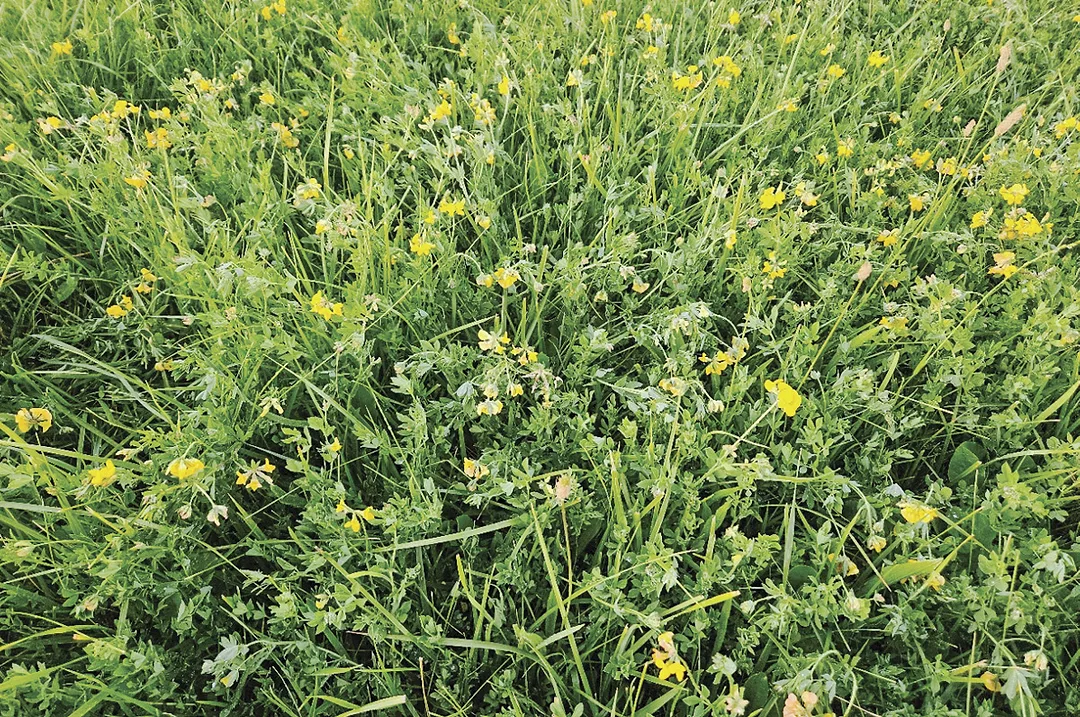
There seems to be a consistent blight that plagues all pasture managers throughout the Intermountain West: Fields that once easily met the needs of livestock through the grazing season now struggle to meet demand. Legumes have thinned or disappeared, grass stands are uneven, and forage quality doesn’t quite meet animal needs. While full pasture renovation is often thought of as the solution, it is rarely practical. High establishment costs, lost grazing time, irrigation limitations and erosion risk make starting over a difficult and often risky decision.

Look, I understand the temptation. If you could just get one big replanting project to fix everything wrong in your pasture, then you will start being a better manager of your fields. But the truth is, your pastures need to get better the same way they got sick, and it wasn’t from a bad start. No, more often than not, pastures are dying from neglect, and they will get better from better management. As bad as that might sound, there is hope for you yet. You may not need to spend so much time and equity to get things going. Many producers have used interseeding to improve pasture performance without completely resetting the system.
Pasture decline is seldom caused by a single factor. Instead, it is typically the result of many different factors that build slowly over time. Selective grazing plays a major role, as livestock repeatedly graze the most palatable plants while less desirable species are left behind. Over time, this selective pressure reduces plant diversity and weakens overall stand productivity. Within a few years, you end up with a solid stand of the animals’ least favorite plants.
Water availability further complicates the issue. Many pastures benefit from spring moisture early in the season, but water becomes limited as summer progresses. Cool-season grasses dominate early growth and then decline in productivity under heat and moisture stress. Soil compaction adds another layer of challenge, particularly where grazing or equipment traffic occurs on wet spring or irrigated soils. Compacted soils restrict root growth, limit water infiltration and favor shallow-rooted species, making it difficult for new seedlings to establish. Nutrient deficiency often accelerates this decline, especially systems that rely heavily on nitrogen fertilizer without legumes.
You may need to interseed within a pasture to give it a little jump-start. Interseeding offers a practical way to address many of the challenges that come from mismanaged fields, but it is important to understand what it can and cannot accomplish. Interseeding works best in pastures that still have reasonable ground cover but lack diversity or legume presence. It is particularly effective where weed pressure is manageable and where grazing can be temporarily adjusted to allow seedlings to establish.
When conditions are right, interseeding can restore legumes, improve forage quality, enhance seasonal production and increase root diversity that benefits soil structure over time. However, interseeding cannot overcome severe drainage issues, chronic overgrazing, or extreme compaction without additional management changes. And, of course, interseeding will not make you a better manager. Do not expect everything to get better without a commitment to your desired goals and outcomes. Setting realistic expectations and committing to better practices are critical to long-term success.
Where sod is thicker or where producers want to introduce grasses, forbs or larger-seeded legumes, no-till drilling provides greater precision and more consistent establishment. No-till drills allow seed to be placed at the proper depth while minimizing soil disturbance, making them well suited to established pastures. However, success depends heavily on equipment setup and management.
Coulters must effectively cut through residue and sod, openers must place seed shallowly and consistently and press wheels must ensure good seed-to-soil contact without causing additional compaction. Reducing competition prior to drilling is essential. Heavy early grazing or clipping can weaken existing grasses, while avoiding nitrogen fertilization before seeding helps prevent existing plants from outcompeting seedlings. In irrigated systems, careful water management following seeding can further reduce stress on establishing plants.
Timing is one of the most critical factors influencing interseeding success. Early spring interseeding benefits from reliable soil moisture and cooler temperatures, which favor cool-season species. However, competition from established grasses can be intense during this period. Spring interseeding is most successful when sod has been weakened in advance and when grazing pressure can be delayed long enough for seedlings to anchor.
Rarely do I advocate for overgrazing. However, if you want to knock back a grass’s ability to grow so you can favor establishing seedlings, you can use this to your advantage. This only works if you have a plant that has more grazing tolerance, such as fescue.
Late summer or early fall interseeding can also be highly effective, particularly at higher elevations or under irrigation. Reduced competition from cool-season grasses and cooler nights create favorable conditions for establishment. The primary risks during this window include limited fall moisture, early frost and shortened establishment periods before dormancy. Matching species selection and seeding dates to local conditions is essential.
Regardless of seeding method or timing, grazing management remains the most important factor in interseeding success. As I mentioned previously, grazing can be used strategically before planting to improve success of seedlings by reducing canopy shading, suppressing dominant species and creating light soil exposure. Once the field has been interseeded, you must give the new plants the opportunity to grow or else they will be selected out of your pasture.
Best practice is to wait a year before you turn animals out onto that pasture again. Once you know the newly interseeded plants are established, you can begin to enjoy the fruits of your labor. When grazing does finally resume, animals should be rotated frequently to ensure that plants have ample time to recover. Rotational grazing systems consistently outperform continuous grazing when it comes to maintaining legumes and preventing repeat pasture decline.
Success requires patience, especially when it comes to interseeding. In the first year, success should be measured by establishment rather than dominance. Seedlings may be present but not visually impressive, and root development often matters more than top growth. Many interseeded pastures show their greatest improvement in the second year, after plants are fully established into the stand. The number of plants and the number of species are better indicators of success than yield alone during the establishment phase.
Interseeding offers a cheaper alternative to full renovation. Costs are typically lower because you don’t need to prepare a seedbed, you have less time lost grazing and less erosion risk. Rather than an all-or-nothing approach, interseeding allows you to make small improvements as you improve your management practices. This approach represents the most practical and cost-effective path to improved pasture performance.
Ultimately, successful interseeding is about progress, not perfection. Pasture improvement is rarely a one-time event. Producers who view interseeding as part of an integrated management strategy are far more likely to see lasting benefits. Interseeding is not going to fix everything, but it is a tool in your grazing toolbox along with management, irrigation, weed control and species selection. With an integrated approach to your grazing management, interseeding can significantly extend pasture life and resilience without starting over.