Back in 2007, my colleague Dr. Tom Oelberg was working as a field technical nutritionist when he noticed an interesting pattern. Whenever a few of his dairies began feeding with a new mixer wagon, there was a bump to their herd’s milk production. He called it the new mixer bump mystery.

This pattern raised an important question: Why did production increase if the ration didn’t change? A common thread among these dairies was a new mixer wagon that didn't have years of wear and tear, which can negatively impact ration mixing and delivery. This realization prompted Oelberg’s first iterations for the total mixed ration (TMR) audit, which focused squarely on the mixer wagon and loading/mixing opportunities that were changing variation in the diet delivered to the cows.
Since then, the audit process Oelberg and my teammates created has become a fundamental tool for finding opportunities to improve management in the feed center and ultimately diet consistency. It has evolved into a strategic review of mixing practices to sampling forages and setting up push-up practices that promote consumption.
I’ve been doing TMR audits for more than a decade. Comparing my first audits to one I did this week makes it clear just how far we’ve come.
The early years: Solving diet variability
Fifteen years ago, we learned through auditing that differences between loads, deliveries and days were common. So, TMR audits focused on mixing a more consistent diet and replicating it daily. The goal was to reduce variability in the ration delivered to cows between loads and between deliveries to support better cow health, production and profitability.
Early audits were built around a checklist of 11 mixing factors that could influence diet consistency (Table 1). We would normally spend a full day on-site seeing ingredient loading and mixing behavior in the wagon and follow to watch the delivery. Once feed was dropped, TMR samples were taken and assessed using a shaker box to record the percent variability in particle size. Then key observations, results and solutions were shared.
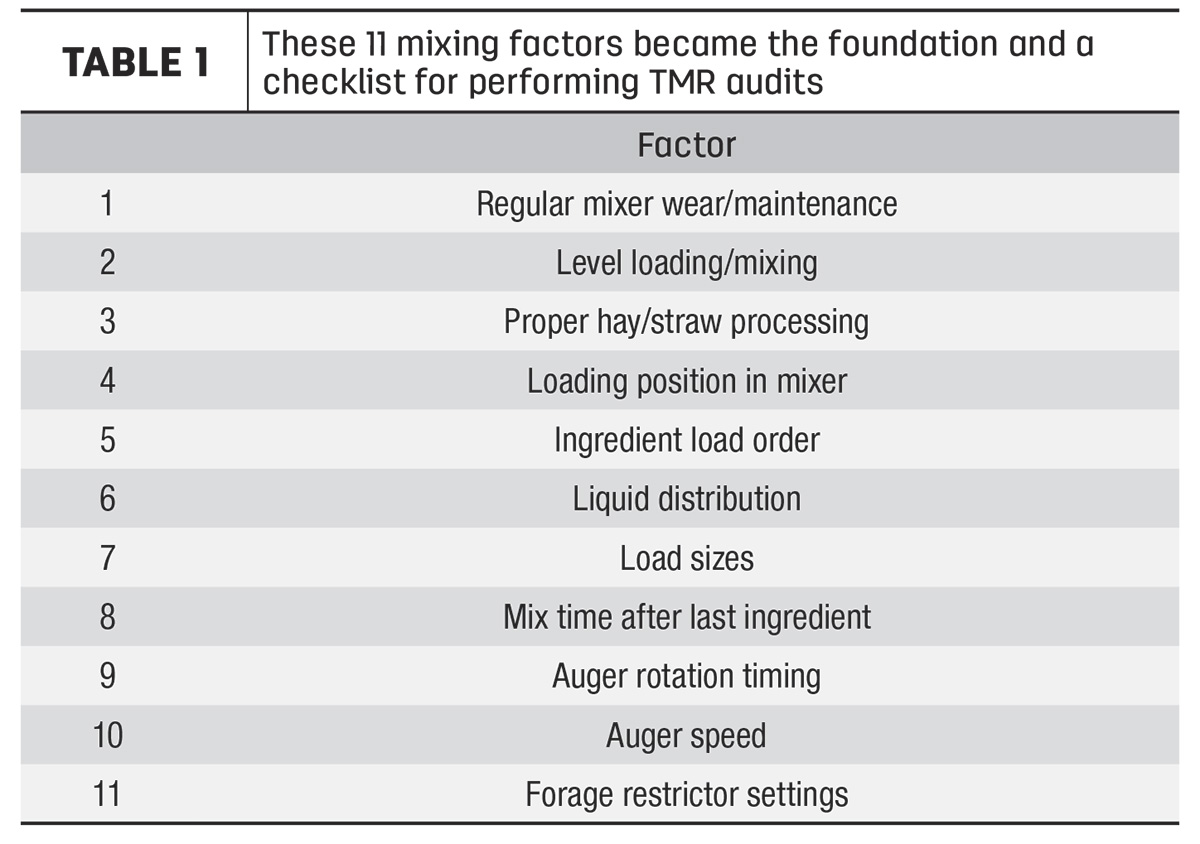
These observations were primarily visual and done by climbing ladders to look in mixers, watching several loads from start to finish, and ultimately comparing multiple pens and loads across the day. Back then, the questions we answered:
- Are ingredients loaded in the right order?
- Are mix times and speeds appropriate?
- Is the TMR uniform from the first feed dropped to the last?
- Can we see efficiency bottlenecks in the loading and delivery process?
- What training and support do employees need?
Takeaway: The new mixer bump mystery showed us that to reduce diet variability, we must be observant of those 11 mixing factors that influence diet consistency (i.e., mixer maintenance, mix pauses and ingredient loading order, among other things). These practices helped stabilize intakes and refusals while eliminating some of the unexplained day-to-day swings in cow performance.
Expanding the lens: The cow and people experience
Once we were more confident in diet consistency, the next question was: What does the meal experience look like for the cow?
Early audits only showed a snapshot in time while we were physically on a dairy. We could see distribution along the bunk, whether feed was pushed up and where there were obvious empty spots. What we couldn’t see was what happened overnight, between shifts or on weekends.
That changed about 10 years ago with the introduction of time-lapse cameras. These cameras recorded continuously for an extended period and provided a more comprehensive picture of:
- Push‑up frequency and timing
- First‑feed and subsequent feed times
- Lock‑up times
- How long cows were at the parlor
- Differences between day, night and weekend routines
Cameras also influenced employee training and morale. Instead of simply telling employees to push up feed every two hours, we could show them what four hours without a push-up looked like from the cow’s perspective. That visual connection made the impact of their work tangible and gave management teams and employees something to buy into.
Around this time, we also began implementing bilingual on-farm training. Spanish-speaking team members reviewed audit findings directly with feeding crews, turning audits into two-way conversations rather than top-down directives.
Takeaway: Cameras revealed to us how small deviations in daily routines could add up. We learned that long gaps between push-ups or delayed feeding affected cow behavior, competition at the bunk and intakes. They also benefited communication with employees, promoting consistency and stronger buy-in from employees.
The last 5 years: Using cameras and feeding software intentionally
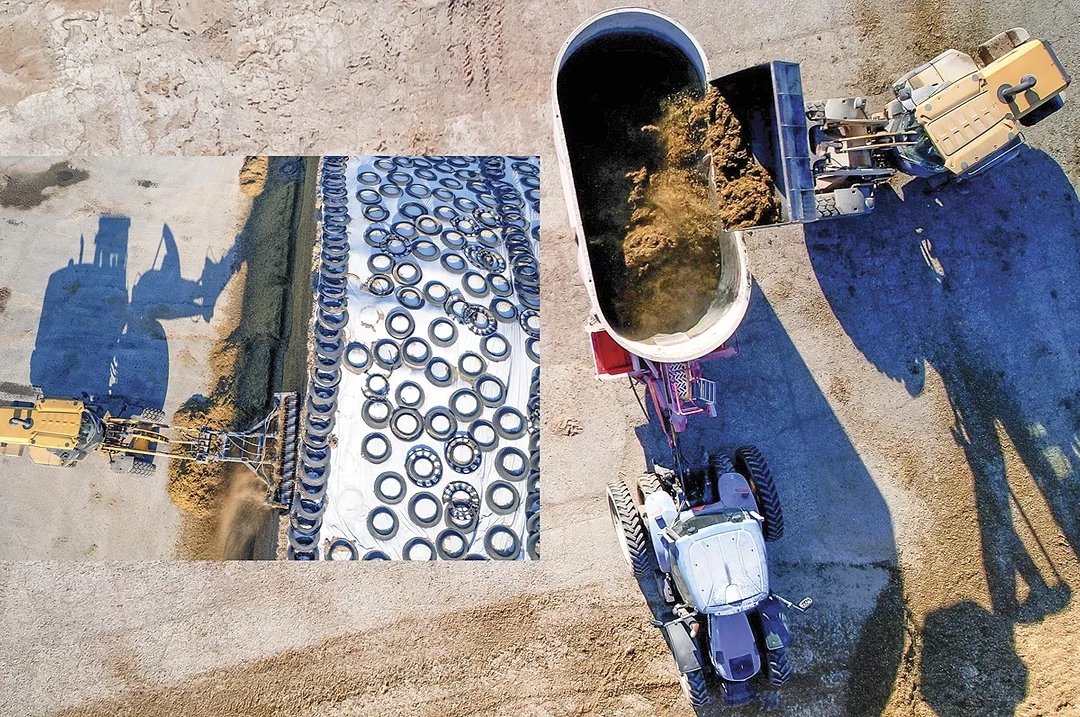
As feed centers have become larger and more complex, we searched for new tools to make the audit process more effective and safer. In the last five years, drone technology has been one of those tools. Drone cameras give us a clearer picture of feed from the beginning of loading to the last pound delivered to the bunk. From this vantage point, we are more equipped to accurately show issues inside the mixer and communicate those opportunities and solutions to the feeding and management teams.
Over the last five years, we have also used dairy-feed software systems more intentionally. By mining specific data from the software before and after an audit, we prioritized where to look and then set up simple ongoing monitoring to catch issues early. For example, we assessed data to find variation in daily schedules, first feeding time, deviations, load sizes, mixing pauses and other management factors.
Takeaway: For dairies, the value is in using their data to spot subtle issues that are easy to miss but can chip away at ration consistency.
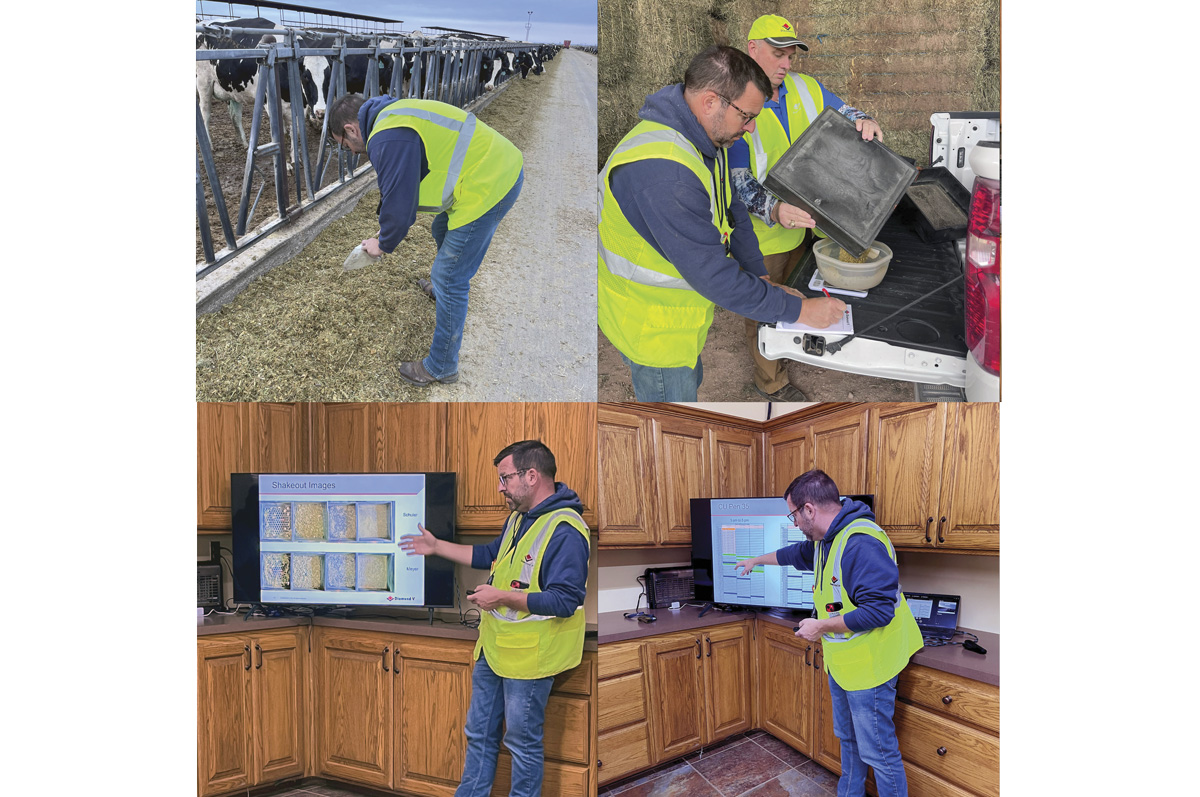
Matt Sattler collects samples at a dairy and uses a shaker box to measure particle sizes within a ration. He then presents his findings and solutions. Image courtesy of Diamond V.
Today’s research and what’s next: Artificial intelligence at the bunk
Our internal research comparing feeding data across dairies reinforces what many of us suspected: First feeding time consistency matters more than we once realized. When dairies drift off schedule for first feeding times, it doesn’t just affect that day – it can influence milk production several days afterward. As this data is refined, it will likely push first‑feeding consistency higher on the priority list.
This ties into reading or calling bunks. Today, most bunk calls still depend on one person’s early‑morning drive through to assess leftover feed, then using those observations to decide the amount of feed to deliver to the pens that day. In the future, artificial intelligence (AI) cameras will likely support dairy teams in interpreting images at the feedbunk. AI cameras are already used for monitoring milking protocols and finding lameness issues. Similar technology will most likely evolve to support feeding teams to have eyes in the feedbunks 24/7.
Takeaway: We will never replace human understanding of cow behavior and how they respond to management changes, but the toolbox of resources we use to make these decisions will be expanding over time.
What hasn’t changed
For all the technology that’s entered the picture, two truths from 15 years ago still stand: Consistency is king, and people make or break the system.
The difference between a quick fix and sustained improvement usually comes down to how well we train, engage and support the feeding team.
My advice is to find a trusted partner who brings both experience and solutions, not just a list of problems. Use that support and your technology to the fullest. TMR audits started from a single question: Why did dairies that just bought a new mixer see a bump in milk production? Today, it is a fundamental tool that helps us use our equipment and data more effectively to better support our people and cows. Curiosity and a willingness to feed cows better will continue to influence what comes next.