When we talk about producing protein, we often think of the percentage shown on the milk paycheque and the kilograms of protein delivered. In practice, however, improving milk protein starts much earlier and in a more concrete place: the rumen.


Milk protein production begins by providing an adequate supply of fermentable energy, allowing rumen microorganisms to efficiently capture nitrogen and synthesize amino acids that can ultimately be used by the mammary gland.
In this article, we propose a practical, operational approach – from the rumen to the milk tank – to increase both milk protein production and farm profitability. While genetics drives 30% to 40% of performance variation, nutrition accounts for 50% to 60%.
The heart of the system: Microbial protein
Microbial protein produced during ruminal fermentation supplies approximately 50% to 60% of the amino acids absorbed by the cow and has a profile that is particularly well suited to milk protein synthesis. From both a biological and economic perspective, microbial protein is the most efficient and cost-effective protein source available to the dairy cow.
The priority is clear: Optimize the ruminal environment to maximize microbial protein synthesis.
Influencing factors
-
A stable ruminal pH (6 to 6.8)
- Maintaining rumen stability requires a well-formulated ration, adequate physically effective fibre, consistent feed distribution, easily digestible fibre, proper bunk distribution, and a regular feeding and feed pushing schedule.
-
High-quality forages
- The higher the digestibility of neutral detergent fibre (NDF), the more energy is available for rumen bacteria. Well-ensiled forage that is harvested at the right time and rigorously managed during storage is essential.
-
Energy-protein synchronization
- The simultaneous supply of fermentable carbohydrates (starch, sugars, etc.) and degradable proteins to the rumen enables rumen microbes to capture nitrogen more efficiently, rather than losing it in the form of urea.
Remember, feeding rumen bacteria means feeding paid milk protein. Increasing protein is therefore not simply a matter of adding more crude protein (CP), but of improving fermentable energy supply, microbial protein synthesis and overall amino acid balance.
Energy: The driving force behind protein
Milk protein synthesis requires energy as much as it requires amino acids. The volatile fatty acids produced during ruminal fermentation represent the energy currency that converts amino acids into milk protein.
In practice, the availability of feedstuffs rich in fermentable carbohydrates is often the main factor limiting milk protein content. Two examples of feeding methods used to boost milk protein include corn milling and corn silage treatment with a cracking roller (CSPS).
However, the aim remains to increase fermentable energy by fine-tuning the starch-fibre and ration balance without compromising rumen health.
Bypass proteins: A complement, not a substitute
Rumen undegradable protein (RUP) and protected amino acids can play a supporting role once the rumen has been optimized. Seeking to replace microbial protein (MP) with digestible undegraded protein is rarely a winning strategy. Biologically, MP remains the main source of amino acids absorbed by the metabolism.
In addition, responses to poorly targeted supplementation with low amino acids are often variable in the field. Protein synthesis is regulated by several amino acids simultaneously, making it unlikely that there is a single limiting factor.
Practical advice
Start by securing cows’ dry matter intake (DMI), ruminal fermentation, digestible fibre and fermentable energy, and then adjust the amino acid profile as required.
Feeding a ration that allows the complementarity of a wide variety of amino acids to microbial protein and uses a dynamic system for energy degradation in the rumen is one of the key elements in supporting cost-effective milk protein production.
Measuring for action: Nitrogen utilization efficiency
Nitrogen utilization efficiency (NUE) is a simple calculation: nitrogen in milk divided by nitrogen ingested.
In the field, values are generally between 20% to 40%, with the most efficient herds reaching 30% to 35%. Improving NUE often makes it possible to increase protein at no additional cost by making better use of nitrogen at the ruminal level.
Improve NUE by:
- Increasing forage fibre digestibility (NDFd)
- Synchronizing energy and rumen degradable protein (RDP)
- Reducing sorting and ensuring the ration in front of the animals is the same as the formulated one
Protein starts at the feedbunk
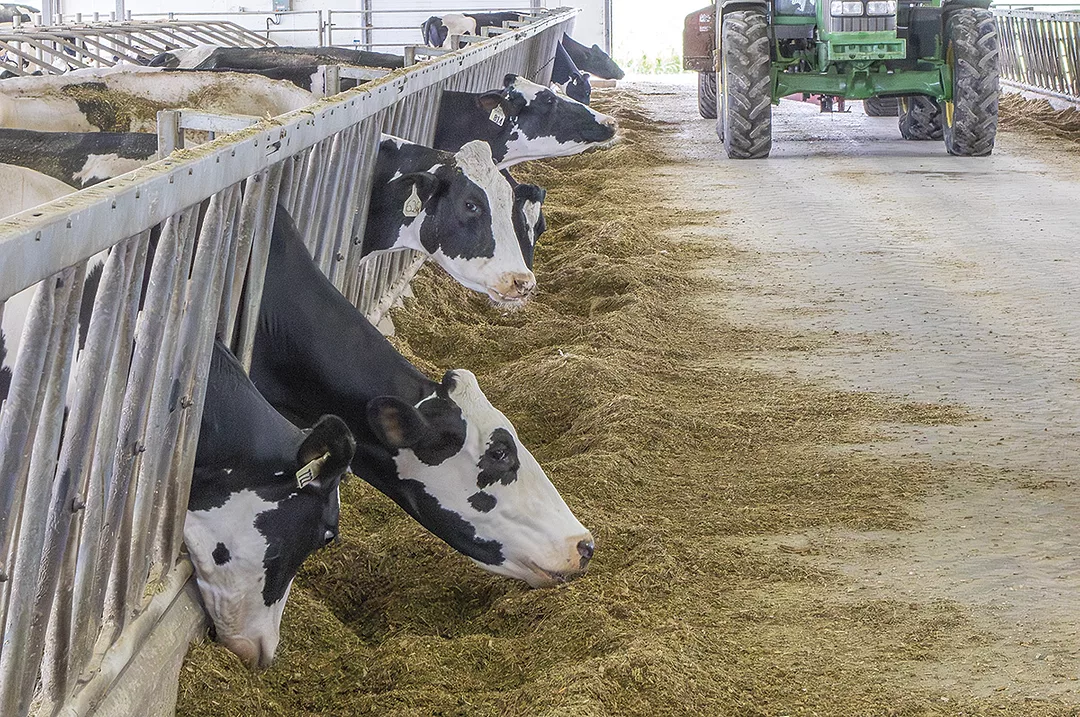
DMI remains the primary trigger for milk production. In early lactation, limiting negative energy balance, maintaining a balanced protein/fat ratio and encouraging multiple daily feed intakes are best practices with a strong impact on cow health and therefore on milk protein production.
Good feeding practices
- Fresh ration distributed at least twice a day
- Frequent pushing
- Regular total mixed ration (TMR) audits (the Penn State particle separator, moisture, density, etc.)
- Regular on-farm updates of the actual dry matter content of feedstuffs
Seasonal effects: Anticipate summer, capitalize in winter
The protein content of milk follows a well-documented seasonal cycle of summer dips and autumn rises. In summer, heat stress reduces intake, fermentable energy and microbial protein production. With warmer weather, increase energy density, secure RDP and support rumen pH. During the cooler months, monitor fibre quality and avoid excess fat.
Economics: Protein counts, but not without volume
The recent increase in the protein premium sends out a signal that milk protein should not be neglected. It's important to focus on, but it shouldn't override the importance of milk volume and milkfat content. The best approach is to simulate the real impact of ration adjustments on farms and measure the financial impact of these changes according to business objectives.
The right additives, tools and timing
Various additives can support fermentation and rumen efficiency, as long as the fundamentals provided are in place. Technologies for monitoring dry matter, DMI and formulation now make it possible to reduce the gap between the diet formulated and the diet consumed.
Key messages
Increasing milk protein is more than just adding CP. It's a systemic approach that starts with the rumen and involves intake, rumen pH, digestible fibre, fermentable energy and energy-protein synchronization. Energy remains the driving force that transforms amino acids into milk protein.
Protein has gained importance in milk payment, but milk volume and milkfat content are still essential elements of the dairy processor's income. There is no miracle solution, only a daily discipline of execution. This is what turns well-fed rumen bacteria into kilograms of paid protein.
Methods to increase fermentable carbohydrates
Corn milling: A finer grind (approximately 1 millimetre) increases ruminal starch degradability and digestibility, compared to a coarse grind (4-6 millimetres).
Corn silage treatment with a cracking roller (CSPS): A degradation score or rolling index above 70% indicates adequate grain breakage by the cracking roller and better starch release.