
In the face of increasingly volatile cattle markets, cow-calf producers must adapt by seeking opportunities that offer stability and profitability. While recent record-high cattle prices have provided welcome margins, these cycles are temporary and producers should plan for inevitable downturns. One tool for managing these fluctuations and improving returns in all years is the use of value-added programs. While these programs have become increasingly popular due to the promise of higher premiums for “program” cattle, participation costs vary greatly, leaving some producers to ask if it’s really worth enrolling.

As part of the University of Idaho’s summer fellow program, undergraduate student Libby Blattner studied the existing literature and interviewed Idaho ranchers and cattle buyers to help provide that answer.
Understanding participation requirements
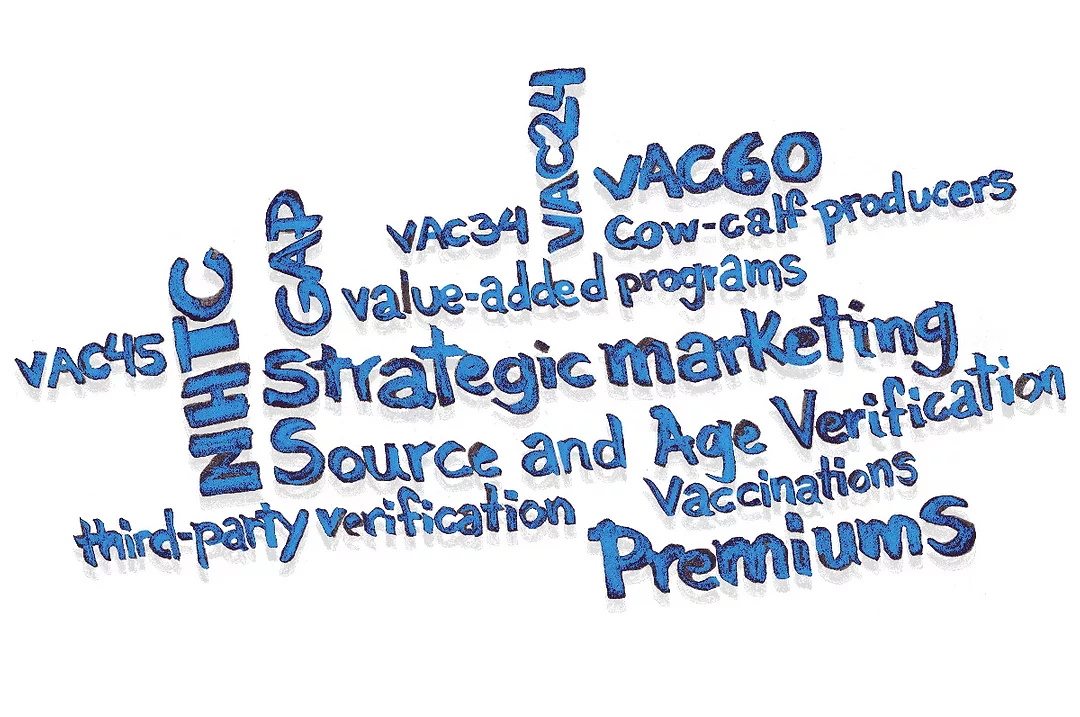
Participation in value-added programs typically requires meeting specific criteria in animal health, management, documentation and traceability. For instance, Superior Livestock Auction protocols such as VAC24, VAC34, VAC45 and VAC60 involve precise vaccination schedules and weaning periods with higher premiums associated with more extensive preconditioning. Programs like NHTC (Non-Hormone Treated Cattle), GAP (Global Animal Partnership), and Source and Age Verification demand additional documentation and third-party verification, adding administrative work but also boosting market access and premiums.
Preconditioning management practices vary by program – the certified VAC45 program, for example, requires a minimum of 45 days weaned, a two-dose vaccination regimen, dehorning and deworming. Source and Age Verification programs require in-depth identification and recordkeeping robust enough to be verified by approved certifiers. Although these requirements can increase labor and input costs, they also open access to premium buyers, especially in export and natural markets.
Evaluating the pricing influences of value-added programs
Participation in value-added programs often translates to higher prices per pound. A Kansas State University study done for Superior Livestock Auctions (using 2021 and 2022 auction data) found that nationally, calves enrolled in VAC45 programs earned a premium of $5.79 per hundredweight (cwt), while those under NHTC programs received $5.73 per cwt more than noncertified lots. GAP certification yielded premiums as high as $9.67 per cwt in some regions, reflecting growing consumer demand for beef that is perceived as ethically produced.
Other programs like Source and Age Verification have shown significant value, particularly when combined with other practices. For example, a 2002 study found that lighter Source Verified cattle (less than 650 pounds) brought an additional $1.30 per cwt over traditional auction prices, especially when pooled into larger, uniform lots. The economic value of these certifications often scales with regional demand and buyer preference, making it critical to understand the local market landscape.
It’s important to recognize that premiums alone do not guarantee profit. A 2022 study looked at the profitability of a regional program, Virginia Quality Assured (VQA). Researchers found that VQA cattle had faster turnover and better feed efficiency but lower sale weights. This meant any profitability increases had to come more from operational efficiency than outright price premiums. The most successful producers were those who balanced certification costs with operational improvements, emphasizing health, uniformity and low-stress management.
Mitigating price fluctuation with strategic marketing
Value-added programs can help producers smooth income through better market timing and buyer targeting. Marketing uniform, healthy calves in large groups, ideally through video auctions or presorted sales, can attract higher-paying buyers and reduce price volatility. Cow-calf operations often default to selling calves at the same time each year, regardless of market conditions. By strategically utilizing forage resources and maintaining management flexibility, producers can sell at a more advantageous price point. Similarly, retaining ownership or delaying the weaning time can also allow producers to sell during a more favorable price window. For many value-added programs, the preconditioning practices of the operation fall second in importance to operations that are willing to raise and sell cows at the opportune moment.
Furthermore, the use of marketing alliances and cooperative sales can enhance access to buyers seeking value-added cattle. Even small producers can participate in value-added programs by forming cooperatives to create uniform sale lots. Such coordination also improves buyer confidence in the health and performance of the cattle.
Selecting the right program for your operation: Evaluating the net benefit
Choosing the best value-added program depends on a rancher’s existing infrastructure, herd size, marketing channels and tolerance for administrative requirements. For smaller operations with limited labor, programs like VAC34 or Source and Age Verification may be feasible entry points. Larger or more intensive operations may find greater returns from VAC45+, NHTC or GAP, where the premiums better offset the labor and documentation costs.
A great tool for making that decision at the operation level is the partial budget, which evaluates the additional benefit, additional cost, reduced benefit, reduced cost and ultimate net benefit associated with a proposed change.
Table 1 provides an example of what a partial budget for enrolling in the NHTC program might look like. This example assumes that your base scenario is using antibiotic feed additives and growth hormones and that costs are spread out over 100 calves. As you can see, the costs may outweigh the benefits for this producer but may start to make more sense if 1) losses from lower weight gain are less than expected and 2) scale increases to spread the audit cost out over a greater number of animals.
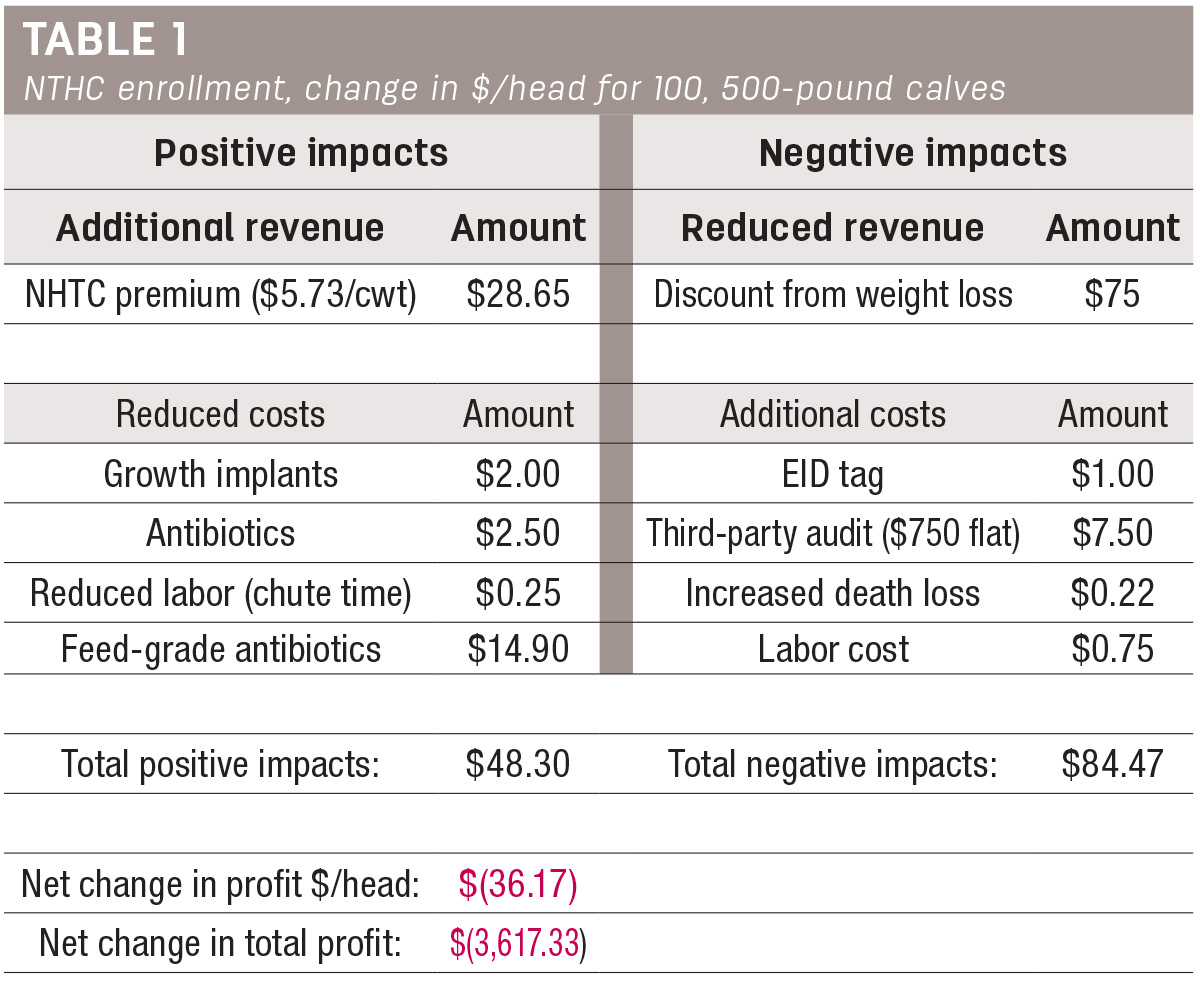
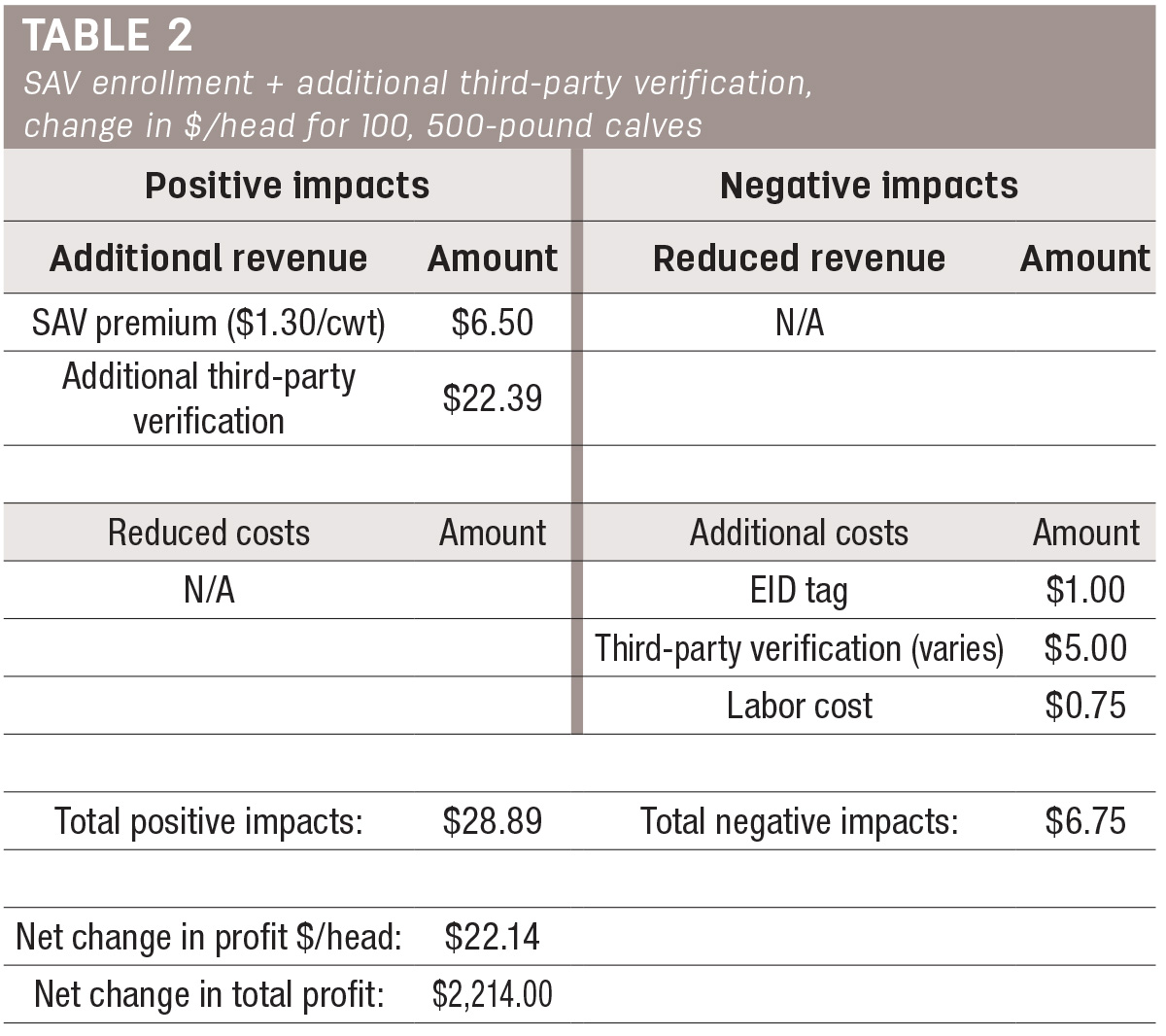
Table 2 provides examples of what a partial budget for enrolling in the Source and Age verification program might look like. This example also assumes that costs are spread out over 100 calves. It is important to note here that third-party fees for source verification programs rely on desk audits plus a random spot check, so the cost is almost entirely per‑head admin/tag fees charged by the umbrella provider.
The University of Idaho AgBiz team has a partial budget template available upon request.
Conclusion
Value-added programs offer a promising avenue for cow-calf producers to differentiate their cattle, increase revenue and hedge against price downturns. However, a positive net benefit is not guaranteed. Before participating, every producer should determine what changes would be required on their own operation and complete a partial budget to assess what the true benefit is to their unique operation, rather than taking estimated average premiums at face value.
Libby Blattner, undergraduate student at University of Idaho, also contributed to this article.



.webp?height=auto&t=1783636475&width=285 "63802-Thomas-GPS-equipment--Automated-Magnum-Tractor--Matt-Skinner-photo(1).jpg")
