Producers are seeing lower milk prices from January 2025 highs. While this downturn still reflects basic supply and demand, there are significant differences compared to recent cycles: strong cull and beef prices, earning component incentives, corn silage quality by region and a younger generation of managers.


Read on as we unpack what dairy producers should know about this milk price downcycle.
1. Strong beef prices
High cull cow and beef prices are one of the biggest contrasts to previous low‑milk‑price periods. They are supporting cash flow, and dairies are leaning into breeding and raising more beef-on-dairy. Still some caution is called for because every cow bred to beef means one less replacement animal for the herd. Raising a dairy heifer to first calving takes about two years, then another three years to truly break even.
Things to consider:
- Selling deep into replacements or leaning heavily on beef‑on‑dairy can feel good in the short term, but it is difficult to quickly rebuild the herd when markets change.
- Early life care protocols seem like an afterthought for beef-on-dairy calves. Now is the time to reevaluate those to lower mortality rates and add income.
2. FMMO updates
Even with the same cows and the same diet, some dairies see a different emphasis on milk components compared to a year ago. A major reason is recent updates to the Federal Milk Marketing Orders (FMMO).
Five key FMMO changes were approved last year. Four took effect in June 2025 and the fifth on Dec. 1, 2025. The most impactful to the milk check is the updated skim milk composition factors which decide how protein and other components are valued. It effectively raises the performance bar for component premiums. In sports terms, the goalposts have moved. Once milk protein dips below roughly 3.3%, you are likely giving up meaningful income every day.
How should we proceed? Do we feed cows to avoid penalties and protect premiums or cut out feed costs to appease the balance sheet? The answer lies in balancing both.
Here’s what we recommend considering:
- Know your component numbers and benchmarks. Track your milkfat and protein against current FMMO thresholds and your regional or co-op averages. Know exactly where you stand relative to the new bar.
- Use a simple decision tree before removing an ingredient. Before cutting, ask: Will removing this ingredient lower my milk protein or fat enough to lose premiums or trigger a penalty under the new formulas? What happens to income over feed cost (IOFC), not just feed cost? For example, a 25- to 40-cent-per-cow-per-day saving on additives isn’t a win if it costs more than that in lost components and also higher health costs.
- Use individual cow component data when choosing which cows to cull and grouping for feeding strategies. Keeping the herd’s average components strong can protect revenue under the new formulas.
One final sentiment: Always protect diet fundamentals. Cutting costs by removing feed ingredients without preserving rumen and gut health can disrupt cow health and production and ultimately hurt both components and IOFC.
3. 2025 corn silage by region
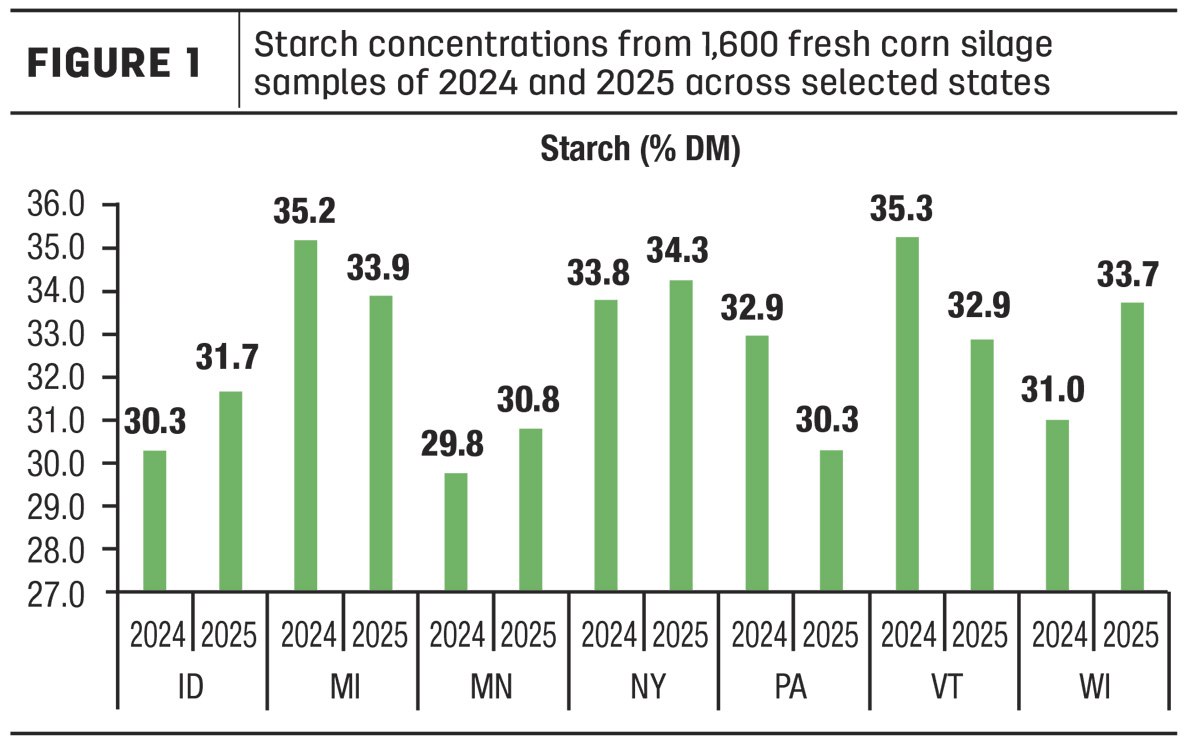
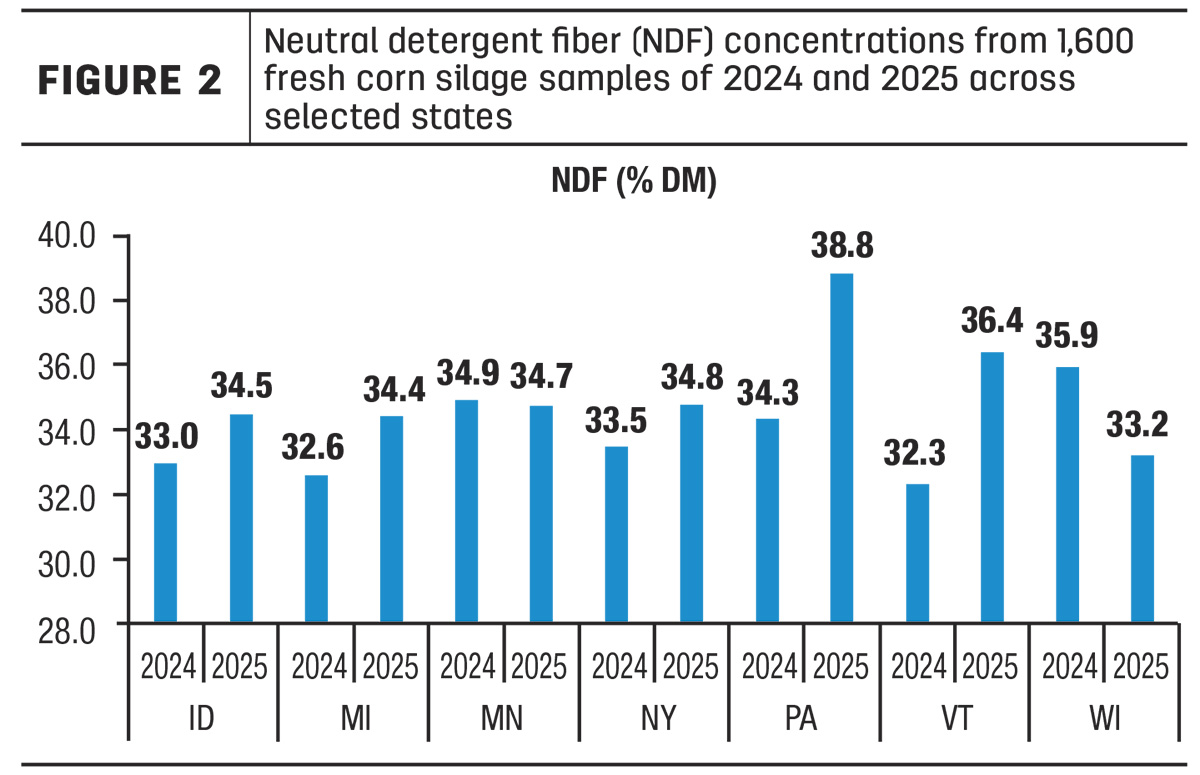
The 2025 corn silage crop is another major factor in shaping milk and components (Figures 1 and 2).
In the West, multiple producers report that 2025 corn silage is substantially worse than 2024 silage. When opening new piles or bags, they saw immediate drops in milk and components along with more frequent alarms from activity and rumination monitors. In several areas, silage has been dry and challenged by yeast and mold, increasing the need for mycotoxin binders and gut health tools.
While in the East, most producers have transitioned to 2025 silage and are seeing a different pattern: modest milk yield losses (often 2 to 5 pounds per cow per day), but components are holding reasonably steady. Drought stress in parts of the East may have changed starch levels, but it definitely decreased starch digestibility, shifting more of the plant's energy into the fibrous part. That means more reliance on fiber digestibility and rumen function to support performance.
Across regions, there are common practices worth considering as you feed the 2025 crop:
- Don’t assume this year’s silage behaves like last year’s. Collaborate with your nutritionist to understand the actual nutrient profile and where the risks and opportunities lie.
- Monitor closely when switching piles. Track changes in milk, components, intakes and manure. Be ready to adjust the ration and, where justified, include or increase binders and gut health tools.
- Maximize cow use. If more energy is tied up in fiber, focus on getting the most from the fiber you already have through effective fiber, proper processing and ration design – rather than just pouring more grain on top.
4. Operational plan
An interesting aspect of this downturn is who is sitting in the driver’s seat. A number of herds we work with are led by people in their late 20s or early 30s who are managing a downcycle for the first time. The younger generation may be more tech-savvy, but a common advantage for all producers now is faster access to useful information. We are better equipped with real-time market data and risk management tools than 10 or 20 years ago. Combining those tools with calm, deliberate decision-making should give producers more confidence in navigating this cycle.
There is no one‑size‑fits‑all for weathering a downcycle, but there are steps we can take so we can confidently feed cows, produce milk and run a business.
Treat this as a time to re-baseline feeding and financial strategies. That starts with a clear goal and a specific time frame. The goal you choose should guide every ration and management decision that follows.
The process can look like this:
1. Define a six‑month goal by sitting down with your strategic team and very specifically answering:
- Are we trying to preserve cash flow?
- Maintain production and herd momentum?
- Make a controlled production adjustment?
2. Print out current rations and go through line by line with your nutritionist.
- Tie each ingredient to a clear function. For low-inclusion items, ask: What is this supposed to do?
- Challenge every additive, especially ones used for a year or more. Ask: Do we still have the problem we added? Can we reduce the dose and watch response?
- Shift from talking price per ton to price per cow per day. This is because you can lower price per ton and still raise price per cow per day if the feed rate increases.
3. Dedicate a nutrition visit to audit the feeding system.
- Watch how feed is stored, loaded, mixed, delivered and managed at the bunk. Shrink can be a silent killer for feed costs.
- In a low‑price environment, every pound of feed and every minute of labor matters more.
A feed system audit is one of the most practical, low‑cost tools available in a down market. It can show low-hanging fruits, which are simple, inexpensive changes that can have an outsized impact.
Looking ahead
It is likely that milk prices will stay relatively low while cow numbers and production remain high, and while global demand stays moderate. Based on new FMMO standards, it’s fair to assume that component value will continue to grow in importance.
In many ways, the future of milk production is to produce high‑component milk efficiently; manage risk and costs proactively; use data, audits and continuous improvement as standard practice.
In a challenging milk price environment, these kinds of operational improvements can be just as powerful as ration tweaks. Combined with a clear understanding of replacement needs, FMMO changes and this year’s corn silage realities, they can help your dairy get through this cycle and come out stronger on the other side.