Since its introduction into the U.S. in the late 1800s, the horn fly has become a persistent challenge for livestock producers in pasture-based systems. For beef and dairy operations, horn flies are more than a nuisance; they contribute to measurable losses in weight gain, milk production and overall animal performance.

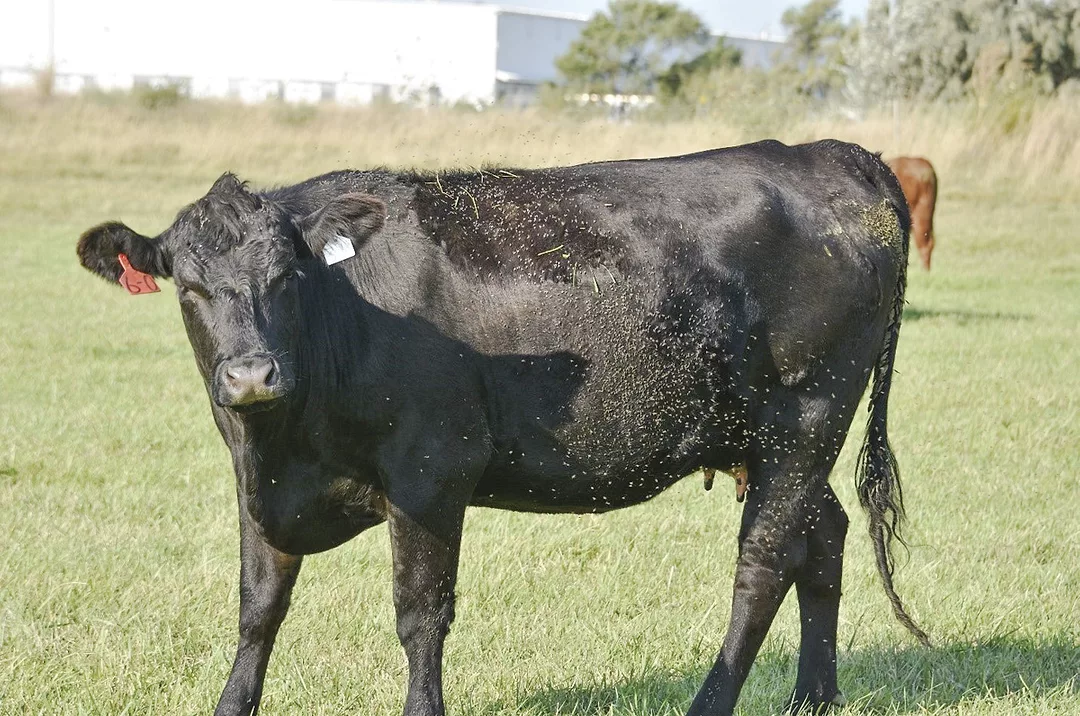
Horn flies are small, gray flies about half the size of a house fly and are typically found clustered along the topline, shoulders and sides of cattle. Unlike face flies or stable flies, horn flies remain on the animal nearly continuously. Both males and females blood-feed, taking approximately 20 to 30 blood meals per day. They are highly host-specific, with females leaving the animal only briefly to deposit eggs. As populations increase, cattle exhibit defensive behaviors such as tail switching, head throwing, skin twitching, bunching and seeking shade or water. These behaviors reflect irritation, stress and reduce grazing efficiency.
The horn fly has a short life cycle, typically completing development in 10 to 20 days under favorable summer conditions. Eggs are laid exclusively in fresh cattle manure, often within minutes of deposition. Larvae develop within the manure pat, pupate in the soil beneath it and emerge as adults that quickly locate a host. Multiple overlapping generations occur throughout the grazing season, allowing populations to increase rapidly if not properly managed.
Horn flies are considered the most economically damaging pasture fly in the U.S., with estimated annual losses exceeding $1 billion. The economic injury level is approximately 200 flies per animal. Untreated cattle may experience reduced average daily gain of 0.1 to 0.3 pound per day, decreased milk production, increased stress and energy expenditure, and hide damage from feeding and rubbing. Calves nursing heavily infested cows may also show reduced weight gain.
In the Great Plains and central U.S., horn fly populations typically begin increasing in late May or early June, peak during July and August, and decline after the first hard frost. In southern regions, populations may appear as early as February or March and persist through October, with some areas experiencing year-round pressure. Environmental factors such as moisture, temperature and grazing density strongly influence population development.
Effective horn fly management requires an integrated pest management (IPM) approach. Insecticide eartags can provide season-long control but should be rotated annually by mode of action and removed at the end of the season. Pour-ons and sprays provide rapid knockdown with variable residual activity and are most effective when applied at threshold levels. Dust bags and backrubbers can be effective when placed in force-use locations such as near water or mineral sources, but require regular maintenance. Feed-through insect growth regulators prevent larval development in manure but do not control adult flies and must be consumed by the entire herd. Walk-through fly traps offer a mechanical control option that reduces adult populations without insecticide exposure, although cattle require an acclimation period. Biological control agents, including dung beetles and other beneficial insects, contribute to natural suppression, and careful insecticide selection helps preserve these species.
Insecticide resistance to pyrethroids and organophosphates has been documented in many regions, and repeated use of the same insecticide class accelerates resistance development. Insecticides are classified by the Insecticide Resistance Action Committee (IRAC) mode of action (MoA) system based on how they affect the insect, using a numbered grouping (e.g., Group 1, Group 3). Products within the same group act in the same way, even if they have different brand names. Repeated use of a single IRAC group increases the risk of resistance. To maintain effectiveness, producers should rotate insecticides among different IRAC groups annually, avoid underdosing, treat only when economic thresholds are reached, remove eartags at the end of the season and incorporate nonchemical control methods into their management programs.
A proactive, threshold-based approach that emphasizes regular monitoring, timely treatment, insecticide rotation and the integration of mechanical and biological controls can reduce unnecessary insecticide use, slow resistance development and improve long-term sustainability. The horn fly remains the most economically significant pasture fly affecting cattle in North America, and integrated, data-driven management is essential for protecting herd performance and profitability.