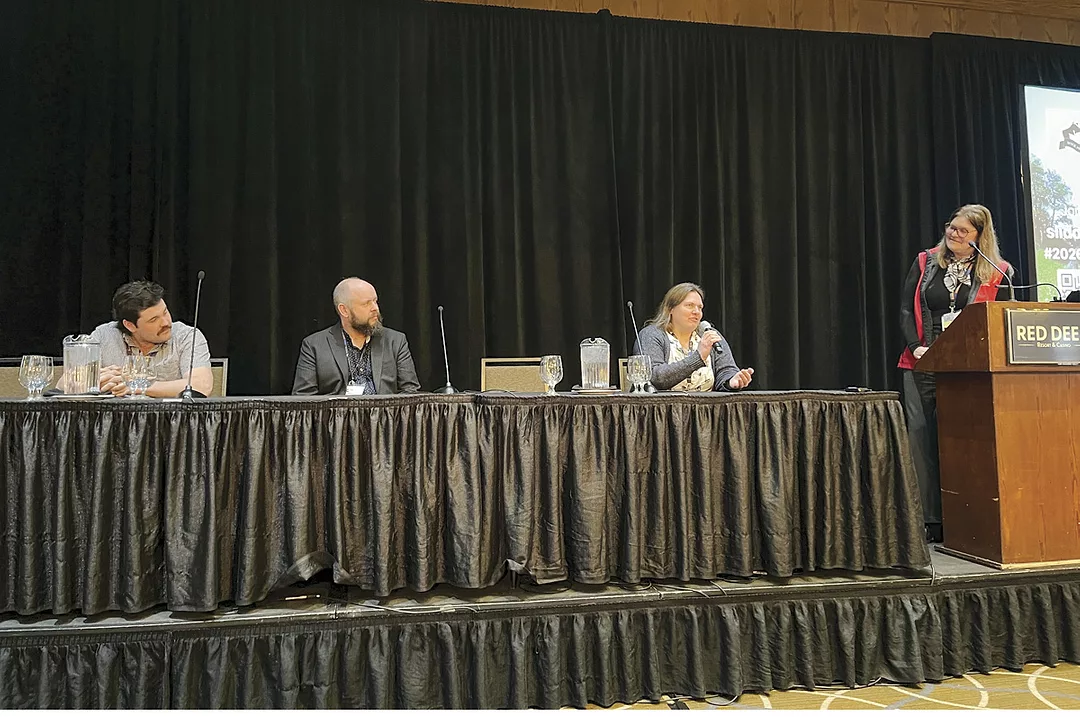
Nearly 900 attendees, including dairy producers, industry professionals, researchers and students, convened in Red Deer, Alberta, for the 2026 Western Canadian Dairy Seminar on March 10-13. Sessions covered a variety of topics, such as milk components, heat stress, feeding trace minerals, calf management, biosecurity and more. The ever-popular virtual farm tours and producer panel continued to be one of the most well-attended sessions throughout the conference. Meals and breaks provided time to visit with trade show exhibitors, network with other attendees and learn more about the latest and greatest in the Canadian dairy industry.

In the spirit of the conference theme – “Navigating the future” – many speakers provided insights into how topics like cow comfort and lameness have evolved over time and shared best practices moving forward.
Keynote speaker Dr. Karen Churchill sat down with agricultural journalist Dianne Finstad for a fireside chat to discuss the opportunities and challenges facing Canadian agriculture and the role of innovation. Churchill is the chief scientific officer at the Global Institute of Food Security, which is a research and innovation institute based at the University of Saskatchewan focused on advancing agri-food productivity, sustainability and food security through cutting-edge science, engineering biology, data-driven agriculture and industry partnership.
Churchill suggested that innovation is not a luxury but rather part of the foundation of food security.
“Innovation reduces waste, increases productivity and ensures accessible, nutritious food. Global demand for dairy and protein is rising sharply, especially across Asia’s middle class. Climate pressures, supply chain disruptions and sustainability expectations require new tools. Doing nothing is far riskier than innovating,” she said.
When comparing how Canada stacks up against global competitors like the U.S. and New Zealand, Churchill mentioned that while Canada has scientific strengths, there is a lack of innovation speed and that innovation tends to be incremental instead of disruptive.
“Yes, genetics, robotics, feed management, emissions reduction and animal welfare innovations are strong in Canada’s dairy sector. However, there is room to expand innovation beyond primary production into new ingredients, novel processing, co-product valorization, fermentation, hybrid dairy-plant products and export-oriented growth,” Churchill said.
Probiotics and prebiotics are among the opportunities Churchill highlighted. Acid whey and skim components can serve as substrates for probiotic beverages, micro-encapsulated functional ingredients, bioactive peptide formulations and gut-health products.
“The world is changing fast, and we must choose to lead rather than react,” Churchill said. “This is the moment to take dairy to the next level – ingredients, co-products, biotech, sustainability and global markets. The question isn’t ‘Should we innovate?’ – it’s ‘Will we claim the opportunities before others do?”
Cow comfort and preventative care
Dr. Dan Weary from the University of British Columbia discussed the evolution of cow comfort, emphasizing the importance of avoiding preventable injuries. He highlighted the effectiveness of deep bedding in reducing hock lesions and lameness. Weary also shared other practical strategies to improve cow comfort, including using brushes, providing access to pasture when possible and managing stall design.
Continuing the theme of minimizing lameness, Dr. Laura Solano from the University of Wisconsin – Madison discussed results from focus groups and other insights related to dairy cattle lameness. The focus groups with producers, herd veterinarians, hoof trimmers and other key stakeholders revealed that lameness is a top priority but is often overlooked due to daily pressures. She identified barriers, such as the lack of a “lameness champion,” operational constraints and regulatory issues.
“There is a lack of coordinated vision among key stakeholders when it comes to managing lameness. It starts with a shared vision and then is an integrated approach that combines technology, support services and monitoring and decision-making tools,” Solano said.
Biosecurity, traceability and recordkeeping
Multiple sessions noted the importance of biosecurity and accurate recordkeeping. During a presentation about emerging diseases, Dr. Murray Gillies from Animal Health Canada shared an overview of outbreaks in the U.S. and Central America that could present a risk to Canadian dairies, including H5N1 and New World screwworm.
“Unsurprisingly, [keeping diseases out of our country] comes down to biosecurity,” Gillies said. “Now is the time to think about this before you have a problem on your farm. If you wait until an outbreak to figure out what to do, it’s frustrating and stressful and things can fall through the cracks. proAction has all these biosecurity programs in place and resources for producers to use.”
Part of that biosecurity plan includes maintaining accurate visitor records and restricting where visitors can go on the farm. Additionally, international travel – for farmers and visitors – can also present inherent risks.
“We should know the travel history of our visitors. Everyone should have clean clothes and boots, and footwear should be disinfected,” Gillies said. “If you are the one traveling, you should know the foot-and-mouth disease status or the foreign animal disease status of the country you are visiting. If you visit farms in other countries, that is a risk and you could bring something back with you. Make sure everything you bring back is free from soil and manure and remember to disinfect your footwear.”
The significance of biosecurity, traceability and maintaining good records was reiterated by Dr. Kerri-Rae Millar from Morden Veterinary Clinic during her presentation about lessons learned from a tuberculosis (TB) outbreak on a dairy in Manitoba. A positive case was identified through lab tests on June 9, 2025, from a cow that was slaughtered two months prior. The entire herd, including youngstock, was depopulated on June 30. By late August 2025, the producer could start filling the barn again.
“TB isn’t that prevalent in Canada anymore, so we typically won’t see a cow with classic TB signs,” Millar said. “After lesions and other signs are identified at a slaughterhouse, the lymph nodes and lung tissue are sent to the lab for PCR testing. The problem with TB is that it is extremely slow growing, so it can take anywhere from eight to 14 weeks to grow in culture. So, ... TB was found two months later growing in a petri dish and the producer was notified that their premise is under quarantine and that their herd will be depopulated. Getting that call as a producer – especially considering the cow was slaughtered two months ago – is pretty overwhelming.”
Millar recommended euthanasia and post-mortems should occur off-site if possible.
“The less the producer has to see, the better,” she added.
Traceability is very important for these types of investigations to track other potentially infected animals.
Millar commended the dairy industry for doing a fantastic job with traceability and identified some areas for continued improvement, including bull calves and calves leaving the farm. She also recommended dairy producers look at where they purchase youngstock and other animals, keep an eye on wildlife and maintain good records.
“There’s a saying that most diseases are bought and paid for, but some are just bad luck. Do practice good farm biosecurity. Keep your records up to date, and please keep your records on animals that leave the barn after they are gone. If you find yourself in a situation like this, give yourself some time and ask for help. Call your herd vet, milk marketing board and neighbours, they can all help you. The community was extremely supportive. Everyone quickly realized it could have easily been them and that there was nothing this producer did to cause it,” she said.