The face of Canadian dairy is changing, with more women stepping into farm management, leading agricultural organizations and playing key roles in advancing innovation across the industry. Throughout 2026 – the United Nations International Year of the Woman Farmer – Dairy Farmers of Canada will share the stories of some of the women helping shape our world-class Canadian dairy sector.
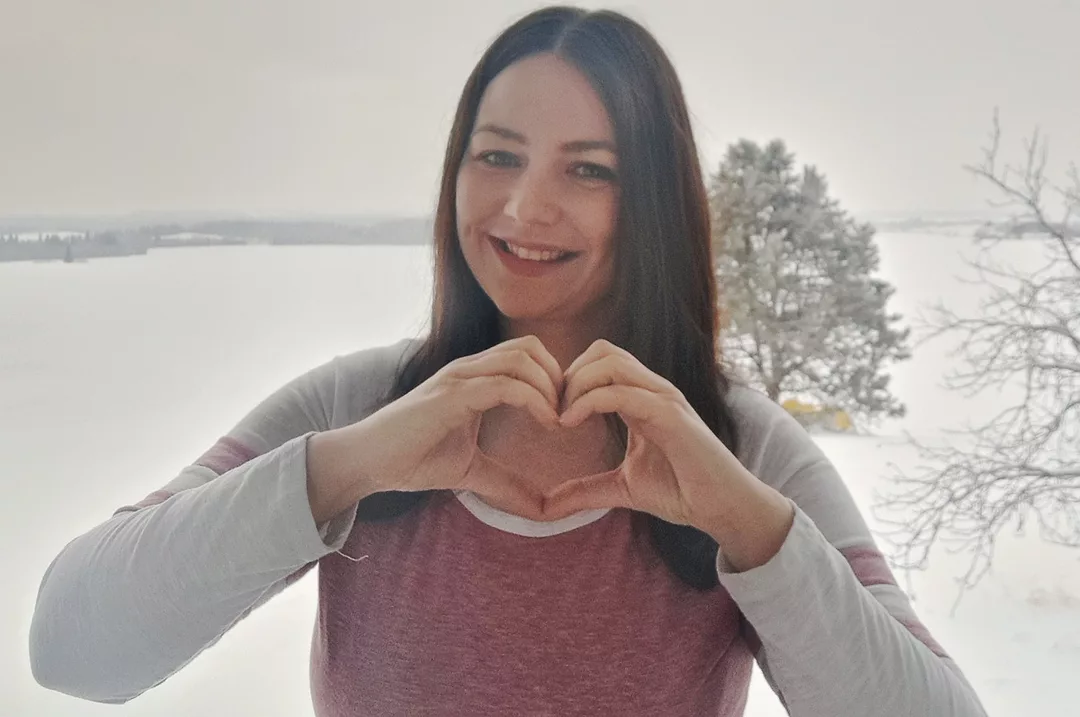
Karen didn’t always think she would end up in agriculture, even as she was surrounded by it. Her grandparents ran a dairy farm, her parents raised pigs, and her boyfriend worked on his own family’s dairy operation. Still, life experiences and encouragement from her father gave her the push to go into a successful career in nursing.
Now, Karen’s dairy-farming boyfriend is her dairy-farming husband, they are raising four boys, and she’s a full-time farmer herself. While she made a career change, Karen is putting her former profession into practice on the farm. “In dairy farming, you're doing the same thing as nursing, but for cows,” she says. “I'm advocating for my cows every day.”
It’s just one of the ways the dairy industry was the perfect fit for a person who, even while off the farm, never really wanted to take themself out of the dairy community. Karen is using her variety of experiences to boost her farm, her herd and the next generation of prospective farmers.
Karen’s path back to dairy was made easier by the farming women in her life
Growing up in central Alberta, Karen knew dairy would always be an important part of her life. At a young age, though, she experienced the illness and passing of her mom. Watching the care the nurses provided gave Karen new perspective.
“I thought, ‘I want to be that person to take care of other people, to be there at some of their weakest moments and advocate for them,’” she says.
Karen earned her Bachelor of Science in nursing at the local college. After a few years working as a registered nurse, she joined her husband, Henk, in running their second-generation family farm. She now helps manage a herd of 400 cows supported by a team of eight employees.
Karen credits the strong dairy farming women in her life for helping ease the way back into farming.
“I was very lucky growing up with a dairy farming grandmother who was very hands-on,” she says. “I also grew up with two aunts in the industry; one was a dairy farmer, the other a veterinarian. My mother-in-law is such a hardworking woman and so dedicated to the industry. They always taught me women have a place in farming.”
In a farming community where women are not an exception but a norm, Karen says it was easier to move back into agriculture without ever feeling out of place.
“I have a friend who runs a dairy farm of a similar size to mine,” Karen says. “We can bounce ideas off each other. Having people to support each other as fellow dairy farmers has just been wonderful.”
One way Karen is doing this is by applying her passion for health and technology, this time with cows in mind.
Technology and community help Karen make the most of her skills and experience
Like all Canadian dairy farms, cow care is a high priority for Karen and Henk, but nursing helped broaden her perspective.
“Our whole goal is always to do what’s best for our cows and everybody working on the farm,” she says. “I ask, ‘How can we make the cows' lives better? What can we do to improve their quality of care? What can we do to teach people about what we're doing?’”
Her stint in nursing and growing up with a tech-savvy father instilled in her a love of health-focused technology, which she quickly incorporated into her operation.
“The cow wears a tracker on its neck band. It tells me if the cow walks, if the cow has fewer steps in a day, if she has more steps in a day, if she’s eating, even how she’s ruminating,” Karen says.
The cow health monitoring system is a crucial component of the farm, helping Karen’s whole team make decisions.
“With this technology, I can guarantee that if a cow is sick – I hate that they get sick, but just like with humans, it does happen – that I can get attention to them as fast as possible. We're seeing it right away.”
Now, her team includes her young sons. Karen says, “I can share it with my kids and show them how I'm reading it. I ask, ‘What do you see? What are you learning?’”
Karen loves this confluence of farming and teaching because it allows her to share her passion with many other people – not just family and friends, but also with those in her broader community and around the world.
“We have had multiple exchange students over the years. I also run a dairy farming optional course for the local junior high school. I just love it when those kids come out and I can teach them about dairy farming,” she says.
Karen has also found a passion for returning the warm welcome she received when she came back to dairy full time.
“It's just big, open hospitality. If you're ready to work hard and go and make a difference in the industry, the doors just fly open for you,” she says.
Dairy Farmers of Canada (DFC) is the national policy, lobbying and promotional organization representing Canadian dairy producers. DFC strives to create stable conditions for the dairy sector in our country. It also seeks to maintain policies that promote the sustainability of Canadian dairy production and promote dairy products and their health benefits. Visit DFC’s website for more information.