With antimicrobial-resistant infections increasing worldwide, it is important for all of us to do our part in antimicrobial stewardship, including those of us in the dairy industry. While qualitative research on farmers’ perceptions of antimicrobial resistance indicates that some dairy farmers have felt unfairly blamed for antimicrobial resistance, the truth is that it is a global problem that requires all sectors, including beef, poultry, swine, companion animal medicine, dairy and the human health sector, to participate.

Selective mastitis protocol
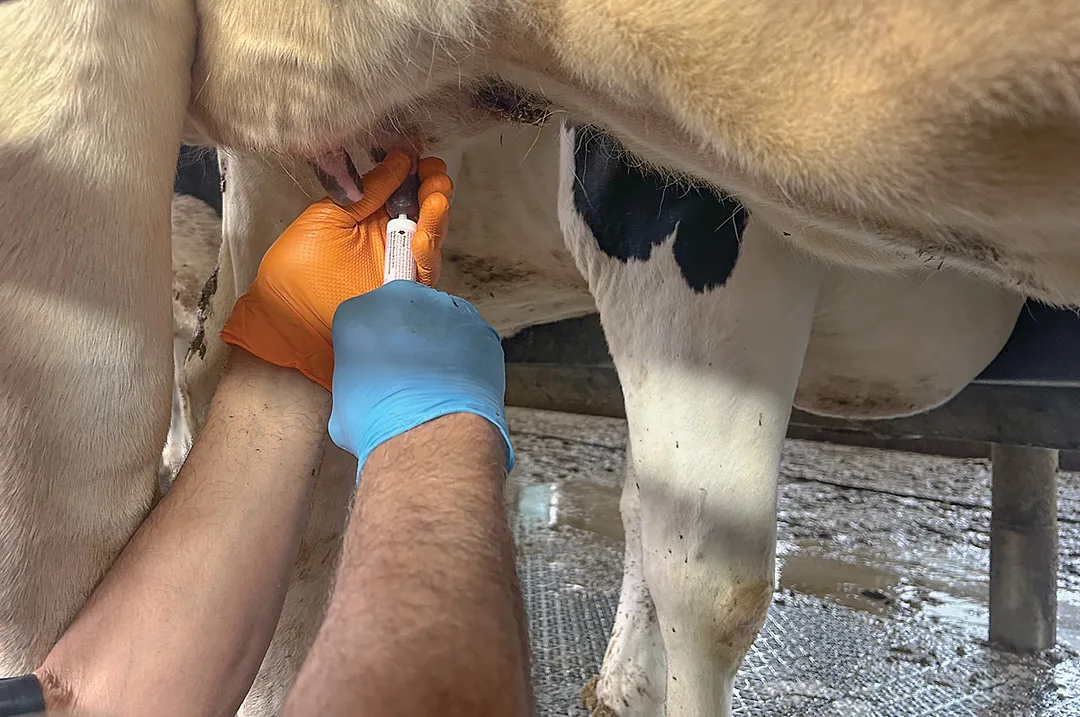
Because a large portion of the antimicrobials we use on dairy farms are for the prevention and treatment of mastitis, this represents an area where improved antimicrobial stewardship can be implemented. One approach for implementing improved antimicrobial stewardship on dairy farms would be through adoption of a selective clinical mastitis protocol.
This refers to a protocol in which we aim to treat non-severe clinical mastitis cases that would benefit from treatment with an antimicrobial and refrain from treatment of cases that would be less likely to respond to treatment. Such an approach, if suitable at the individual farm level, would allow for a substantial improvement in antimicrobial use on dairy farms.
With that in mind, researchers have sought to understand what motivates and prevents farmers from adopting selective clinical mastitis protocols. When evaluating the perceived barriers to the adoption of selective antimicrobial treatment for non-severe clinical mastitis, researchers at the University of Guelph and the University of Prince Edward Island found that a major barrier to adoption of selective clinical mastitis treatment is bacteriological diagnostics. Specifically, farmers in the study expressed frustration about not being able to receive diagnostic results in time to be useful.
At the core of a selective clinical mastitis treatment protocol is the ability to access diagnostic testing and receive results in a timely manner. At this time, we know that if treatment is delayed 24 hours while waiting for the results of the diagnostic test, we do not expect a difference in outcome of the case. By outcome of the case, we are referring to bacteriological cure, clinical cure, somatic cell count following the clinical mastitis case, milk yield, likelihood of recurrence and likelihood of culling. While this is true, 24 hours is a fast turnaround time, and depending on the context and diagnostic accessibility, that may be challenging. For this reason, there is ongoing research to improve availability of on-farm rapid diagnostic tests. With the assistance of your herd veterinarian, there is also the option of setting up on-farm bacteriological culturing, which can help reduce the time to results.
Participants in the same sample in Canada shared that automated milking systems supported the adoption of selective clinical mastitis treatment. On farms with automated milking systems, waiting for diagnostic results prior to initiating treatment was easier to implement due to decreased direct interaction and visualization with the udder, as opposed to farms with a parlour or tiestall where the farmers and on-farm employees regularly interact with the udder. Although an interesting finding of the study, decreased interaction and visualization of the udder presents other obstacles in terms of clinical mastitis detection. The implications of this should be considered further.
On-farm cultures
Milk culturing adoption is an important aspect of a selective clinical mastitis protocol. A recent study conducted in western Canada identified some of the barriers and facilitators to milk culturing. Based on these data and the use of a behavioural change framework, the authors proposed a number of interventions to support the adoption of milk culturing. One of the barriers described by the dairy farmers and on-farm personnel included frustration with contamination of milk samples. To ensure samples are collected in a way that we can trust the results, on-farm employees need to be provided with proper training on the steps involved. Extension specialists can play a key role here in providing additional guidance on the steps to be followed to avoid contamination of the samples and ensure the results will be accurate and therefore useful.
Other farmers in the sample expressed frustration with receiving milk culture results that indicated “no growth” of bacteria. Although potentially frustrating to the farmer when there is a cow presenting with clinical signs of mastitis, “no growth” is actually a very meaningful result. It tells us that bacterial thresholds were not met, and there likely was not any bacteria present in the udder when the sample was taken. This is likely because the cow has already cleared the infection. It may also indicate that the cause of the infection is not due to bacteria at all. In these cases in which bacterial culturing produces a result of “no growth,” antibiotics are not needed and would not be helpful. Further clarification and support from veterinarians, extension specialists and on-farm consultants is needed to aid in the interpretation of such results.
A call for producer-friendly opportunities
Farmers also shared that more user-friendly systems are needed, specifically cowside tests with improved shelf-life. Additionally, costs associated with on-farm culturing were not perceived to be appealing, especially when considering the shelf-life of the culture plates. To address cost-related concerns, the development of udder health programs by local veterinary clinics has been suggested as one possible intervention.
Similar to other studies focused on antimicrobial stewardship among dairy farmers, the herd veterinarian was identified as playing a significant role in supporting farmers with the adoption of milk culturing. This is especially true on farms where there is not unanimous support for milk culturing among key stakeholders. By helping dairy farmers and veterinarians navigate the identified barriers and by providing support for identified facilitators, we can better position the dairy industry to achieve long-term improvement of antimicrobial stewardship practices on dairy farms.
References omitted but are available upon request by sending an email to the editor.