We use cookies to provide you with a better experience. By continuing to browse the site you are agreeing to our use of cookies in accordance with our Cookie Policy.
  • Sign In
  • Create Account
  • Sign Out
  • My Account
subscribe / renew
  • Livestock
    • Beef
    • Dairy
      • Canada
      • U.S.
    • Sheep & Goats
    • Other Livestock
  • Crops
    • Grains
      • Barley
      • Wheat
    • Hay
    • Pasture
    • Ensiled Forages
  • Equipment
  • Magazines
    • Progressive Dairy US
    • Progressive Dairy — Canada
    • Progressive Dairy – en francais
    • Progressive Forage
    • Progressive Cattle
    • Progressive Cattle - Canada
    • Idaho Ag Proud
  • Blogs
  • Buyers Guide
  • Advertise
  • Ask AgProud

Progressive Dairy

Progressive Dairy Canada

PD Canada en Francais

Progressive Cattle

Progressive Cattle Canada

Progressive Forage

Agproud Idaho

Home

Home » protein requirements

Articles Tagged with ''protein requirements''
62742-cooper-1.jpg

New dietary guidelines push for twice the protein

January 7, 2026
David Cooper

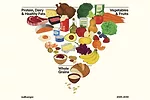
The Dietary Guidelines for Americans for 2025-30 make a direct push for whole, nutrient-dense foods, specifically protein, dairy, vegetables, fruits and whole grains, while reducing highly processed refined carbs, added sugars and sodium. Recommendations for daily protein intake were doubled from the previous 2020-25 version.


Read More
62587-cabot-2023-planted-Kernza-060125-Zone-36.jpg

Working lands, working options: Expanding forage flexibility in the Upper Colorado River Basin

Forage crops in the Upper Colorado River Basin face mounting stress from aridification and shifting runoff. Researchers are measuring consumptive water use with evapotranspiration modeling and sensor networks to guide resilient forage strategies.
December 29, 2025
Brett Bovee, Perry Cabot, Aaron Derwingson, Hannah Holm, Tessa Peters, and Katie Russell

Forage crops in the Upper Colorado River Basin face mounting stress from aridification and shifting runoff. Evapotranspiration modeling and in‑field sensor measurements are helping producers adapt forage systems to limited water supplies.


Read More
62378-kern-hay.jpg

Four forage parameters to watch after a wet haying season

This year’s wet haying season left many producers with bales that didn’t dry down properly, raising concerns about forage quality and livestock health. As winter feeding plans take shape, understanding four key forage parameters can help producers make informed decisions.
November 6, 2025
Rebecca Kern-Lunbery

After years of drought, Nebraska hay producers faced a new challenge in 2025: too much rain. This high-moisture hay raises new questions about winter feeding strategies.


Read More
62086-kern-lunbery-1116.jpg

Forage for camelids

Llamas and alpacas may graze like cattle, but their nutritional needs tell a different story. With limited gut capacity and constant dry matter intake, these fiber-producing camelids rely on nutrient-dense forage to meet their protein, energy and micronutrient needs.
September 9, 2025
Rebecca Kern-Lunbery

Llamas and alpacas may graze like cattle, but their nutritional needs tell a different story. With limited gut capacity and constant dry matter intake, these fiber-producing camelids rely on nutrient-dense forage to meet their protein, energy and micronutrient needs.


Read More
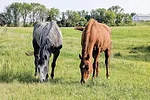
61615-kern-horses-grazing-2.jpg

Nutrition to prevent lameness in horses

Maintaining a balanced diet and monitoring body condition can prevent lameness and delay the onset of metabolic issues.
June 27, 2025
Rebecca Kern-Lunbery

There is more we can do nutritionally to prevent lameness in horses. Ensuring a well-balanced diet along with monitoring body condition can go a long way in preventing lameness and delaying the onset of some metabolic issues.


Read More
61318-meccage-root.jpg

Alfalfa: A misunderstood crop in the West’s water crisis

Alfalfa has frequently been portrayed negatively in discussions about water consumption in the western U.S. Media reports often blame this crop for depleting vital resources in dry areas. Such claims oversimplify a complex issue and overlook the essential contributions of alfalfa to agriculture.
April 10, 2025
Emily Meccage

Nationwide, 14.6 million acres are cultivated for alfalfa. Critics argue this is too much for regions with limited water, yet they fail to compare these numbers to other staple crops. 


Read More
60554-wyffels-cow-calf-getty.jpg

Managing beef cattle to get the best use of fall/winter forage

Low-quality forages can be a limiting factor in keeping cows in proper condition for calving, lactation and rebreeding, but there are tools available to maintain reproductive health and efficiency.
November 12, 2024
Sam Wyffels

Nutritional management plays a central role in promoting the health, productivity and reproductive success of beef cattle.


Read More
60483-GRAY.coreylewis.jpg

Weaning calves – art or science?

When weaning, making sure calves are as comfortable as possible can be the ticket to more pounds on their frames and dollars in your pocket.
November 1, 2024
Zeb Gray

It is hard to have blanket recommendations for producers across the U.S., as environments and production practices vary so much between regions and even producers within regions. Nonetheless, there are some basic principles and practices that will give your calves the best chance at navigating the weaning process.


Read More
60279-warner-1.jpg

How do moisture and composition affect feedstuff costs?

Nutrient composition and dry matter content should be taken into account when evaluating the value of different feeds.
October 8, 2024
Jason M. Warner

While understanding the impact of feedstuff dry matter is critical for making informed management decisions, we also must consider how differences in nutrient composition, in addition to dry matter, influence feedstuff cost scenarios.


Read More
60206-eckerle-trucks.jpg

Optimizing health in beef cattle receiving programs

There’s a lot to consider when receiving new cattle into the feedlot. A few checklist items can help ensure better health and productivity of these animals.
September 13, 2024
Greg Eckerle

The journey from pasture to plate is fraught with challenges, particularly during the initial receiving period when cattle are most vulnerable. The receiving phase, typically encompassing the first 45 days after cattle arrive at a feedlot, is critical for ensuring their health, well-being and subsequent productivity.


Read More
Previous 1 2 3 4 5 6 7 8 Next
  • RECENT ARTICLES
  • 63615-nichols-staff.jpg

    The Good Dirt: Tweak it a little

    June 17, 2026
  • 63601-viney-1316.jpg

    Klondike Farms: Built with grit, guided by stewardship, growing for the next generation

    June 17, 2026
    • Richards Ranch enhances tradition with virtual fencing

      June 17, 2026

FREE NEWSLETTERS

Award-winning coverage of in-depth news and analysis to make your business more profitable.

SIGNUP TODAY
Advertisement
THE GUIDE

How do I get my company listed in your Buyers Guide? 
Submit a request to be listed for FREE in the Buyers Guide here.

Why can I only see so many articles before I have to register for the site?
Find out why here.

SUBSCRIBE to Leading Industry Magazines

Award-winning coverage of in-depth news and analysis to make your business more profitable.

Subscribe/Renew
Advertisement

I'm looking for ________

Find the right products and services for your farm, ranch or operation.

CHECK OUT OUR BUYERS GUIDE
Advertisement
  • FEATURED PODCASTS
  • [Podcast] Matthew Evangelo talks mastitis management at Bar E Dairy

    Progressive Dairy
    Mastitis
  • [Podcast] Changing the Rules of Pre-Fresh Dairy Cows

    Progressive Dairy
    Podcasts
    SPONSORED BY Applied Biotechnologies Inc.
PERSONALIZED CONTENT
Create an account and see website content tailored to your operation.  It only takes a few seconds!
SEE RECOMMENDATIONS NOW!
Copyright © 2026 Progressive Publishing

MORE INFORMATION
  • About Us
  • Terms & Conditions
  • Privacy Policy
  • FAQs
  • Advertise
  • Shop
  • Stats Posters

OUR MAGAZINES
  • Progressive Dairy
    • Facebook
    • Twitter
    • Linkedin
  • Progressive Dairy — Canada
    • Facebook
    • Twitter
    • Linkedin
  • Progressive Dairy — en français
    • Facebook
  • Progressive Cattle
    • Facebook
    • Twitter
    • Linkedin
  • Progressive Cattle — Canada
    • Facebook
    • Linkedin
  • Progressive Forage
    • Facebook
    • Twitter
  • AgProud — Idaho
    • Facebook
    • Linkedin

CONTACT INFORMATION

Progressive Publishing
238 West Nez Perce (physical)
PO Box 585 (mailing)
Jerome, ID 83338


info@progressivepublish.com
(800) 320-1424
(208) 324-7513 (Main)
(208) 324-1133 (Fax)