Alfalfa has often been cast as the villain in debates surrounding water use in the western U.S. Headlines point fingers at the crop for draining precious resources in arid regions. These accusations oversimplify a complex issue and fail to acknowledge alfalfa's invaluable role in agriculture. As a scientist dedicated to sustainable farming and livestock nutrition, I believe it’s time to set the record straight.

First, we must put alfalfa’s acreage into perspective. The sheer acreage dedicated to alfalfa often draws criticism. Nationwide, 14.6 million acres are cultivated for alfalfa, with states such as California, Arizona and New Mexico contributing significantly. Critics argue this is too much for regions with limited water, yet they fail to compare these numbers to other staple crops. For instance, the U.S. dedicates more than 82 million acres to corn and 87 million acres to soybeans. Even Kansas, a significant player in agriculture, devotes 7.15 million acres to wheat – far surpassing alfalfa's 580,000 acres.
Alfalfa’s perennial nature can lead to misconstrued data when comparing alfalfa’s water usage to other crops. Unlike annual crops, as a perennial, alfalfa is capable of regrowing multiple times per year. This means farmers can harvest it several times annually, spreading water use across many months rather than concentrating it into a single growing season or single crop harvest. If you compare the annual water use of alfalfa to other crops based on the total production of forage mass, alfalfa is more water-efficient and can turn water into more yield compared to many other common staple crops.
Still, you may wonder why we grow a crop primarily fed to animals rather than humans in an area where water is so valuable. The answer lies in alfalfa’s unique ability to thrive in environments where other crops cannot. Its resilience, water-use efficiency and environmental benefits make it one of the best choices for converting limited water resources into nutritious livestock feed on land that might otherwise lie fallow.

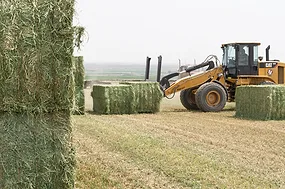
Alfalfa’s resilience, water-use efficiency and environmental benefits must be considered when you compare alfalfa to other crops. By providing exceptional protein yields, improving soil and water quality and thriving in challenging conditions, alfalfa is an important crop in sustainable agriculture. Image courtesy of Forage Genetics International.
Resilience and flexibility
Alfalfa thrives in water-scarce regions because it is remarkably resilient to drought. Its deep taproots, which extend far below the surface, enable it to access water reserves unavailable to most annual crops. Research supports alfalfa’s ability to use residual winter moisture before irrigation is necessary, reducing its water demand in the early growing season.
Studies conducted during California’s 2013-15 drought demonstrated alfalfa can be successfully deficit irrigated, meaning it can survive on reduced water availability without crop failure. When water becomes scarce, alfalfa can enter dormancy, conserving resources until conditions improve.
Beyond drought tolerance, alfalfa’s perennial nature also makes it resilient to other extreme weather events. While hail or flooding can destroy a season's worth of annual crops, alfalfa’s ability to regrow minimizes such losses. This resilience ensures a steady feed supply for livestock, even in challenging conditions.
Water-use efficiency and harvest index
Critics often overlook alfalfa’s water-use efficiency. Research shows that alfalfa’s water-use efficiency – its ability to produce valuable output per gallon of water consumed – is higher than that of many other crops, including almonds and wheat. In a water-limited environment, it is not just about how much water a crop uses but how effectively it converts that water into valuable agricultural products. Alfalfa excels in this regard, providing optimal protein yields per unit of water applied. This makes it a smart choice for maximizing limited resources. When comparing alfalfa to one of the most commonly grown protein sources, soybeans, alfalfa produces significantly more protein per acre, in some instances more than two times the pounds of protein.
Alfalfa’s harvest index also contributes to its water-use efficiency. Nearly 100% of the aboveground plant matter of alfalfa is harvested, giving it a very high harvest index. In comparison, only 30%-50% of total plant matter is harvested from most other seed-producing and fruiting crops. And after harvest, alfalfa regrows quickly, providing ground cover year-round, which helps protect the soil and decrease water loss.
In terms of protein per acre, alfalfa provides exceptional yields of up to 2 tons of crude protein per acre annually, significantly surpassing soybeans, which yield approximately 1,400 pounds of protein per acre.
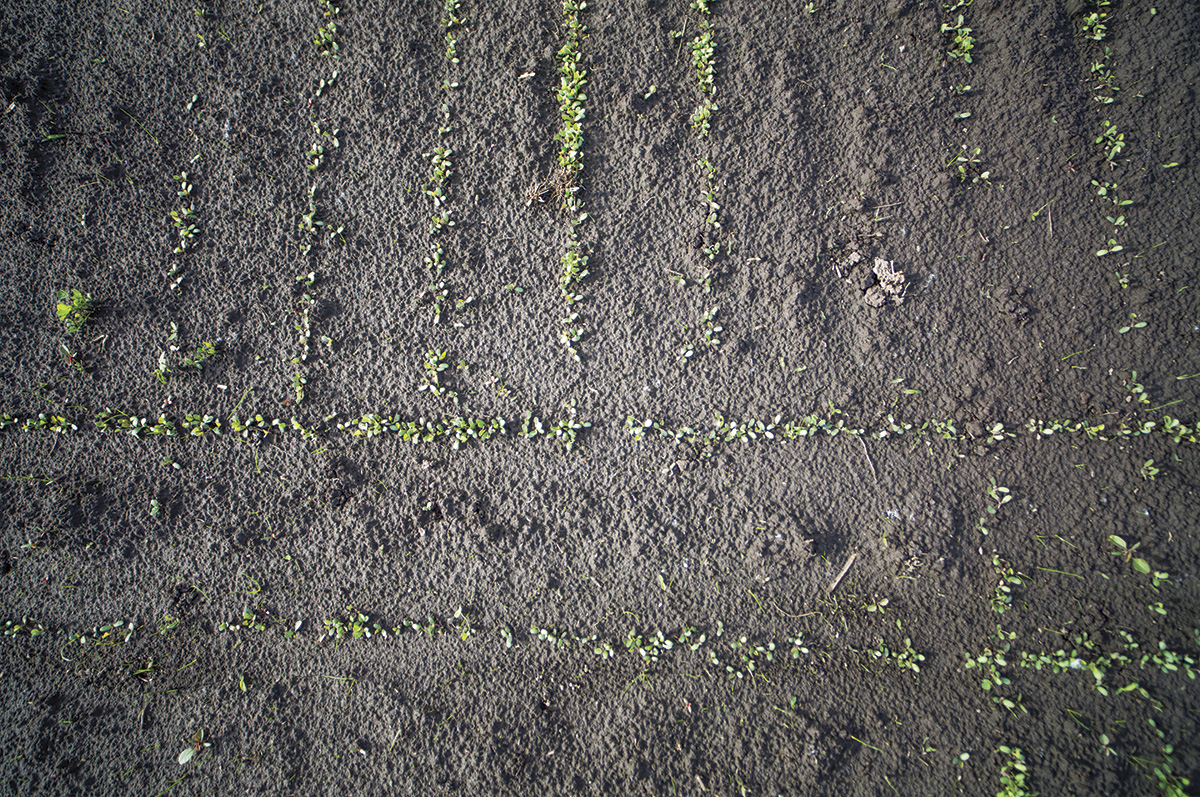
Alfalfa’s deep roots enhance soil tilth and promote nutrient and water mobility, which can contribute to the long-term sustainability of valuable farmland. Image courtesy of Forage Genetics International.
Environmental benefits
Alfalfa’s ability to provide constant ground cover can help reduce soil erosion while simultaneously improving soil health. Alfalfa’s deep roots enhance soil tilth and promote nutrient and water mobility, which can contribute to the long-term sustainability of valuable farmland.
Alfalfa also plays a crucial role in helping improve water quality. Its ability to scavenge excess nutrients makes it an effective tool for cleaning up polluted water sources. This characteristic is particularly important in areas where agricultural runoff has led to water contamination. Alfalfa’s ability to scavenge toxic metals like chromium and aluminum has been utilized to reclaim abandoned mining sites, as well as in the case of factory runoff, even playing a role in the real-life case behind the Erin Brockovich movie.
Nitrogen fixation is an important factor in alfalfa’s environmental contributions that cannot be overlooked. Studies show that rotating alfalfa with high-value crops can significantly increase microbial biomass, mycorrhizal fungal activity and overall soil health. In one study, tomatoes planted after alfalfa experienced a 17-ton-per-acre yield boost without additional nitrogen fertilizer, demonstrating alfalfa's ability to naturally enrich the soil. Additionally, nitrate leaching was lower following alfalfa compared to corn, reducing groundwater contamination.
By absorbing excess nutrients, alfalfa can help mitigate the impact of farming on water ecosystems and can reduce the need for additional inputs, positioning it as a crop that supports environmental stewardship.
Recognizing alfalfa’s value today and into the future
As we look to the future, the role of alfalfa in sustainable agriculture will continue to evolve. Advances in crop management and irrigation technology are helping farmers optimize water use and improve yields. Ongoing research into alternative uses for alfalfa is expanding its potential applications. For example, distillation methods are being developed to produce sustainable human protein from alfalfa while generating high-quality forage byproducts. Such innovations highlight the crop’s versatility and its potential to address multiple agricultural challenges simultaneously.
Alfalfa is not the enemy in the West’s water crisis. It is a highly resilient, efficient and environmentally beneficial crop that plays a critical role in our agricultural system, helping ensure food security for millions of people who depend on livestock products. By providing exceptional protein yields, improving soil and water quality and thriving in challenging conditions, alfalfa should be recognized as an ally in the quest for agricultural sustainability, not an adversary.
Click here for more information on Forage Genetics International research or products.
References omitted but are available upon request by sending an email to the editor.