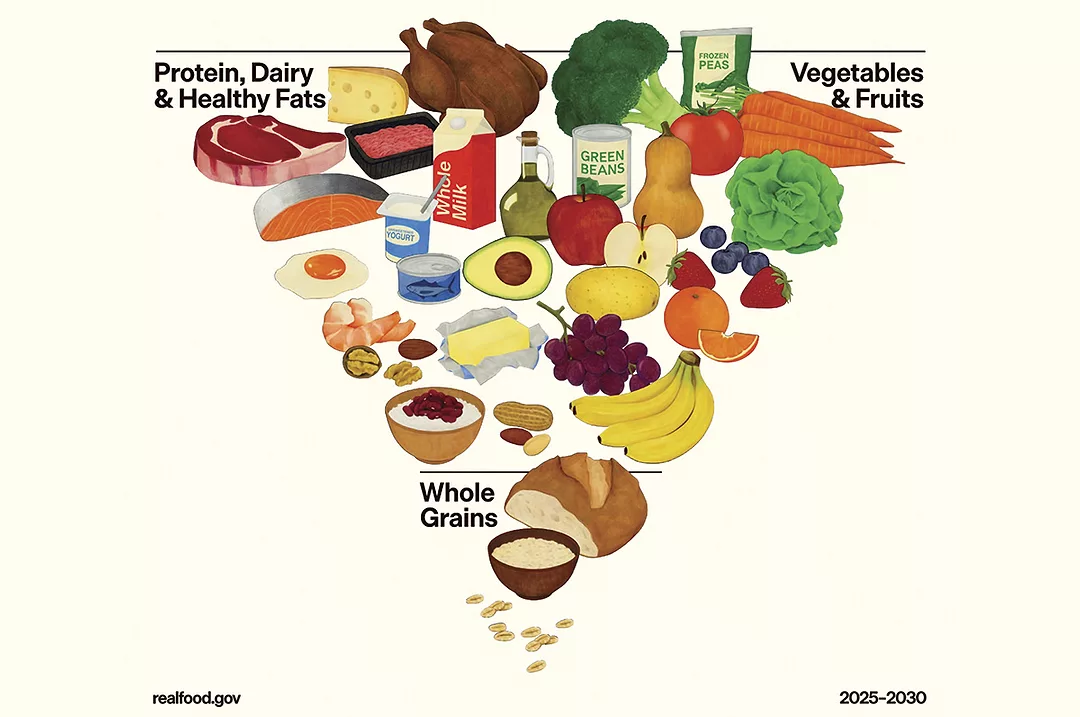
Meat and dairy are back on the menu in bigger ways in the newly updated Dietary Guidelines for Americans (DGA) released by the departments of Agriculture and Health and Human Services (HHS) on Jan. 7.

The DGA release for 2025-30 makes a direct push for whole, nutrient-dense foods, specifically protein, dairy, vegetables, fruits and whole grains, while reducing highly processed refined carbs, added sugars and sodium. Recommendations for daily protein intake were doubled from the previous 2020-25 version.
“We are realigning our food system to support American farmers, ranchers and companies who grow and produce real food – and the Trump administration is working to ensure all families can afford it,” the document‘s message from USDA Chief Secretary Brooke Rollins and HHS Secretary Robert F. Kennedy Jr. reads.
The new document outlines “Prioritize protein foods at every meal” in its second page, with recommendations to consume a variety of animal sources, “including eggs, poultry, seafood and red meat, as well as a variety of plant-sourced protein foods, including beans, peas, lentils, legumes, nuts, seeds and soy.”
The guidelines also prescribe a serving goal of 1.2-1.6 grams of protein per kilogram of bodyweight per day, adjusting as needed based on an individual’s caloric requirements. Such a formula for protein consumption is new to the DGA.
“As Americans face the double burden of being overfed and undernourished, they are searching for reliable, affordable solutions to meet their nutritional needs and personal preferences. Thankfully, there are a wide range of beef options in the marketplace,” said registered dietitian and nutrition scientist Dr. Shalene McNeill, executive director of nutrition science for the National Cattlemen’s Beef Association (NCBA). “On a per-gram basis, beef offers more nutrient value that many other animal and plant options. Incorporating beef in the diet can help support the overall health and well-being for all Americans.”
“We are pleased the dietary guidelines recommend Americans prioritize protein and that families can get that protein from nutrient-dense meat and poultry,” said Meat Institute President and CEO Julie Anna Potts. “Secretary Rollins and Secretary Kennedy’s leadership have simplified the dietary guidelines, making it clear that meat is a protein powerhouse which plays a vital role in healthy diets. Robust scientific evidence demonstrates that meat is a rich source of high-quality protein, essential vitamins and highly bioavailable minerals that support human health throughout the lifespan.”
The new DGA continues to suggest a 2,000-calorie-per-day dietary pattern that can be adjusted as needed based on an individual’s caloric requirements. NCBA in its statement noted the DGA didn’t make changes to recommendations that saturated fats do not make up more than 10% of daily calories, but, “the guidelines do note that healthy fats are a natural part of real foods like meat, and these fats support many important functions in the body like nutrient absorption.”
Other key highlights in the new guidelines noted by NCBA:
- It incorporates using beef tallow and other healthy fats in the cooking process.
- It recommends using healthier cooking methods such as baking, broiling, roasting, stir-frying or grilling, all of which can be used with the wide variety of retail beef cuts available to American families.
- It endorses nutrient-dense foods like meat during infancy and early childhood to support growing children.
The American Medical Association added its own endorsement of the new DGA. “The American Medical Association applauds the administration's new dietary guidelines for spotlighting the highly processed foods, sugar-sweetened beverages and excess sodium that fuel heart disease, diabetes, obesity and other chronic illnesses," Bobby Mukkamala, the group's president, said in a statement.