Across the Upper Colorado River Basin, forage crops are a powerful engine of rural economies. Alfalfa, mixed grass hay and irrigated pastures form the nutritional base of livestock operations and anchor much of the agricultural land use across broad swaths of the region.






These systems are resilient, familiar and central to the Western livestock industry. But as the basin faces a prolonged imbalance between water supply and demand – driven by earlier runoff, hotter summers and persistent aridification – producers are looking for tools that allow them to keep land in production and maintain economic stability. From district water boards to individual farmers, the sentiment that echoes across the basin is that practical solutions are needed in a drier, hotter future to sustain this important facet of the agricultural system.
Recognizing the need for collaborative and collective solutions, the Intermountain West Alternative Forages working group – which includes researchers and project managers from Colorado State University (CSU), The Land Institute, American Rivers, The Nature Conservancy and Trout Unlimited – focuses on widening the range of forage options available when water is limited, markets shift or growing conditions change. The group’s work has been supported by the Colorado Water Conservation Board, the Colorado River District and private foundations.
Ongoing research by CSU and its Colorado Western Slope partners is also helping fill knowledge gaps by quantifying consumptive-use patterns of these crops through a coordinated program of unmanned aerial vehicle-based evapotranspiration modeling and in-field sensor measurements, allowing researchers and producers to better understand how these forages respond under varying water conditions.
Because the Upper Basin is overwhelmingly a forage basin where an estimated 75% of irrigated acres grow alfalfa or pasture grasses, any discussion of resilience must start with crops that already dominate the landscape. Alfalfa remains unmatched in yield, feed quality and market reach.
In interviews conducted for the working group by WestWater Research, producers consistently describe alfalfa as the backbone of Western forage agriculture: predictable, durable and supported by decades of breeding and research. Grass pastures, likewise, are deeply tied to place and often occupy ground unsuited for haying equipment, providing crucial grazing during spring and fall shoulder seasons.
Solutions that complement, not replace, existing forage systems are recognized as more likely to get broad adoption. Interviews highlight a common theme: When water deliveries drop, partial- or full-season irrigation withdrawal is often the least desirable approach. Ceasing irrigation, even for a single season, can be hard on soils, expensive to manage and disruptive to livestock operations. Grass pastures show quick yield declines under water stress and can take years to recover. Alfalfa rebounds well, but repeated deficits can shorten stand life and negatively affect soil conditions. These challenges create an opening for complementary forage options that help stabilize production across variable climate and water-supply conditions.
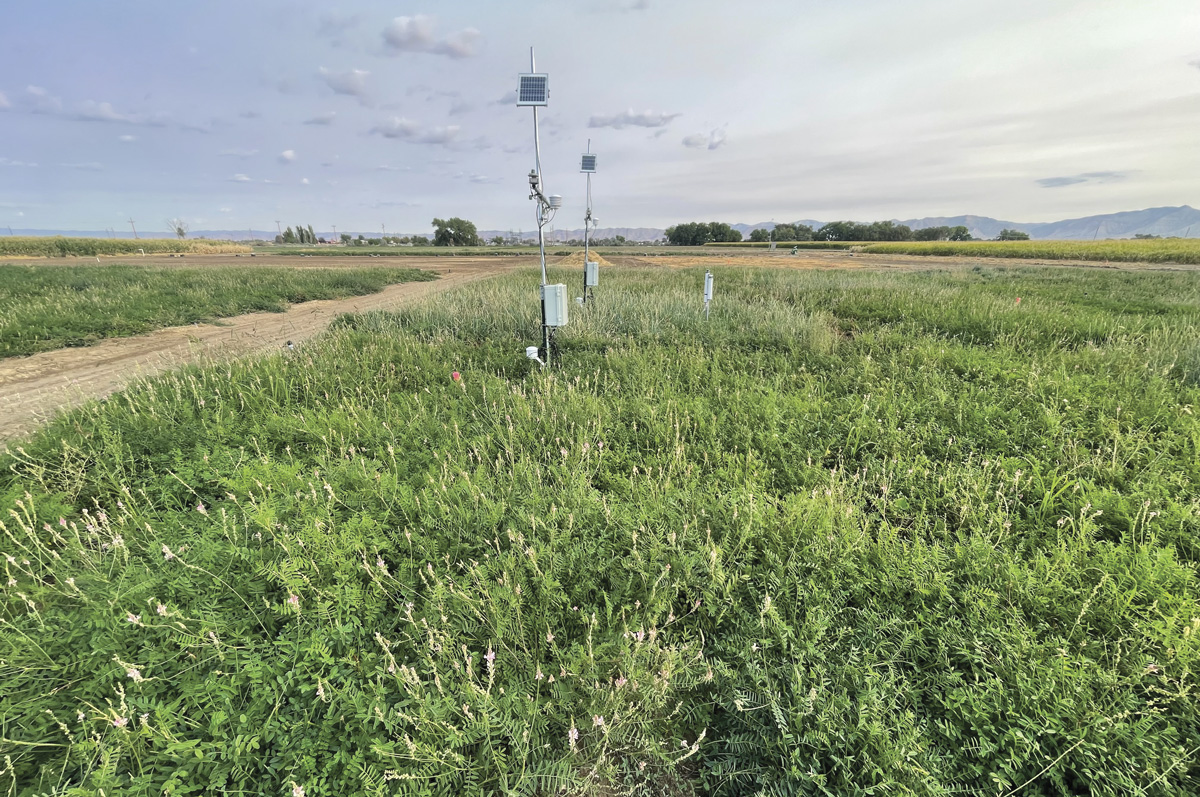
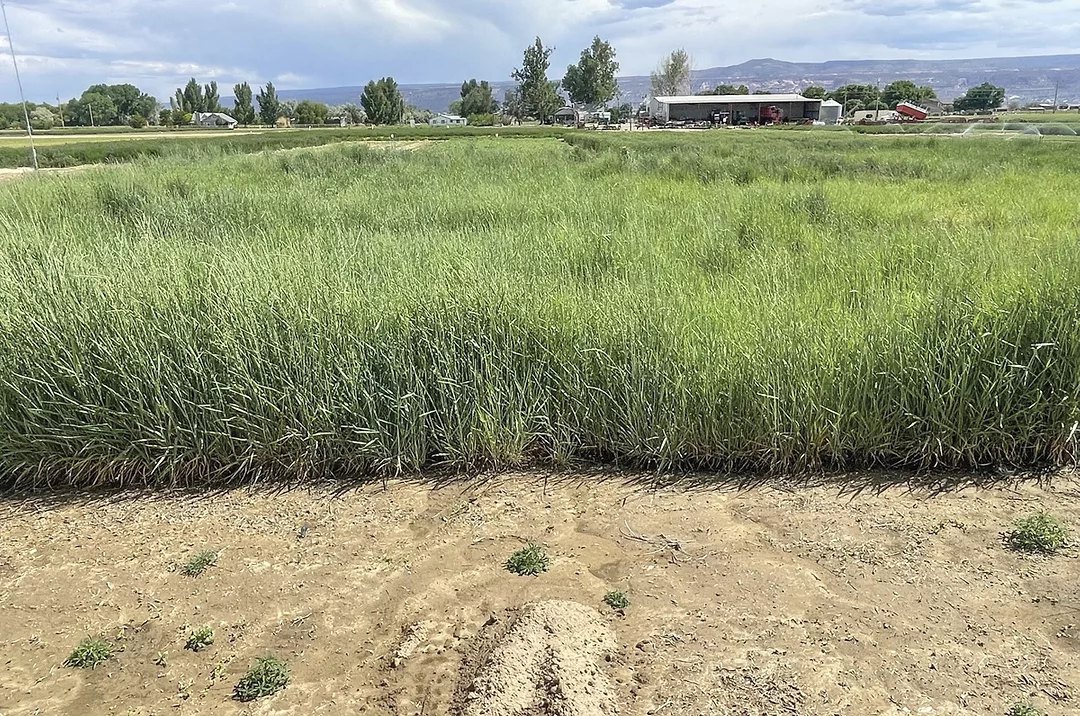
Colorado State University’s Uniform Variety Research plots in Fruita, Colorado, feature 2024-planted sainfoin, equipped with solar-powered sensors to monitor crop and soil conditions, including water-use efficiency under drought stress. Image by Perry Cabot.
One advantage of these complementary forages is their alignment with the realities of irrigation timing, particularly for producers who lack reservoir storage or hold junior water rights. Many river systems naturally see reduced flows after midsummer, which can result in 10% to 30% reductions in expected water volumes for junior rights holders. Producers often note that when a crop needs water can be as important as how much it ultimately produces. Some complementary forages reach peak water demand earlier in the season or are already past peak production when late-season shortages occur. In this sense, a forage with slightly lower yield potential may still offer strong operational value if its timing matches the water that is reliably available.
Several forage options illustrate this potential. Sainfoin, a nonbloat legume valued by both cattle and wildlife, offers stable protein content, cold tolerance and natural resistance to key pests. Though its yields are generally lower than alfalfa, its long stand life and excellent grazing characteristics make it attractive in settings where water supply tightens in late summer. One West Slope producer, Jim Fry, became interested in the crop after learning about sainfoin as a “low-bloat, low water-use, hollow-stem perennial” and seeing opportunities for “introducing new crops to local markets” for his neighbors.
Kernza, an intermediate wheatgrass bred by The Land Institute, can function as a grain and forage dual-use crop and may fit rotationally into operations seeking lower-input perennial options.
Mixed forage stands that combine alfalfa, grasses and drought-tolerant species also show promise. Research suggests these mixtures can generate strong biomass per unit of applied water, reduce vulnerability to heat or moisture extremes, and provide flexibility for either grazing or haying, depending on the year.
Producers echoed this interest, noting that these mixes spread risk and add diversity without requiring major changes to equipment or management. The most challenging aspect of establishing forage mixes is to deal with weeds that opportunistically grow when irrigation is held back. Triticale and other cool-season annuals establish quickly and can help extend the usable life of aging forage stands as they decline in productivity.
Still, none of these options can succeed without market support. Even the best-performing forage is unlikely to gain traction unless buyers recognize its value, whether for nutrition, digestibility, animal performance or operational traits such as low-bloat characteristics. As complementary forages receive more attention, there must be a parallel effort to expand buyer interest, particularly among dairies, feedlots and within regional horse and cattle markets. Distinctive traits, such as sainfoin’s low-bloat profile, can open new market niches and help producers justify experimentation.
Market development also intersects with emerging water management programs. If programs that compensate producers to voluntarily use less water continue to grow in the basin, then forage options that tolerate intentional periods of reduced irrigation may offer both agronomic and financial advantages. Complementary forages that maintain vegetation, protect soil cover and resume production quickly after a drydown can help producers participate in these programs with fewer operational disruptions. Whether water shortages result from voluntary leasing or natural hydrologic variability, flexible forages can help minimize negative impacts.
What emerges from this work is a picture of incremental, grounded, producer-driven adaptation. The strength of Western forage agriculture has always been its ability to evolve. Now more than ever, producers will need to balance limited water supplies, navigate market conditions, adjust feeding strategies and steward land and water resources.
Continued research on performance, water use, economic returns and management practices can shorten the learning curve and expand the toolbox available to producers. In doing so, complementary forages can play a meaningful role in sustaining the productivity, resilience and economic viability of working lands across the Upper Colorado River Basin.