We use cookies to provide you with a better experience. By continuing to browse the site you are agreeing to our use of cookies in accordance with our Cookie Policy.
  • Sign In
  • Create Account
  • Sign Out
  • My Account
subscribe / renew
  • Topics
    • All recent articles
    • Animal Welfare
      • Animal Handling
      • Cow Behavior
      • Welfare Standards
    • Barns
      • Barn Design
      • Bedding
      • Bird Control
      • Cow Comfort
      • Cow Cooling
      • Cow Flow
      • Expansion
      • Flooring
      • Fly Control
      • Lighting
      • Pen Design
      • Stalls
      • Ventilation
    • Calves & Heifers
      • Calf & Heifer Health
      • Calf & Heifer Nutrition
      • Calf Housing
      • Colostrum
      • Heifers
    • Feed Ingredients
      • Additives
      • Byproduct Feeds
      • Carbohydrates
      • Fiber
      • Minerals
      • Protein
      • Supplemental Fats
      • Trace Minerals
      • Vitamins
    • Feed Management
      • Bunk Management
      • Feed Evaluation
      • Feed Storage
    • Forage Types
      • Alfalfa
      • Alternative Forages
      • Grasses & Grazing
      • Silage
    • Genetics
      • Breeding Protocols
      • Breeding Strategy
      • Crossbreds
      • Indexes
      • Purebreds
      • Traits
    • Herd Health
      • Animal Monitoring
      • Antibiotics
      • Diagnostic Tests
      • Digestive Issues
      • Dry Cows
      • Fresh Cows
      • Infectious Disease
      • Mastitis
      • Metabolic Disease
      • Vaccination
    • Hoof Health
      • Digital Dermatitis
      • Hoof Care
      • Lameness
      • Lesions
    • Manure
      • Carcass Disposal
      • Greenhouse Gases
      • Manure Analysis
      • Manure Application
      • Manure Handling
      • Manure Solids
      • Manure Storage
      • Nutrient Management
      • Renewable Energy
      • Solid-Liquid Separation
    • Milking Equipment
      • Milk Storage
      • Milking Robots
      • Milking Sanitation
      • Milking Systems
      • Parlor Types
      • Teat Prep Equipment
    • Milk Quality
      • Udder Hygiene
      • Parlor Hygiene
      • Milk Production
      • Milk Components
    • Ration Formulation
      • Digestion
      • Dry & Transition Cow Diets
      • Lactating Cow Diets
    • Reproduction
      • Breeding Equipment
      • Repro Management
      • Repro Technology
    • Technology
      • Management Software
    • Business Management
      • Consultants
      • Employees
      • Finances
      • Profitability
      • Risk Management
      • Succession Planning
      • Training Tools
      • Working with Family
    • Dairy Farm Features
    • Special Topics
      • Christmas
      • Dairy Activities
      • June Dairy Month
      • Niche Marketing
      • State of the Dairy Industry
      • Women in Dairy
  • News
    • Dairy Demand
    • Dairy Foods
    • Dairy Industry Issues
    • Dairy Trade
    • Events
    • Milk Marketing
    • Milk Processing
  • Blogs
    • From the Editor
    • Guest Blogs
    • Faber’s Food for Thought
    • HERd Management
    • Just Dropping By
    • Life on the Family Farm
    • The Milk House
    • Tim the Dairy Farmer
  • Podcasts
  • Buyers Guide
  • Magazine
    • Current Issue
    • Past Issues
  • Ask AgProud
UsCa

Progressive Dairy

Progressive Dairy Canada

PD Canada en Francais

Progressive Cattle

Progressive Cattle Canada

Progressive Forage

Agproud Idaho

Home

Home » Topics » Progressive Dairy » Forage Types

Forage Types
Forage Types RSS Feed RSS

Tips for managing pasture in extreme weather

August 20, 2019
Tamara Scully
When dairy farming is based on grazing, a necessary focus on managing pastures to optimize forage nutrients for cow health and productivity emerges.
Read More

Western bean cutworm and mycotoxins in corn silage

August 6, 2019
Gary Bergstrom, Jaime Cummings, Joe Lawrence, Elson Shields, and Ken Wise
Mold and mycotoxin development in corn ears and stalks, and the resulting corn silage, continues to be a major concern for dairy producers. Mycotoxins can result in a range of problems for livestock throughout the year as they are ingested with the feed.
Read More

Successfully harvesting, fermenting and feeding BMR sorghum

August 6, 2019
Thomas Kilcer
BMR sorghum has been increasing in acres across the region north of the Mason-Dixon line. Most farmers, agronomists and seed sales professionals use harvest and feeding information from years of experience in Texas and across the South.
Read More

Conventional to grazing: Making it work

August 5, 2019
Tamara Scully
According to economic data gathered from 60 Maryland dairies between 1995-2009, grazing dairies posted a higher per-cow profit than confinement dairies – $156 more per cow. The farms surveyed included 20 grazing-based and 40 confined-milking herds.
Read More

Factors that may limit the effectiveness of silage additives

July 31, 2019
Limin Kung
Various additives, including micro-organisms, enzymes and chemical compounds, have been added to forages to maintain or improve the nutritive value of a crop as silage. As is the nature of most biological systems, there can be considerable variation in the outcome of using these additives.
Read More

Dairy case study: What made production drop?

May 24, 2019
John Goeser
Similar to a crime scene investigation unit, nutritionists often seek out evidence pointing toward a causative factor when troubleshooting. In some cases, the herd symptoms and challenges are odd, and contributing factors are not very easy to sort through even for well-seasoned consultants.
Read More

Keeping kelp in front of cows on grass

March 18, 2019
Brittany Olson
In another installment of Penn State Extension’s Dairy Grazing Management Guide webinar series, University of New Hampshire professor, extension educator and veterinarian Andre Brito discussed the growing popularity of supplementing kelp to cows in pasture-based systems, both organic and conventional.
Read More

Warm-season grasses and milk production in grazing dairies

March 14, 2019
Brad Heins and Kathryn Ritz
Pasture is the primary source of forage for grazing dairies. In the northern U.S., this requirement is typically met by a May-to-October grazing season, and profitability depends on pastures that provide a uniform, season-long supply of high-quality forage. However, in the northern U.S., seasonal variation in temperature and precipitation creates a challenge, as the predominant forage plants, which include perennial grasses such as Kentucky bluegrass and smooth bromegrass, and legumes such as white clover, undergo a “summer slump” in production.
Read More

Better than average: Feasible balances for dairy farms that produce most forage needs

March 13, 2019
Karl Czymmek and Mart Ros
Key performance indicators, such as milk urea nitrogen, ration nitrogen (N) and phosphorus (P) levels, corn stalk nitrate testing, and soil fertility assessments are only useful if we know what to strive for.
Read More

Cornell sorghum variety and establishment

March 13, 2019
Thomas Kilcer
Sorghum, mainly a crop of the deep south, is being planted on more acres across the northeast. Originally relegated as an emergency summer feed when earlier crops had failed, or for part-time livestock farms, the crop is going mainstream because of the number of economic and practical advantages it offers.

Read More
Previous 1 2 3 4 5 6 7 8 9 10 11 Next
  • Progressive Dairy
  • 1026pd-digital-edition-feature-spot.jpg

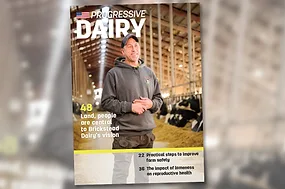
    June 12, 2026 Progressive Dairy digital magazine

    June 12, 2026
  • 63471-coyne-63471E.jpg

    Brickstead Dairy at forefront of industry progress

    June 12, 2026
    • The Courage to Evolve: Mothers

      June 12, 2026

FREE NEWSLETTERS

Award-winning coverage of in-depth news and analysis to make your business more profitable.

SIGNUP TODAY
Advertisement
THE GUIDE

How do I get my company listed in your Buyers Guide? 
Submit a request to be listed for FREE in the Buyers Guide here. 

Why can I only see so many articles before I have to register for the site? 
Find out why here.

How do I listen to the Progressive Dairy podcast?
Listen here.

How do I submit an idea for an article? 
Click here.

SUBSCRIBE OR RENEW Your Subscription to Leading Industry Magazines

Award-winning coverage of in-depth news and analysis to make your business more profitable.

Subscribe or Renew Today
  • INDUSTRY NEWS
  • Dairy News
    Dairy Industry News

    U.S. dairy exports soar in April

    June 11, 2026
  • Dairy Industry News

    QualiTru Sampling Systems launches customized food safety and quality training program for commercial dairy industry

    June 11, 2026
  • Dairy Industry News
    People

    Progressive Publishing hires Lauren Wangsness as summer editorial intern

    June 10, 2026
Advertisement

I'm looking for ________

Find the right products and services for your farm, ranch or operation.

CHECK OUT OUR BUYERS GUIDE
Advertisement
  • FEATURED PODCASTS
  • [Podcast] Changing the Rules of Pre-Fresh Dairy Cows

    Progressive Dairy
    Podcasts
    SPONSORED BY Applied Biotechnologies Inc.
  • [Podcast] Performance By Design: Science-driven solutions for today’s calf raisers

    Progressive Dairy
    Podcasts
    SPONSORED BY IFF Animal Nutrition & Health
PERSONALIZED CONTENT
Create an account and see website content tailored to your operation.  It only takes a few seconds!
SEE RECOMMENDATIONS NOW!
Copyright © 2026 Progressive Publishing

MORE INFORMATION
  • About Us
  • Terms & Conditions
  • Privacy Policy
  • FAQs
  • Advertise
  • Shop
  • Stats Posters

OUR MAGAZINES
  • Progressive Dairy
    • Facebook
    • Twitter
    • Linkedin
  • Progressive Dairy — Canada
    • Facebook
    • Twitter
    • Linkedin
  • Progressive Dairy — en français
    • Facebook
  • Progressive Cattle
    • Facebook
    • Twitter
    • Linkedin
  • Progressive Cattle — Canada
    • Facebook
    • Linkedin
  • Progressive Forage
    • Facebook
    • Twitter
  • AgProud — Idaho
    • Facebook
    • Linkedin

CONTACT INFORMATION

Progressive Publishing
238 West Nez Perce (physical)
PO Box 585 (mailing)
Jerome, ID 83338


info@progressivepublish.com
(800) 320-1424
(208) 324-7513 (Main)
(208) 324-1133 (Fax)