We use cookies to provide you with a better experience. By continuing to browse the site you are agreeing to our use of cookies in accordance with our Cookie Policy.
  • Sign In
  • Create Account
  • Sign Out
  • My Account
subscribe / renew
  • Topics
    • All recent articles
    • Animal Welfare
      • Animal Handling
      • Cow Behavior
      • Welfare Standards
    • Barns
      • Barn Design
      • Bedding
      • Bird Control
      • Cow Comfort
      • Cow Cooling
      • Cow Flow
      • Expansion
      • Flooring
      • Fly Control
      • Lighting
      • Pen Design
      • Stalls
      • Ventilation
    • Calves & Heifers
      • Calf & Heifer Health
      • Calf & Heifer Nutrition
      • Calf Housing
      • Colostrum
      • Heifers
    • Feed Ingredients
      • Additives
      • Byproduct Feeds
      • Carbohydrates
      • Fiber
      • Minerals
      • Protein
      • Supplemental Fats
      • Trace Minerals
      • Vitamins
    • Feed Management
      • Bunk Management
      • Feed Evaluation
      • Feed Storage
    • Forage Types
      • Alfalfa
      • Alternative Forages
      • Grasses & Grazing
      • Silage
    • Genetics
      • Breeding Protocols
      • Breeding Strategy
      • Crossbreds
      • Indexes
      • Purebreds
      • Traits
    • Herd Health
      • Animal Monitoring
      • Antibiotics
      • Diagnostic Tests
      • Digestive Issues
      • Dry Cows
      • Fresh Cows
      • Infectious Disease
      • Mastitis
      • Metabolic Disease
      • Vaccination
    • Hoof Health
      • Digital Dermatitis
      • Hoof Care
      • Lameness
      • Lesions
    • Manure
      • Carcass Disposal
      • Greenhouse Gases
      • Manure Analysis
      • Manure Application
      • Manure Handling
      • Manure Solids
      • Manure Storage
      • Nutrient Management
      • Renewable Energy
      • Solid-Liquid Separation
    • Milking Equipment
      • Milk Storage
      • Milking Robots
      • Milking Sanitation
      • Milking Systems
      • Parlor Types
      • Teat Prep Equipment
    • Milk Quality
      • Udder Hygiene
      • Parlor Hygiene
      • Milk Production
      • Milk Components
    • Ration Formulation
      • Digestion
      • Dry & Transition Cow Diets
      • Lactating Cow Diets
    • Reproduction
      • Breeding Equipment
      • Repro Management
      • Repro Technology
    • Technology
      • Management Software
    • Business Management
      • Consultants
      • Employees
      • Finances
      • Profitability
      • Risk Management
      • Succession Planning
      • Training Tools
      • Working with Family
    • Dairy Farm Features
    • Special Topics
      • Christmas
      • Dairy Activities
      • June Dairy Month
      • Niche Marketing
      • State of the Dairy Industry
      • Women in Dairy
  • News
    • Dairy Demand
    • Dairy Foods
    • Dairy Industry Issues
    • Dairy Trade
    • Events
    • Milk Marketing
    • Milk Processing
  • Blogs
    • From the Editor
    • Guest Blogs
    • Faber’s Food for Thought
    • HERd Management
    • Just Dropping By
    • Life on the Family Farm
    • The Milk House
    • Tim the Dairy Farmer
  • Podcasts
  • Buyers Guide
  • Magazine
    • Current Issue
    • Past Issues
  • Ask AgProud
UsCa

Progressive Dairy

Progressive Dairy Canada

PD Canada en Francais

Progressive Cattle

Progressive Cattle Canada

Progressive Forage

Agproud Idaho

Home

Home » Topics » Progressive Dairy

Progressive Dairy
Progressive Dairy RSS Feed RSS

0607 PD: Baxter Black: Timber and global warming

June 6, 2007
Oh, no, just when they were beginning to wear me down, a new study concludes that by 2100, forests in the mid- and high-latitudes will make some places up to 10 degrees warmer than they would be if the forests did not exist. Does this bode ill for the salesmen offering to sell you carbon offsets by planting a tree in honor of the luxury appliance in your home? Alas, it merely points out the problem of scientists guessing, speculating, hoping, wishing, or projecting answers to questions that remain unproven.
Read More

0607 PD: Dairy ranks #1 in agriculture, boosts Idaho’s economy

June 6, 2007
While agricultural employment in many Idaho counties has fallen in recent years, seven south-central Idaho counties are reaping the benefits of a vibrant dairy industry that has brought jobs and money to their economies. A study conducted by Boise State University looked at the economic impact of the dairy industry in Idaho, in particular the seven south-central counties of Cassia, Elmore, Gooding, Jerome, Lincoln, Minidoka and Twin Falls counties, where the majority of dairy employment occurs. In fact, from 1997-2005, these seven south-central Idaho counties represented 27.0 percent of the total agricultural employment in Idaho; however, they were responsible for 48.2 percent of the growth in the state’s total agricultural employment.
Read More

0607 PD: Reproductive success in dairy cows: The linkage of milk yield, nutrition and reproduction

June 6, 2007
During the past several decades, selection for increased milk yield has had a temporal association with declines in fertility and reproductive efficiency in dairy cows. In the U.S., an average annual decrease of 0.5 percent in conception rate at first service occurred between 1975 and 1997. In the United Kingdom (between 1978 and 1996) and in Spain (between 1991 and 2000) conception rate at first service decreased 1 percent per year.
Read More

0607 PD: Dry cows need heat stress relief, too

June 6, 2007
This is the time of year to get serious about heat abatement strategies for your herd. Though we enjoy the warmer weather, most lactating cows perform best at temperatures from 40 to 65°F. Signs of heat stress start to occur at around 75°F. This spring, once you’ve installed your new fans and sprinkler systems and cleaned off your existing fans in the lactating herd, you also need to consider making sure your close-up dry cows are kept cool.
Read More

0607 PD: Adding value to milk by fractionation

June 6, 2007
In the history of milk production, a reoccurring problem for dairy farmers has been the capacity of producing more milk than can be utilized. This problem is complicated by the limited shelf life of milk. In the early 1900s, farmers dealt with this issue by fractionating milk into cream and skim milk. The cream was then churned into butter, and the buttermilk produced was used in baking. The skim milk was fermented into cottage cheese, and the whey produced was fed to farm animals. Consequently, fractionation of milk into its various components and creation of milk-based ingredients is not a new concept.
Read More

0607 PD: Experience with crossbreeding: From headaches to happiness

June 6, 2007
The Prins Dairy, owned by John and Kevin Prins, is located near Oakdale, California. Our dairy has been in operation since 1971. Today, we milk 570 cows, and cows are grazed in the summer and freestall-housed in the winter. All cows are fed a total mixed ration (TMR) once per day.
Read More

0607 PD: Insect control on lactating dairy cattle

June 6, 2007
Author’s note: The instructions for use of the recommended insecticides are not as comprehensive as the pesticide labels and are intended to be used as guidelines only. Before using any pesticide, read the label for more specific instructions. Many insecticides are sold under brand names not listed in this publication. House fly and stable fly control on dairy farms
Read More

0607 PD: Baxter Black: Deer roping

June 6, 2007
This is a story where the perpetrator must remain anonymous. Hereinafter he shall be called, “He who learns the hard way” or simply, “He Who.” He Who plotted over the long winter days about how to feed corn to a deer for a few weeks to fatten it up. Grain- fed venison, he envisioned. Succulent. His first step was to procure a deer. Many congregated at his cattle feeder. Positioning himself behind the feeder, he waited, rope in hand. He Who stepped out, threw his loop and caught a doe around the neck. She just stood there and stared at him.
Read More

0607 PD: Modern dairy genetic options

June 6, 2007
Dairy producers and dairy cattle breeding companies should breed for more profitable dairy cattle. Producers are limited in their breeding decisions by the genes or families in the populations available, and this is primarily under the control of breeding companies. Past selection for increased production and for improvement in several other traits (such as udder conformation) has been very successful. However, the genetic antagonism between production traits and health and between production traits and reproduction have resulted in increased disease rates and reduced reproductive performance in U.S. dairy cattle. Some recent additions to our genetic evaluations (genetic evaluations in the U.S. are called predicted transmitting abilities or PTAs) will help breed more profitable, problem-free dairy cattle and will reduce or eliminate the downward trend in reproductive performance.
Read More

0607 PD: Where have all the blue silos gone?

June 6, 2007
Pulling up to the faded-red octagon stop sign, I happened to glance up. I saw the most awesome sight. The indigo-violet sunset floating across the horizon was truly impressive. The downy feather clouds seemed to glow with an aura of cool fluorescent hues. Three majestic blue silos completed the stunning picture.

Read More
Previous 1 2 … 1904 1905 1906 1907 1908 1909 1910 1911 1912 … 1931 1932 Next
  • RECENT ARTICLES
  • 1026pd-digital-edition-feature-spot.jpg

    June 12, 2026 Progressive Dairy digital magazine

    June 12, 2026
  • 63471-coyne-63471E.jpg

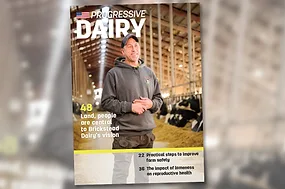
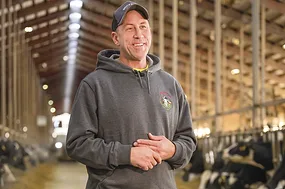
    Brickstead Dairy at forefront of industry progress

    June 12, 2026
    • The Courage to Evolve: Mothers

      June 12, 2026

FREE NEWSLETTERS

Award-winning coverage of in-depth news and analysis to make your business more profitable.

SIGNUP TODAY
Advertisement
THE GUIDE

How do I get my company listed in your Buyers Guide? 
Submit a request to be listed for FREE in the Buyers Guide here.

Why can I only see so many articles before I have to register for the site?
Find out why here.

SUBSCRIBE to Leading Industry Magazines

Award-winning coverage of in-depth news and analysis to make your business more profitable.

Subscribe/Renew
Advertisement

I'm looking for ________

Find the right products and services for your farm, ranch or operation.

CHECK OUT OUR BUYERS GUIDE
Advertisement
  • FEATURED PODCASTS
  • [Podcast] Changing the Rules of Pre-Fresh Dairy Cows

    Progressive Dairy
    Podcasts
    SPONSORED BY Applied Biotechnologies Inc.
  • [Podcast] Selling Calves in a Record Market: What Ranchers Need to Know Right Now

    Progressive Cattle
    Podcasts
    SPONSORED BY Superior Livestock Auction
PERSONALIZED CONTENT
Create an account and see website content tailored to your operation.  It only takes a few seconds!
SEE RECOMMENDATIONS NOW!
Copyright © 2026 Progressive Publishing

MORE INFORMATION
  • About Us
  • Terms & Conditions
  • Privacy Policy
  • FAQs
  • Advertise
  • Shop
  • Stats Posters

OUR MAGAZINES
  • Progressive Dairy
    • Facebook
    • Twitter
    • Linkedin
  • Progressive Dairy — Canada
    • Facebook
    • Twitter
    • Linkedin
  • Progressive Dairy — en français
    • Facebook
  • Progressive Cattle
    • Facebook
    • Twitter
    • Linkedin
  • Progressive Cattle — Canada
    • Facebook
    • Linkedin
  • Progressive Forage
    • Facebook
    • Twitter
  • AgProud — Idaho
    • Facebook
    • Linkedin

CONTACT INFORMATION

Progressive Publishing
238 West Nez Perce (physical)
PO Box 585 (mailing)
Jerome, ID 83338


info@progressivepublish.com
(800) 320-1424
(208) 324-7513 (Main)
(208) 324-1133 (Fax)