Among the hobbies I’ve had a fire for in my lifetime, ranging from music, books, sports, dogs and travel, one that’s been the most sentimental is sports memorabilia.

Autographed items, especially baseballs, have become a cottage industry in this hobby. A prized autographed ball, card or photo always raises the value of a collectible, but it may require authentication from an agency. Some agencies and their ratings are more credible than others, but they all come with an additional price.
I avoid all this rigmarole and go with my gut to find items that have the look and feel of authenticity. As one example, years ago I bought an unauthenticated ball signed by the key players of the 1988 New York Yankees. It’s what collectors call a “dugout ball” – one passed around in short sequence to multiple players for some special guest, who then loses it or sells it to a piker like me.
Clearly signed are the names of All-Stars Willie Randolph, Don Mattingly, Jack Clark, Dave Righetti, Ron Guidry, as well as Hall of Famers Dave Winfield, and my favorite player ever, Rickey Henderson.
It’s not authenticated, but it has the matching signatures, different ink colors, pen strokes and even some pine tar, to give the feel of experience. Another collector told me it would be most difficult to get authentication for it, but it has “the absolute feel” of authenticity.
Which brings me to a topic of authenticity in another form – the information in this magazine.
Even if you’re not an economist, you probably know how AI – artificial intelligence – has become a defining modern technology for Wall Street, Main Street, factories, government, schools, hospitals and yes, even your ranch or farm.
Rapid progression of AI requires more models, more data, more information and more content. AI evolves as it consumes, and grows smarter, more refined and more realistic. This leads to replication of real information at a rate that surpasses some human abilities.
But the drawbacks to this evolution of AI are growing as well. It can be inaccurate, create flawed models, assert bias, commercialism, fraud and even racism in its results.
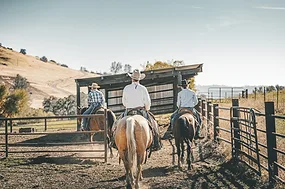
In short, it still lacks authenticity. And you as ranchers know the feel of authenticity, from the soil, to nature, to weather, to livestock when you sense it.
That’s how we feel about the information we are hired and trained to provide to you as readers and listeners. This year, our publishers created an AI policy that runs under our masthead. It explains the critical standards we follow to preserve human-written content, based on experiences, talents, thought-proving skills of editors, writers, illustrators and photographers.
Are all uses of AI banned from Progressive Publishing? No, and like any technology, AI will require all of us to use it carefully and wisely. But when we do, it will be disclosed transparently. It may be used for research or study, but the craft of writing the words we use will be done with our own thoughts and hands.
Check out the policy yourself in each magazine, and consider it our own ink-stained signature promising authenticity.