A high-producing, 2,100-cow herd in the Midwest began DHIA (Dairy Herd Improvement Association) testing to evaluate whether ongoing testing and the available data tools could deliver measurable return. The herd already used a herd management program and collected daily milk weights.

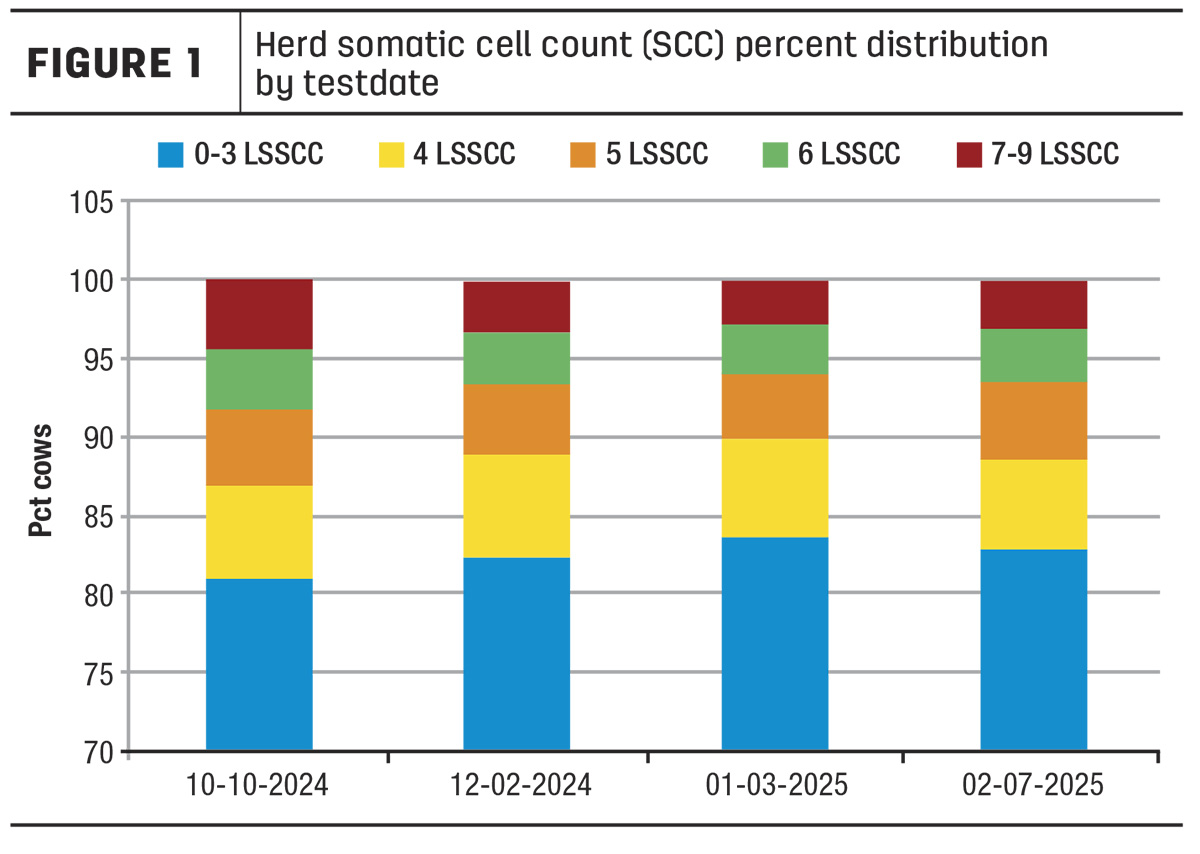
After four months on test, they were averaging 86 pounds of milk across all cows (96 pounds for milking cows), with a 26% pregnancy rate. During this same period, the somatic cell count (SCC) dropped from 186,000 to 142,000 (Figure 1).
While the herd was already performing well, they wanted to determine whether DHIA testing and additional data analysis tools could help uncover new opportunities to add even more value.
The problem
This was a high-performing herd with no major issues to solve. SCC remained low, with more than 80% of cows not infected. Reproduction and production were also strong, and herd management software was already in use. However, the team wanted to explore whether a deeper data analysis could reveal additional opportunities and add even more value to an already successful operation.
The solution
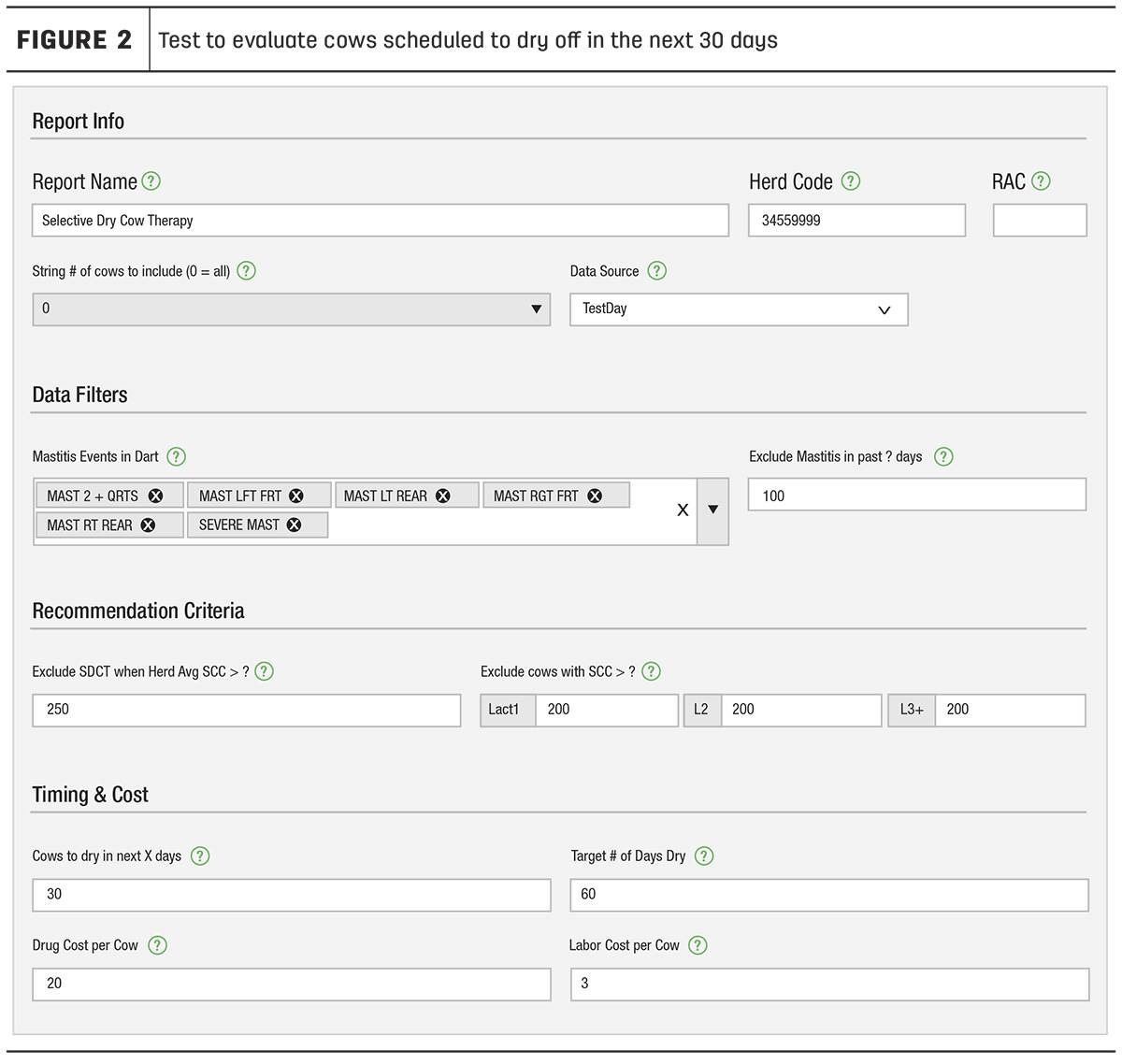
The team used a dairy data analysis tool to evaluate whether financial savings could be achieved through more selective treatment decisions at dry-off.
Being on test and having individual SCC values made it possible to treat cows individually rather than as a group.
They used the following criteria:
- SCC below 200,000 for selective dry cow therapy (SDCT) eligibility
- A 60-day dry period
- $20 drug cost and $3 labor per treatment
- Exclusion of any animals with a mastitis health event recorded in the last 100 days
They reviewed the most recent test to evaluate cows scheduled to dry off in the next 30 days. This information was recorded in the input form of the web-based tool (Figure 2).
The results
To support consistent and reliable results, herds typically have at least eight tests per year and ideally test monthly. While this herd had recently started on test and had more limited historical data, there was still enough information to identify clear opportunities and measure impact.
Cut antibiotic use by 78%
- The herd did not have individual SCC values prior to going on test.
- With access to individual values:
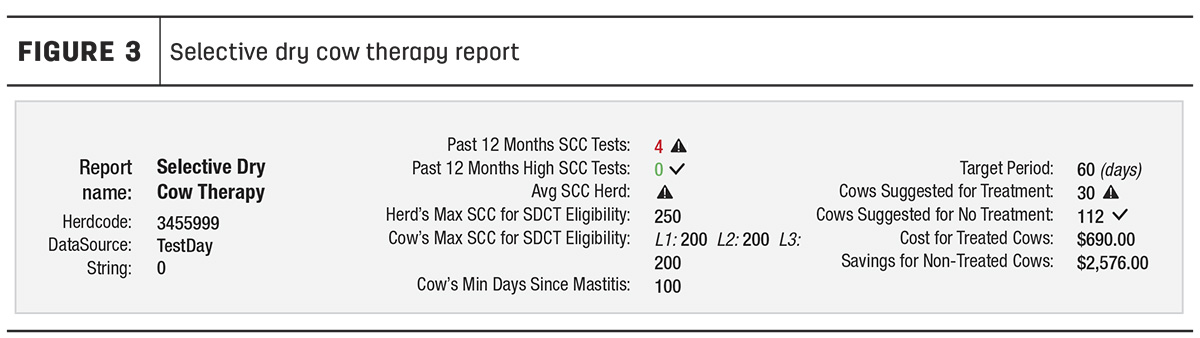
- Only 30 cows required treatment at dry-off due to SCC above the 200,000 thresholds.
- 112 cows scheduled for dry-off in the next 30 days were eligible for SDCT (Figure 3).
Saved $2,576 in treatment and labor costs over a 30-day period
- Based on not treating the 112 cows.
- Cost to treat the 30 cows that did require therapy totaled $690.
Projected annual savings of over $30,000
- Based on repeating the same monthly savings.
Evaluated treated cows
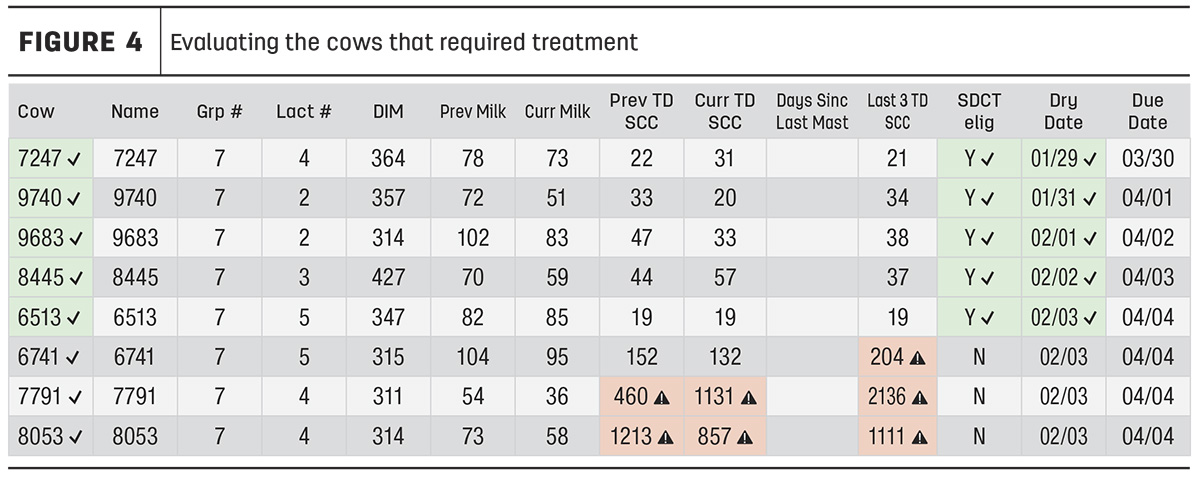
- Evaluating the cows that required treatment provided additional insight for management decisions, including identifying potential cull candidates.
- The report identifies cows eligible for SDCT in green and those requiring treatment in red, along with the reason they are not eligible.
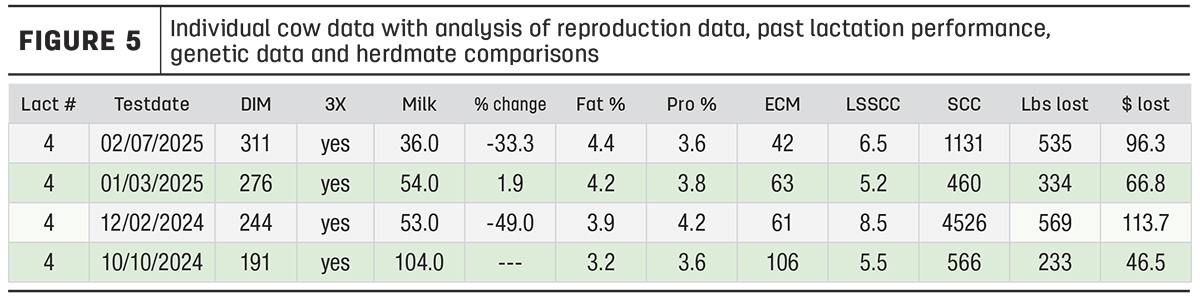
- Reviewing this data allows for a quick assessment of whether further analysis is warranted. For example, cow 7791 had been chronically infected for multiple tests and current production was low (Figure 4).
- Selecting the cow will then bring up the individual cow page that allows for additional analysis, including reproduction data, past lactation performance, genetic data and herdmate comparisons. The test day tab provides historical production and SCC data trends, offering a more complete picture of performance over time. This level of detail supports informed decisions on whether a cow should be kept for another lactation or removed from the herd (Figure 5).
Utilizing these web-based data analysis tools helps identify which cows require treatment and which are eligible for selective dry cow therapy, resulting in a measurable financial benefit. Evaluating individual cows with low production and high SCC can also support decisions to cull rather than carry them into another lactation.
For this herd, the opportunity wasn’t solving a visible problem, it was uncovering unnecessary cost. By using individual cow data to guide dry-off decisions, they reduced treatment, maintained herd performance and captured additional value from a process that had previously been applied the same way across the herd.
This case study is built from real DRMS testing data collected over several months and reflects actual herd-level outcomes. While the farm is not identified, the example reflects a real situation and is intended to show how data management tools can translate performance data into clear, economic value.