To treat or not to treat? That’s the question producers often face when it comes to re-treating sick calves. It's hard to treat a calf for respiratory disease and not see immediate results. But sticking to an antibiotic’s designated post-treatment interval (PTI) is essential for both calf health and producer success. A PTI is the minimum time between initial treatment and re-treatment. Experts emphasize that these intervals are critical to antibiotic efficacy, animal welfare and operational efficiency.

Why PTIs matter
The important thing to remember is that it takes time for antibiotics to work. When an animal is treated, there won’t be an immediate response. A post-treatment interval is designed to give that animal time to respond to the drug before re-treating, adding additional stress and cost.
“Respiratory disease is one of our most common issues in cattle when we look at what diseases they're afflicted by,” says Nathan Meyer, DVM, Boehringer Ingelheim. “Antibiotics work, they absolutely do. But using them correctly, especially when it comes to re-treatment timing, is an important consideration.”
PTIs vary depending on the antibiotic used, but one thing is consistent: Treating too soon can do more harm than good.
“Trust the data and trust the science,” Meyer says. “Putting another drug in too early generally doesn't help and only adds stress and cost.”
Readministering antibiotics before the designated PTI can interrupt the drug’s mechanism and make it so it doesn’t work the way it should.
“You’re adding cost, stress and you may not be helping the calf at all,” Meyer says.
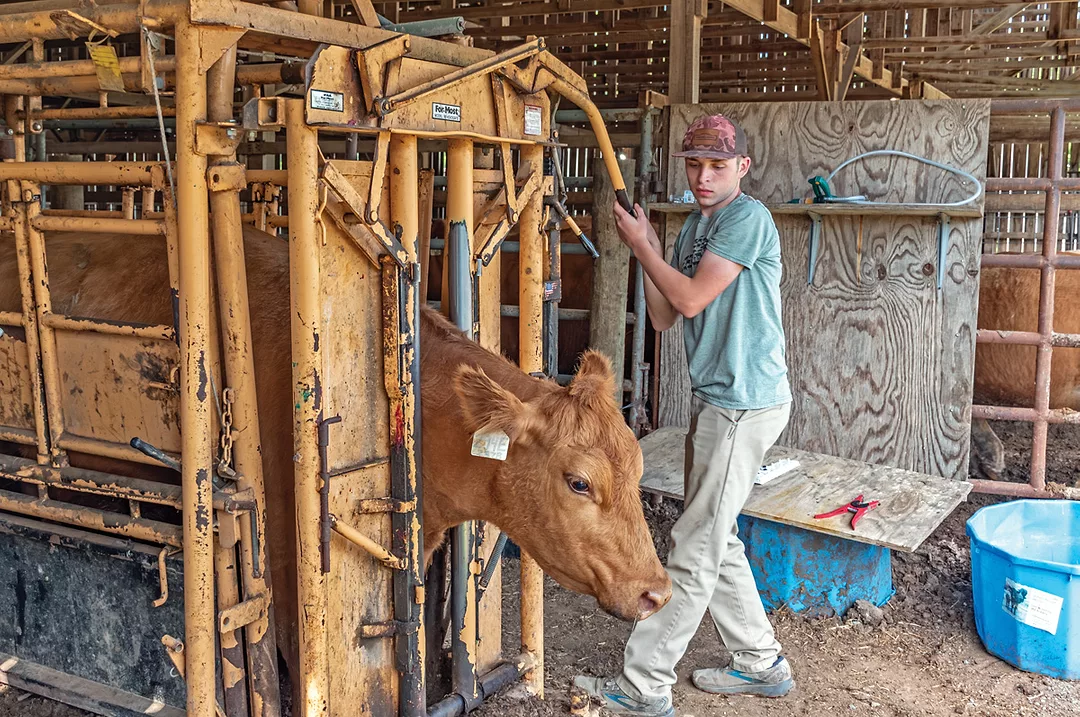
Deana Hardee, DVM (Merck Animal Health), agrees, saying, “We could be doing more harm than good by bringing the calf back up through the chute because we haven’t given the antibiotic time to do its job or the calf time to respond.”
Setting the right PTI
There’s no one-size-fits-all re-treatment interval. PTIs must be tailored to the operation and the class of cattle involved. There are studies that provide starting points; however, individual operations need to determine their own optimal PTI.
“Every operation has to determine what their optimal post-treatment or postmetaphylactic interval is because the classes of cattle are different,” says Dan Scruggs, DVM, Zoetis. “A lot of other factors are different, which will change the PTIs.”
He adds, “Sure, we have studies showing that if you wait seven, 10 or even 14 days to re-treat a calf, there was no benefit to treating earlier. So if a calf isn’t getting better as fast as you want, but isn’t deteriorating rapidly, you wait. That’s what makes sense.”
For long-acting antibiotics, many operations use a simple seven-day rule for convenience, Meyer says. “You treat on the 6th, you’re not eligible to treat again until the 13th. It just makes for easy math.”
There is also a psychological side of treatment that is very real for many producers. Seeing a sick calf and not treating immediately can be emotionally difficult. Producers care for their animals; it’s just human nature.
“It’s an emotional toll waiting for that post-treatment interval,” Meyer says. “But that’s where trusting your protocol and understanding the pharmacology makes all the difference.”
Instead of immediately re-treating, producers should look for subtle improvements.
“You’re looking for animals that are no longer worsening,” Hardee says. “They may still look off, but that doesn’t mean they’re not recovering.”
The signs of illness on re-treatment are often more subtle than during the initial illness onset, Scruggs adds.
Re-treating the right way
Treatment protocol development should always involve a veterinarian and be based on the original antibiotic’s pharmacokinetics, pharmacodynamics and available research or evidence, Hardee says.
“Most people will switch to a different class of antibiotic for re-treatment,” Meyer says. “The current industry recommendation is to rotate drugs to reduce resistance risks.”
However, it’s not just about picking another product. You should also be looking for other causes that may be adding to the continued illness onset in your cattle.
“If you're wanting to re-treat too many cattle inside your PTI, that’s an early indicator something else is going wrong,” Scruggs says. “It could be management, procurement, diet transitions, social stress and other things that may not be antibiotic-responsive conditions.”
He adds that a spike in re-treatments is a red flag. “If you’re typically re-treating 25 percent, and over time that becomes 40 percent, something is off, and that is your earliest indicator of building trouble."
Repeated treatment not only affects the animal’s immediate health but can also impact long-term performance.
“Cattle who’ve had respiratory disease, even if treated successfully, can have lung lesions and consolidation that doesn't fully resolve,” Hardee says. “We see these at the plant, even in cattle who were never treated.”
That’s why early detection and proper PTI adherence matter.
“Healthier animals perform better,” Hardee says. “A healthy animal wants to eat and grow. A sick one doesn’t.”
Younger cattle are particularly vulnerable.
“They’re more susceptible to disease, don’t have a lot of body reserves and are often socially awkward in a feedlot setting,” Scruggs says. “That’s a triple threat that makes establishing optimal PTIs even more essential.”
Role of vaccines and prevention
The best treatment is prevention. Vaccination protocols and animal husbandry are vital in keeping re-treatment rates low.
“If you can prevent disease, boom – that’s step one,” Meyer says.
For cow-calf producers, vaccines are a long game. “Vaccinating the cow can protect the calf in utero through colostrum,” Hardee says. “Then, branding-age and weaning vaccinations build the calf’s immune memory.”
Despite best efforts, some animals will still get sick. In those cases, sticking to the PTI is key.
“Have your PTIs written down,” Meyer says. “Tag the calf, note the drug and date treated, and include when it’s eligible for re-treatment. Everyone working that group of cattle should know exactly what to look for.”
This consistency builds data for long-term evaluation.
“You can’t manage what you don’t measure,” Hardee says. “Adhering to protocols gives you a foundation to track treatment success, case fatality rate and re-treatment numbers.”
Understanding what you're dealing with is essential before assuming the antibiotic isn’t working. Whether it’s heat stress, poor feed transitions or simply time, understanding the complete picture, and letting antibiotics do their work, gives calves the best shot at recovery and gives producers peace of mind and better returns.
“Establishing and sticking to your PTIs is a simple strategy to evaluate and continue to improve animal health,” Hardee says. “It’s discipline that pays off.”