As parasites continue to adapt, the cattle industry must do the same to stay ahead of them. With no new molecules on the horizon, we must take a proactive approach to our deworming programs.

Research has shown that refugia-based strategies and anthelmintic combinations are needed across the livestock industry to help reduce the development of resistance and to help preserve the efficacy of the few existing anthelmintics. This means using effective products at the right time, at the right dosage and on the right animals. It also means monitoring the effectiveness of our programs to ensure we’re on the right track.
Timing of applications
In the cattle business, and especially in the cow-calf business, we tend to complete herd health protocols on a preset schedule. And while adding a parasiticide application to that existing schedule may be convenient, it’s not always the best time from a parasite control perspective.
Administering any animal health product too early or too late in the game can really limit your return on investment, and this is especially true when it comes to deworming. For example, using a parasiticide when it’s ineffective against a certain larval stage will not only waste product, but it also exposes that parasite population to the active ingredient, which can increase the risk of potential resistance issues down the road.
The ideal timing of parasite control will depend on the age of animals in your herd and the types of parasites present.
It’s important to note that younger animals are most susceptible to parasite populations, so deworming right around the time of weaning can help ensure they reach their genetic potential. Bull turnout is another important time to consider applying a parasiticide. Male animals are generally more susceptible to parasites, and your bull is extremely important to the overall profitability of your operation.
Pasture management
The height of the grass or forage that cattle are grazing is undoubtedly going to influence parasite populations, which makes pasture management an important consideration for effective parasite control. Something to think about is pasture rotation and how the timing can coincide with the parasite life cycle, especially those in the 18- to 25-day grazing rotation range. Work closely with your veterinarian to ensure pasture management and parasite control programs are working together, not counteracting each other.
Ensuring accurate dosing
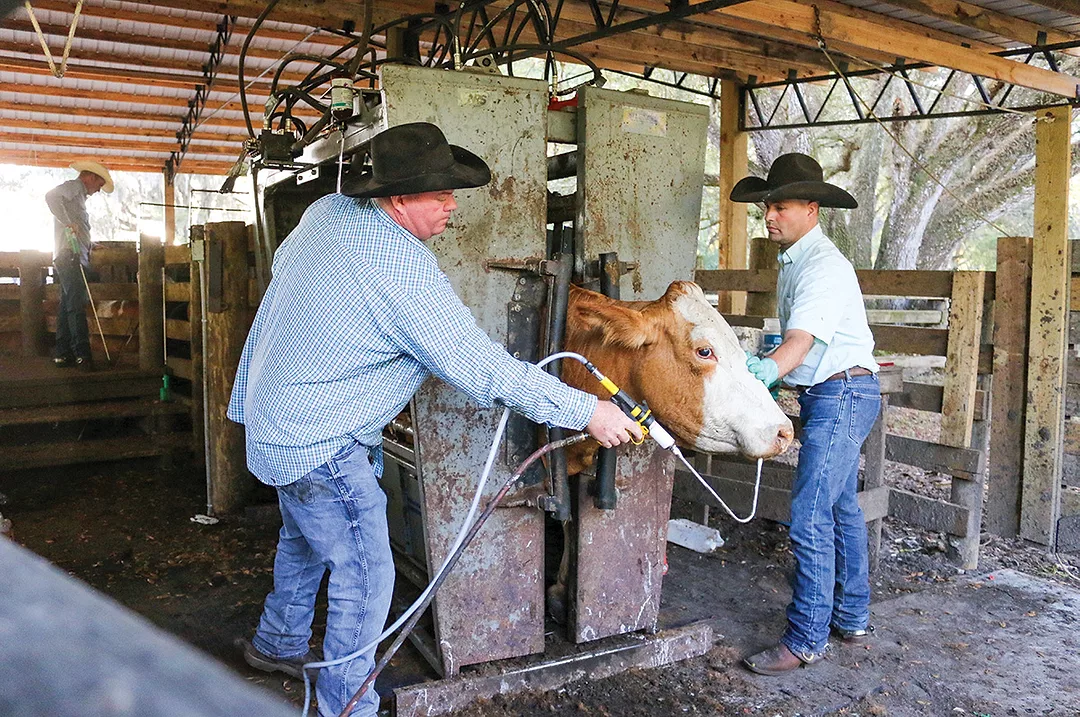
Just like with timing of parasite control, doing what’s convenient may not always be doing what’s most effective. From an application standpoint, when we dose to the average weight of the group, whether that’s with a pour-on or an injectable, there will be a subset of animals that are getting a partial dose, leaving some surviving parasites. Individually weighing each animal does take additional time, but this is the best option for ensuring accurate dosing of parasite control products.
When we think about topical applications, it’s important to remember that we’re applying a pour-on and not a “splash-on.” What I mean by that is, when we’re getting more product on the chute than we are on the animal, the inaccurate application limits product effectiveness, increases the opportunity for resistance to develop and ultimately limits profit potential.
Differentiating between products
For effective parasite control, it's all about ingredient families, not just the brand names. An ingredient family refers to a type of parasiticide that is defined by the mode of action. Mode of action is the way the active ingredient works against a parasite. Selecting parasiticides from different ingredient families helps to keep all active ingredients viable against parasites and mitigate resistance issues.
- Macrocyclic lactones (injection or topical administration): These parasiticides remain in the animal's system for continued exposure to internal and external parasites, ultimately killing them by paralyzing their bodily function.
- lmidazothiazoles (oral administration or injection): This group of parasiticides stimulates muscle contractions in worms, which leads to paralysis. Research demonstrated that levamisole, a type of imidazothiazole, reaches peak blood concentration in the animal in less than 12 hours.
- Benzimidazoles (oral administration): Members of this ingredient family absorb into the animal's system within 12 hours. The parasiticide's contact time to an internal parasite will deplete the parasite's energy reserves and inhibit its ability to eliminate waste, ultimately killing the parasite.
Monitoring effectiveness
When we apply a parasiticide, we often see some immediate clinical improvements, such as animals shedding hair coats and even some short-term production gain benefits. But what we don’t know is how much that application truly impacted the parasite load. How do you know if the application reduced parasite populations by 50% or 90%?
A fecal egg count reduction test (FECRT) is the best tool to determine if the products and practices you’re implementing are doing what they are supposed to. I recommend performing a FECRT at least every second or third year in cow-calf herds and more often in intensive grazing systems.
Finally, because management systems and parasite loads can vary throughout the country, it’s also imperative that producers are working with their local veterinarian and taking the above factors into consideration when designing a parasite management program. There is no industry-wide solution to parasites, but we can all work together to protect the active ingredients that we have available to us.