We use cookies to provide you with a better experience. By continuing to browse the site you are agreeing to our use of cookies in accordance with our Cookie Policy.
  • Sign In
  • Create Account
  • Sign Out
  • My Account
subscribe / renew
  • Livestock
    • Beef
    • Dairy
      • Canada
      • U.S.
    • Sheep & Goats
    • Other Livestock
  • Crops
    • Grains
      • Barley
      • Wheat
    • Hay
    • Pasture
    • Ensiled Forages
  • Equipment
  • Magazines
    • Progressive Dairy US
    • Progressive Dairy — Canada
    • Progressive Dairy – en francais
    • Progressive Forage
    • Progressive Cattle
    • Progressive Cattle - Canada
    • Idaho Ag Proud
  • Blogs
  • Buyers Guide
  • Advertise
  • Ask AgProud

Progressive Dairy

Progressive Dairy Canada

PD Canada en Francais

Progressive Cattle

Progressive Cattle Canada

Progressive Forage

Agproud Idaho

Home

Home » Keywords » digestibilty

Items Tagged with 'digestibilty'

ARTICLES

63549-pearce-Relatively-speaking---is-it-RFV-or-RFQ---field-sticks---IMG_3094-(Yoana-N)-(1).jpg

Relatively speaking, is it RFV or RFQ?

RFV and RFQ were created to help compare forage quality, but decades after RFQ’s introduction, many producers still default to what they know. The two indexes use different equations and assumptions, which is why their numbers don’t always tell the same story.
June 16, 2026
Ralph Pearce

RFQ was designed to fix RFV’s blind spots – so why are producers still split on which number to trust?


Read More
63357-diepersloot-6708.jpg

What short corn can mean for a farm’s forage program

Short‑stature corn hybrids are gaining attention as producers look for silage options with better standability and improved fiber digestibility. Their unique characteristics may offer nutritional and agronomic advantages.
May 18, 2026
Cole Diepersloot

Short‑stature corn hybrids are gaining attention as producers look for silage options with better standability and improved fiber digestibility. Their unique characteristics may offer nutritional and agronomic advantages.


Read More
63362-goldsmith-staff.jpg

Don't stop at RFV and RFQ

RFV and RFQ give a fast way to rank forage lots, but both reduce a complex feed to a single number. A full forage analysis is essential for understanding true feeding value.
May 10, 2026
Katelyn Goldsmith and Jackie McCarville

RFV and RFQ give a fast way to rank forage lots, but both reduce a complex feed to a single number. A full forage analysis is essential for understanding true feeding value.


Read More
63188-vanrensburg-tmarchant.jpg

Unlocking more value from forage: How enzymes can improve performance

In-feed enzymes can help unlock more energy from forage and improve feed efficiency, particularly in herds consuming large amounts of roughage.
April 9, 2026
Laurentia van Rensburg

Forage is the foundation of most beef cattle diets. Whether cattle are grazing pasture, eating hay or being fed silage, these feeds provide the bulk of nutrients for cow-calf, stocker and backgrounding operations.


Read More

How is this year’s corn silage feeding?

Making yourself aware of the impact of the growing environment each season through early sampling and testing is the first step to benchmarking silage annually and addressing those impacts.
January 20, 2026
Jim Smith

Understanding and implementing all the best management practices every season for producing high-quality corn silage that are under your control is critical. Making yourself aware of the impact of the growing environment each season through early sampling and testing is the first step. Benchmarking it annually and addressing those impacts with proven and cutting-edge technology will provide the consistency your herd thrives on and is critical to your bottom line. 


Read More
62583-kern-lunbery-grazing-idaho.jpg

Hay considerations for small ruminants

Sheep and goats have smaller rumens than cattle, limiting intake and increasing dependence on highly digestible forage. They need greater fiber digestibility and energy density, especially in lactation, making hay analysis distinct from cattle standards.
December 22, 2025
Rebecca Kern-Lunbery

Sheep and goats share ruminant anatomy with cattle, but their smaller rumens and distinct grazing behaviors demand higher-quality, more digestible forage to meet energy needs.


Read More
1925pd-forage-lawrence-1.jpg

Growing forage for a growing dairy: opportunities and balance

November 25, 2025
Joe Lawrence

In the Northeast and similar growing environments, home-grown forages are well-understood to provide the foundation of an economically and environmentally sustainable dairy cow diet.


Read More
62298-eclerle-cowc-eating-winter-getty.jpg

Boosting winter forage digestibility with bacillus-based solutions

Keeping cattle nutrition up through the winter is a tall order because of variable forage quality and environmental conditions. Probiotics can be a valuable tool to offset these challenges.
October 27, 2025
Greg Eckerle

Winter feeding presents one of the greatest challenges for beef cattle producers. Forage quality often declines once pastures mature or when hay is harvested under less-than-ideal conditions.


Read More
61949-casper-dixon.jpg

Soil and crop additives for improving forage digestibility for milk production

As early-lactation dairy cows demand increasingly digestible forages, producers continue to challenge the limits of nutrient delivery. New data and decades of USDA-ARS research confirm that digestibility is key to unlocking forage value.
August 12, 2025
David P. Casper

As early-lactation dairy cows demand increasingly digestible forages, producers continue to challenge the limits of nutrient delivery. New data and decades of USDA-ARS research confirm that digestibility is key to unlocking forage value.


Read More
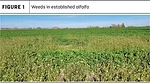
61783-adjesiwor-fig1.jpg

Weeds in my hay? How unwanted guests in alfalfa may affect forage quality

How alfalfa stands compete and sometimes struggle against weeds.
July 17, 2025
Albert Adjesiwor and Chandra Montgomery

That green field of alfalfa might look lush from the roadside – but what’s lurking in the mix could be quietly reducing your forage quality, lowering animal intake and even risking nitrate toxicity. Learn which weeds do the most damage, how they impact feed value and what you can do to protect your first cutting and your herd.


Read More
More Articles Tagged with 'digestibilty'
  • RECENT ARTICLES
  • 63610-mccarthy-Shrestha-biochar.jpg

    Biochar-ging the soil

    June 19, 2026
  • 63597-kubesch.1.jpg

    Stockpiling native warm-season grasses for the fall forage gap

    June 19, 2026
    • Why sustainable branding matters for dairy farms, custom applicators

      June 19, 2026

FREE NEWSLETTERS

Award-winning coverage of in-depth news and analysis to make your business more profitable.

SIGNUP TODAY
Advertisement
THE GUIDE

How do I get my company listed in your Buyers Guide? 
Submit a request to be listed for FREE in the Buyers Guide here.

Why can I only see so many articles before I have to register for the site?
Find out why here.

SUBSCRIBE to Leading Industry Magazines

Award-winning coverage of in-depth news and analysis to make your business more profitable.

Subscribe/Renew
Advertisement

I'm looking for ________

Find the right products and services for your farm, ranch or operation.

CHECK OUT OUR BUYERS GUIDE
Advertisement
  • FEATURED PODCASTS
  • [Podcast] Matthew Evangelo talks mastitis management at Bar E Dairy

    Progressive Dairy
    Mastitis
  • [Podcast] Changing the Rules of Pre-Fresh Dairy Cows

    Progressive Dairy
    Podcasts
    SPONSORED BY Applied Biotechnologies Inc.
PERSONALIZED CONTENT
Create an account and see website content tailored to your operation.  It only takes a few seconds!
SEE RECOMMENDATIONS NOW!
Copyright © 2026 Progressive Publishing

MORE INFORMATION
  • About Us
  • Terms & Conditions
  • Privacy Policy
  • FAQs
  • Advertise
  • Shop
  • Stats Posters

OUR MAGAZINES
  • Progressive Dairy
    • Facebook
    • Twitter
    • Linkedin
  • Progressive Dairy — Canada
    • Facebook
    • Twitter
    • Linkedin
  • Progressive Dairy — en français
    • Facebook
  • Progressive Cattle
    • Facebook
    • Twitter
    • Linkedin
  • Progressive Cattle — Canada
    • Facebook
    • Linkedin
  • Progressive Forage
    • Facebook
    • Twitter
  • AgProud — Idaho
    • Facebook
    • Linkedin

CONTACT INFORMATION

Progressive Publishing
238 West Nez Perce (physical)
PO Box 585 (mailing)
Jerome, ID 83338


info@progressivepublish.com
(800) 320-1424
(208) 324-7513 (Main)
(208) 324-1133 (Fax)