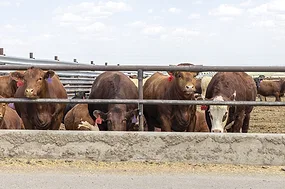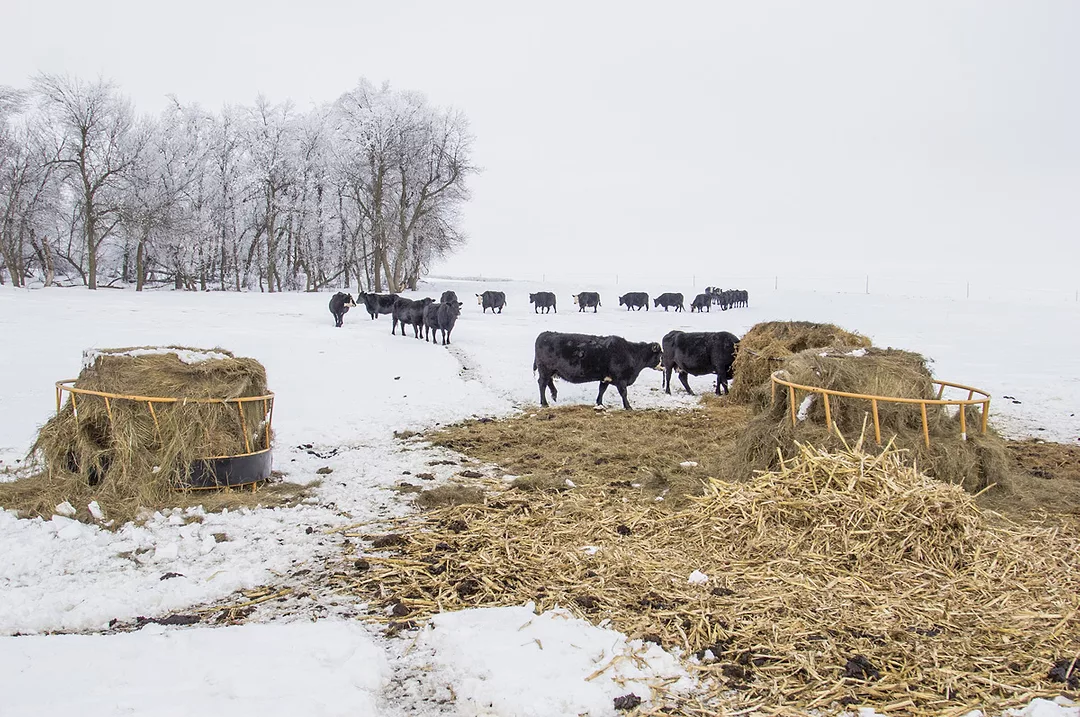
Winter feeding presents one of the greatest challenges for beef cattle producers. Forage quality often declines once pastures mature or when hay is harvested under less-than-ideal conditions. Lignin content rises, percent of total digestible nutrient (TDN) drops, and cattle face the dual stress of cold weather and marginal nutrient availability. The result is suboptimal performance, increased supplement costs and heightened pressure on already tight margins.

In recent years, new biological tools, specifically bacillus-based probiotics, have gained attention for their ability to improve forage digestibility and help cattle get more out of every bite. While probiotics are not a silver bullet, the research around bacillus species shows promise for improving forage utilization.
The forage quality challenge
Beef producers know the story well: As forages mature, lignin content increases. Lignin is essentially indigestible and binds up valuable, more highly digestible nutrients. Neutral detergent fiber (NDF) is less available to the rumen microbes. Winter stockpile grasses and even hay harvested later in the season tend to be higher in lignin and lower in crude protein (CP).
In practical terms, this means cows may fill up on forage while falling short on energy and protein, especially lactating cows and growing calves. That gap must be filled with protein supplements, byproducts or higher-quality hay, all of which increase costs.
Improving how cattle digest and utilize these lower-quality forages is one of the most effective ways to stretch feed resources. That’s where bacillus enters the picture.
What are bacillus species, and how do they work?
Bacilli are naturally occurring, spore-forming bacteria that survive harsh conditions – heat, cold and acidity – that kill many other microbes. When fed to cattle, they germinate in the rumen and other portions of the digestive tract, producing enzymes and metabolites that support fiber digestion and gut health.
Several strains of bacillus produce cellulase, xylanase and other enzymes that help break down structural carbohydrates in plant cell walls. This enzymatic activity works in concert with the cow’s native rumen microbes, effectively increasing the speed and extent of fiber digestion.
Beyond enzyme production, bacilli can also help stabilize the rumen environment. By reducing lactic acid accumulation and encouraging beneficial microbial populations, they support more consistent fermentation, which is particularly valuable when feeding forages of variable quality, common in winter months.
Research on forage digestibility
Multiple controlled university and field studies have evaluated the role of bacillus-based direct-fed microbials in ruminants. While results can vary depending on forage type, animal class and differences among management systems, several key themes have emerged:
- Increased dry matter digestibility (DMD): Trials show that cattle supplemented with Bacillus spp. often demonstrate improvements in total tract digestibility of forage, meaning more nutrients are extracted from the same amount of hay or silage.
- Improved fiber breakdown: Specific enzyme activity tied to bacillus supplementation has been shown to reduce NDF and acid detergent fiber (ADF) concentrations, both markers of improved forage utilization.
- Enhanced intake and performance: By making forage more digestible, cattle can eat more and gain more from lower-quality feeds. Researchers have demonstrated improvements in average daily gain (ADG) and feed efficiency in both beef cows and growing calves.
One Kansas State University trial, for example, reported an increase in NDF digestibility of over 6% when a bacillus-based probiotic was included in the diet of beef steers fed lower-quality forages. Similar results have been replicated in commercial feedlot and cow-calf settings.
Practical benefits for winter feeding
For producers, the key question is simple: Does this technology help lower feed costs and improve cattle performance during winter?
The answer increasingly appears to be “yes.” By increasing forage digestibility, Bacillus spp. allow cattle to capture more energy from the forage base, which reduces the need for additional expensive supplements. This is particularly valuable for:
- Cow-calf herds on winter pasture or hay: Improved digestibility supports maintenance of body condition and reproductive performance without adding as much protein or energy supplementation.
- Growing calves on backgrounding rations: Calves consuming moderate-quality hay or silage can achieve higher daily gains when more of the forage is digested.
- Operations relying on stockpiled forages: Bacillus supplementation helps unlock nutrients from mature fescue, brome and other grasses often used as winter stockpile.
Even modest improvements in digestibility – say, 3% to 5% – can translate into significant feed savings and performance gains across a herd.
How to implement
Most bacillus products are fed as direct-fed microbials either in a mineral, supplement or included directly in a total mixed ration (TMR). Because bacillus spores are extremely stable, they are well suited for pelleting, mineral tubs or meal supplements without losing viability. For best results:
- Choose products with documented strains and proven research. Not all probiotics are the same.
- Introduce supplementation prior to the stress of deep winter or calving to maximize benefits.
- Work with a nutritionist to align probiotic use with forage testing results and supplementation programs.
Looking ahead
As beef producers search for ways to manage input costs while improving efficiency, biosolutions like bacillus-based probiotics are becoming an increasing part of the conversation. They don’t replace good management, proper forage testing or balanced rations, but they can help bridge the nutritional gap when forage quality is limiting.
The goal is straightforward: Let cattle do more with the forage you already have. By enhancing fiber breakdown and nutrient capture, Bacillus spp. offer a practical way to improve winter feeding outcomes.
Forage quality challenges won’t disappear, but leveraging microbial biosolutions can help keep cows in condition, calves growing and feed bills under control, even when winter forages are less than ideal.