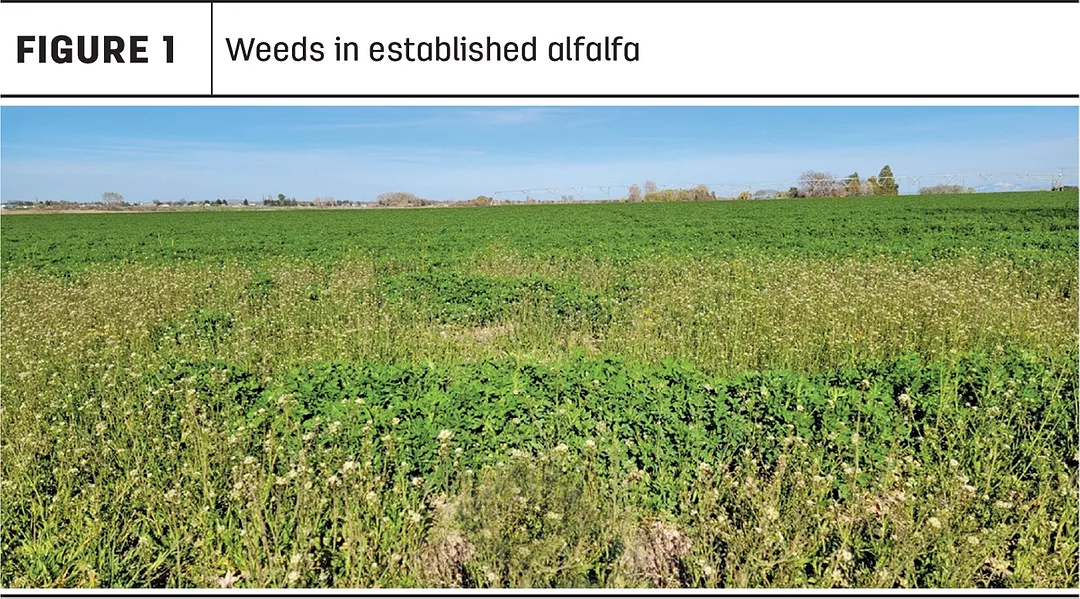
I love taking drives in late spring and early summer to see all the amazing crops spring up. Alfalfa gets an early start in the spring, so it’s hard to miss. One constant observation: The weeds tend to get an early start too, and often match the alfalfa boot for boot. Anyone familiar with alfalfa production will tell you that established alfalfa is very competitive with weeds, and that’s not an overstatement. That said, winter annuals, weeds that emerge late fall/early spring and perennial weeds can still aggressively compete with alfalfa and add a lot of unwanted biomass to the first cutting if not controlled (Figure 1).


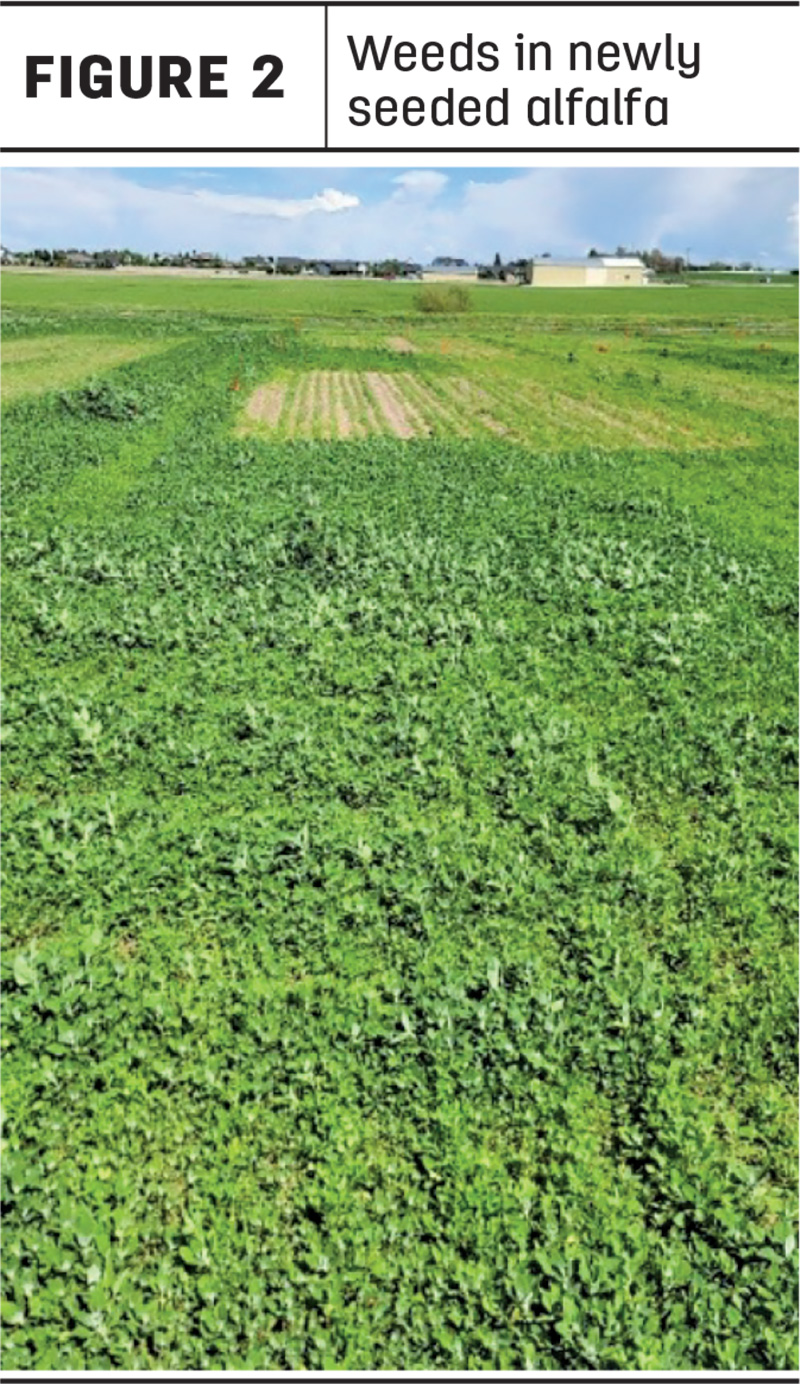
Weeds become even more problematic in newly seeded alfalfa, especially if planted late in the spring or early summer, as summer annual weeds often emerge at the same time as the alfalfa (Figure 2).
Forage quality
In forage crops such as alfalfa, where aboveground plant biomass is the economic product, the relationship between weed presence and yield losses is not as obvious as for grain or root crops, where competitive effects nearly always reduce harvestable yield. It is known that when weeds are present in large quantities in alfalfa, there is a trend of less alfalfa dry matter, as the weeds take up more of the biomass. The question then is: How does weed presence affect forage quality?
This is where it gets a little complicated. The impact of weeds on forage quality depends on the species of weed present, the stage of growth of the weeds and their proportions in the hay. Weeds vary greatly in their nutritional value. Weeds such as shepherd’s purse and foxtails have been shown to have greater fiber concentration compared to alfalfa.
Grassy weeds such as foxtails can dramatically increase mixed forage fiber content – and thus have the most potential to reduce forage quality when present in high density. In addition, the growth stage of weeds at the time of forage harvest also influences their nutritional value. This suggests that delaying alfalfa harvest may result in further reduction in forage nutritive value due to a faster decline in the nutritive value of some weed species.
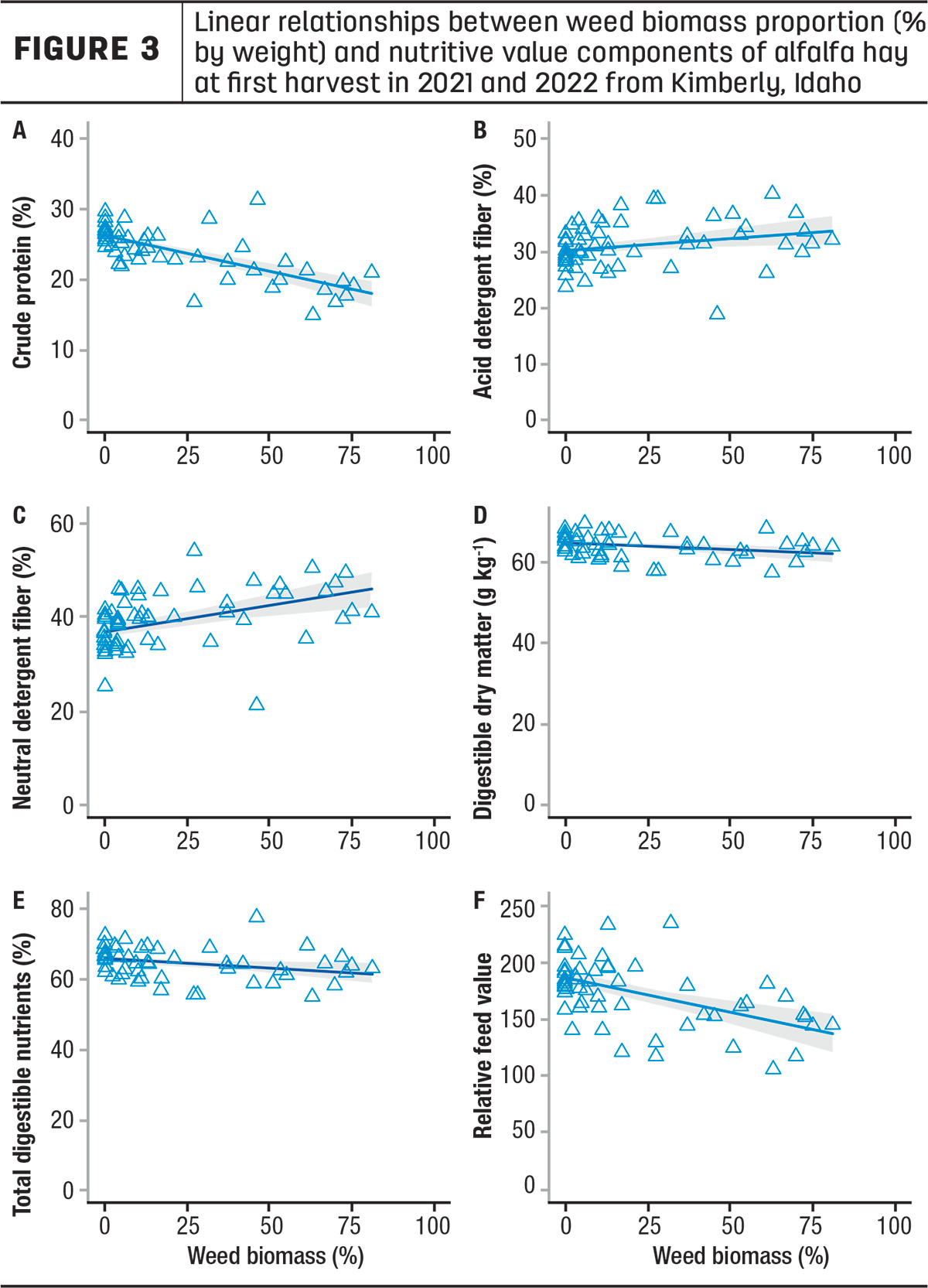
In field studies conducted at Kimberly, Idaho, it was observed that the application of preemergence and postemergence herbicides resulted in different control of common lamb's-quarter, kochia, redroot pigweed, shepherd’s purse and green foxtail, which in turn affected forage nutritive value. As expected, forage crude protein, digestibility, digestible nutrients and relative feed value tend to decrease with an increase in the amount of weed biomass in the hay, while fiber was increased (Figure 3). This means that effective weed control can improve the quality of the alfalfa forage if the weeds are present in high densities.
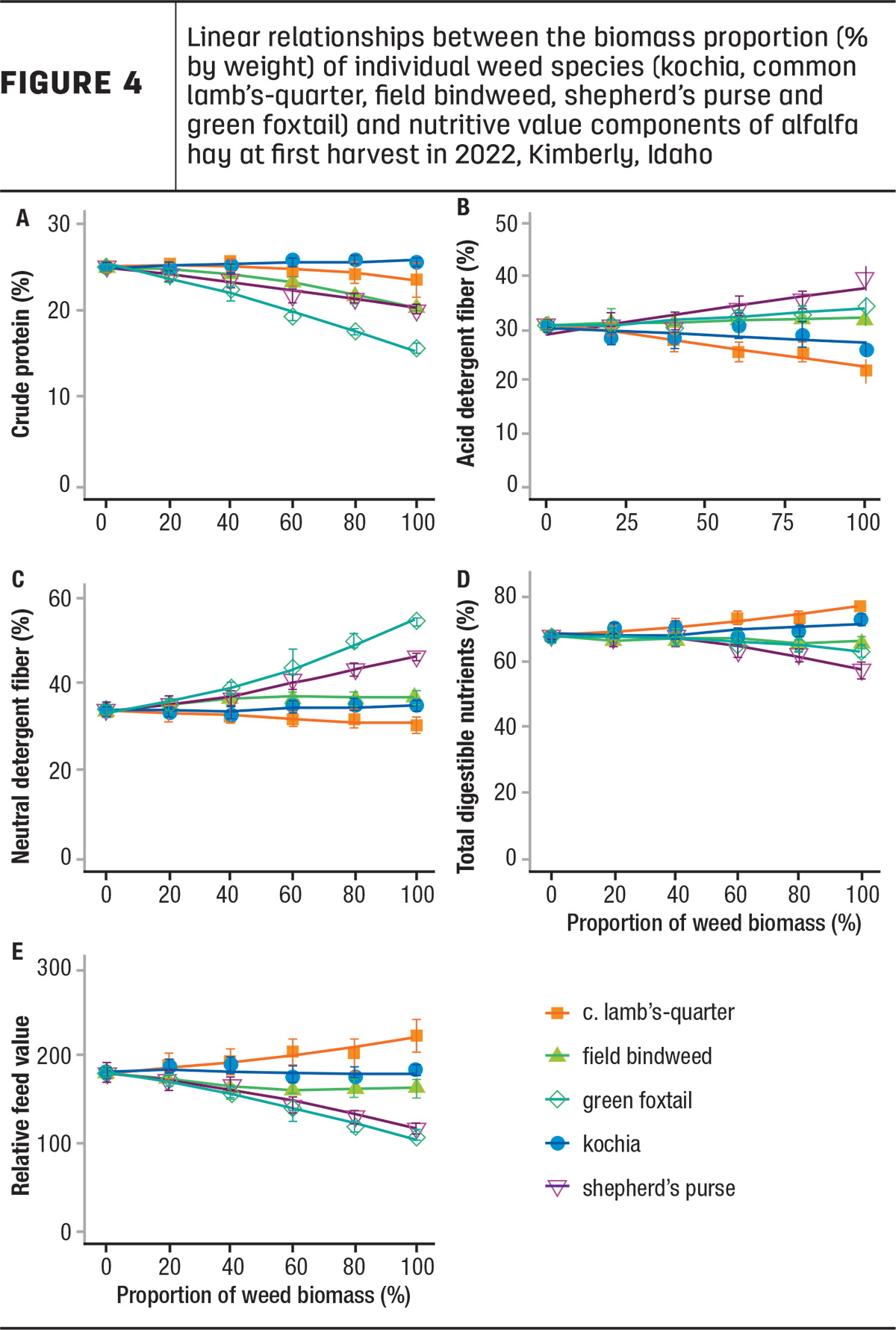
How do individual weeds affect forage quality? It is generally expected that weeds with lower nutritional quality than alfalfa will reduce the quality of alfalfa hay if they are present in large proportions. Our findings confirmed that in newly seeded alfalfa, field bindweed, shepherd’s purse and green foxtail tend to have the most negative impact on alfalfa forage quality, while common lamb's-quarter and kochia had minimal impact on alfalfa forage quality (Figure 4).
Palatability and intake reduction
Many weeds are less palatable or even unpalatable to livestock. Some, like thistles or spiny amaranth, are physically difficult for animals to eat. Others, such as wild mustard or ragweed, can impart bitter flavors or odors that reduce feed intake. Reduced intake not only affects animal performance but can also lead to increased waste.
Potential toxicity
It is worth mentioning that aside from the direct impact of weed biomass on forage nutritional value, weeds such as nightshades, common lamb's-quarter, pigweeds, etc., may accumulate compounds such as nitrates, which may be toxic to livestock if the nitrate levels exceed certain thresholds (Figure 5).
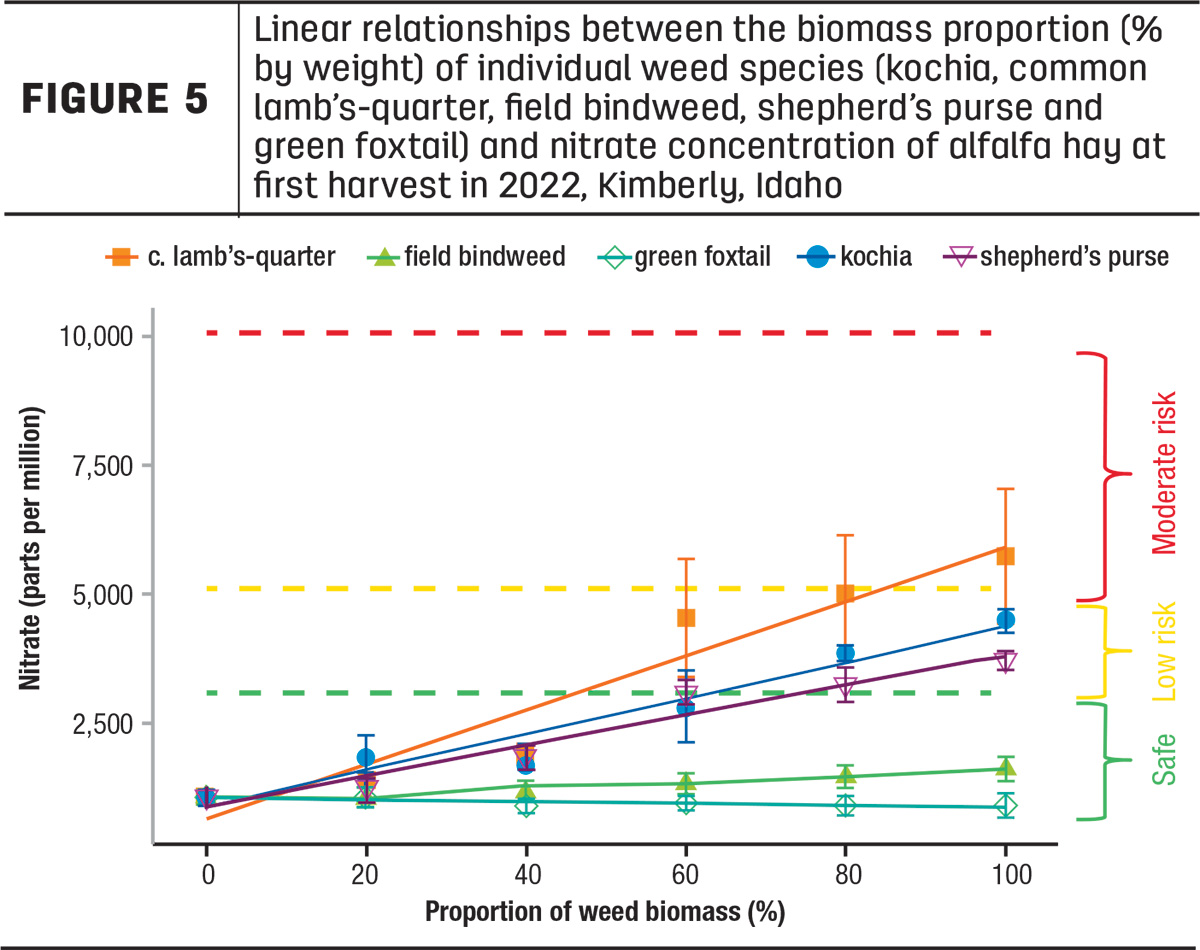
Nitrate in hay may persist after harvest and curing, which can result in poisoning and mortalities in livestock. Generally, forage with nitrate concentration of 0 to 3,000 parts per million (ppm), on a dry matter basis, is safe for cattle; 3,000 to 5,000 ppm is safe for nonpregnant cattle but low-risk for pregnant cattle. Hay with 5,000 to 10,000 ppm nitrate concentration presents a moderate risk of toxicity to cattle and may cause mid- to late-term abortions, reduced milk production and weak calves. Nitrate concentrations of greater than 10,000 ppm are potentially toxic for all cattle and could lead to acute toxicity, abortions and even death.
Our research showed that pure alfalfa without any weed biomass had a nitrate concentration of 1,014 ppm. However, common lamb's-quarter contained nitrate concentration of 5,700 ppm, such that at 60% or greater proportion of common lamb's-quarter biomass alfalfa hay, nitrate concentration increased above the 3,000 ppm threshold, presenting some toxicity risk to some classes of cattle. Up to 15,000 ppm nitrate concentration was observed in common lamb's-quarter in other studies. Thus, under certain conditions, common lamb's-quarter may accumulate significantly greater amounts of nitrate.
Kochia also had a nitrate concentration of 4,400 ppm – and thus, the nitrate concentration of the hay increased as the amount of kochia in the hay increased.
Shepherd’s purse had a nitrate concentration of about 3,700 ppm, while field bindweed and green foxtail had nitrate concentrations of 1,500 and 840 ppm, respectively. It must be noted that conditions that may reduce plant growth (e.g., drought) are likely to increase nitrate accumulation and the risk of livestock poisoning. Thus, under stressed conditions, nitrate concentrations may be greater with reduced weed biomass. Research has also shown that nitrate accumulates more in the vegetative tissue, particularly in the stems. Delaying harvest may increase stem tissue and possibly increase the nitrate concentration of the forage mixture.
Conclusion
Weeds may not always dominate a field, but their presence can quietly erode the quality and value of alfalfa forage. By recognizing the true cost of weed pressure and implementing proactive management strategies, producers can ensure their alfalfa remains a premium feed source and a profitable part of their operation.