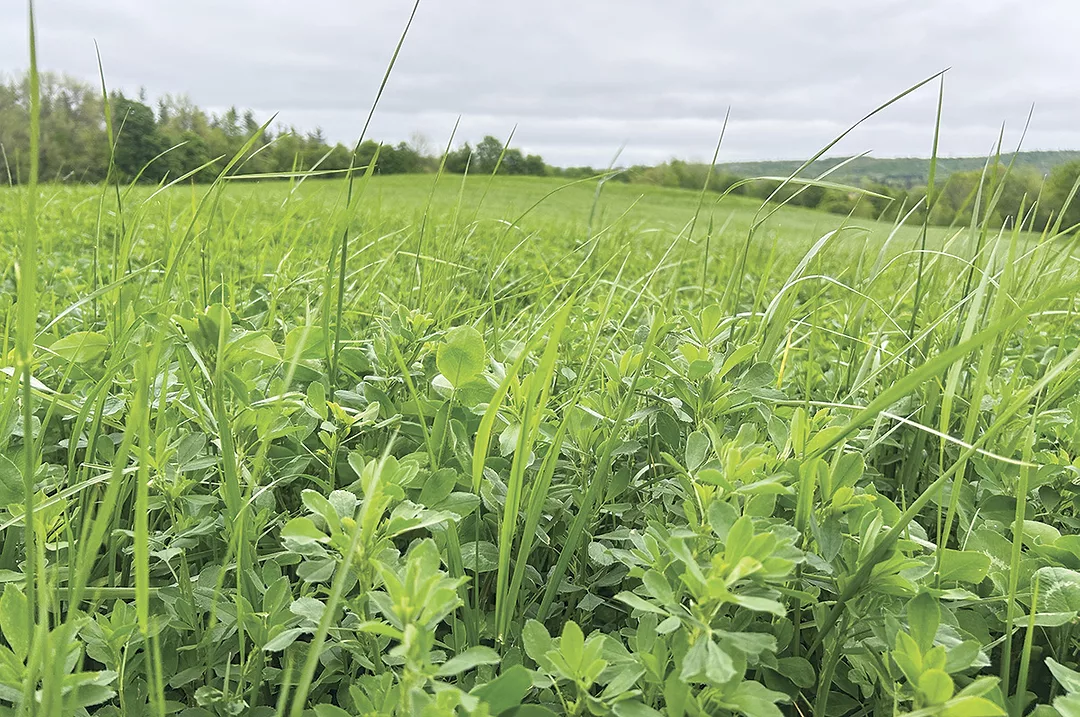
In the Northeast and similar growing environments, home-grown forages are well-understood to provide the foundation of an economically and environmentally sustainable dairy cow diet. The emphasis on achieving higher levels of forage in diets and the need for the right quality in these feeds to achieve this goal remain very important. However, it is also important to recognize that the optimum balance is influenced by farm resources and tradeoffs should be considered, particularly when a farm business is looking to grow through increased cow numbers.

Highly digestible forages are key to optimize inclusion rates in diets for high-producing lactating cows and while several factors impact this, the number one factor is harvest management.
Crop maturity is recognized as the top factor to manage forage quality and a Penn State business analysis of top-performing dairies identified “ability to harvest high-quality forages regardless of the weather” as a top indicator of overall farm profitability. As farms look to cover more acres and face increasingly erratic weather patterns, focus on building overall capacity (labor, equipment, partnerships, etc.) with the goal of managing around Mother Nature, rather than reacting to Mother Nature, is increasingly important.
It is also important to recognize that certain animal groups on the farm do not need the highest-quality forage. There are opportunities to optimize the use of forages with a lower nutritional value when they are matched with the right group of animals. A key to achieve this is flexibility in forage storage options to allow for feeds to be stored by quality, providing the opportunity to access this feed for the right group of animals at the right time of year.
Expanding on the important role of storage in the success of forage programs, managing shrink remains critical. Great gains have been made in silage management in recent decades, but there continues to be opportunities for improvements. Proper silage management (sound storage structures, crop dry matter, proper packing, and covering) improves safety, feed use efficiency, cost of production, and the overall environmental footprint of production. Achieving high silage densities in silos assures more of the feed that is grown reaches the cow and reduces the total storage footprint needed for feed by packing more tons into a smaller space.
The role of forages in the carbon footprint of milk production sends some mixed signals and as we look strategically at their role in our dairy systems, several factors need to be balanced. While data suggests methane emissions from cows is positively correlated with higher-forage diets, in the Northeast numerous benefits to the circular system of homegrown forage production can offer a balance to the differences in how these diets impact the cow.
Higher-forage diets are often associated with lower incidences of health challenges in high-producing cows. Beyond meeting the needs of the cow, production of forages on dairy farms creates a beneficial circular system. Cows and crops both require proper nutrition to thrive. Homegrown feeds provide the foundation of the cow’s diet and the manure produced by the cows provides the foundation to meet the nutritional needs of the crops.
As these potential benefits are recognized, one should not lose sight of how management of cropping systems can significantly impact this balance.
The significance of corn silage in dairy diets has grown substantially in recent decades. Corn silage provides high yields of valuable fiber and energy, and with one harvest per year, offers the potential for a higher level of nutritional consistency relative to other forages. With these benefits, it is also important to recognize the ecological challenges created by a shift in acreage to more corn silage and away from perennial hay crops. The lack of residue left by corn silage, coupled with less balanced rotations, potentially increases soil health, nutrient cycling, and pest management challenges. Organic matter inputs from manure and cover crops coupled with close attention to rotations are needed to balance these effects.
Furthermore, while cover crops offer an opportunity for extra feed (double cropping) in addition to their soil management benefits, it should be recognized that a continuous system of corn and winter annual cover crops does not constitute a sound crop rotation or provide the same benefits as perennial hay crops in rotation and can challenge animal density and nutrient cycling goals. This needs to be considered when exploring the opportunities for winter annual cover crops as a hay crop forage source in diets.
Assessing opportunities for homegrown feed production beyond forage crops also necessitates careful consideration of competing factors. The success of homegrown grain production is very mixed due to variable yield potential, nutritional consistency, and the relative difference in cost between on-farm production and purchased feed ingredients.
Acreage to support homegrown feeds beyond forages offers benefits for managing animal densities and can provide flex acres to manage weather-associated feed inventory challenges but can have mixed impacts on crop rotations. Increased corn acres for grain can exacerbate the challenges discussed previously with increased corn silage acres, while other crops such as soybeans may provide helpful diversity to rotations. Any opportunities for increased production of homegrown feeds require careful consideration of labor, equipment, and opportunity cost for investments made in these operations versus investments made in other areas important to overall milk production and farm efficiency.
Homegrown crop production on dairies in the Northeast provides the opportunity for economic and environmental competitive advantages, but careful planning and balance is needed.
 |
This article appeared in PRO-DAIRY's The Manager in November 2025. To learn more about Cornell CALS PRO-DAIRY, visit PRO-DAIRY. |